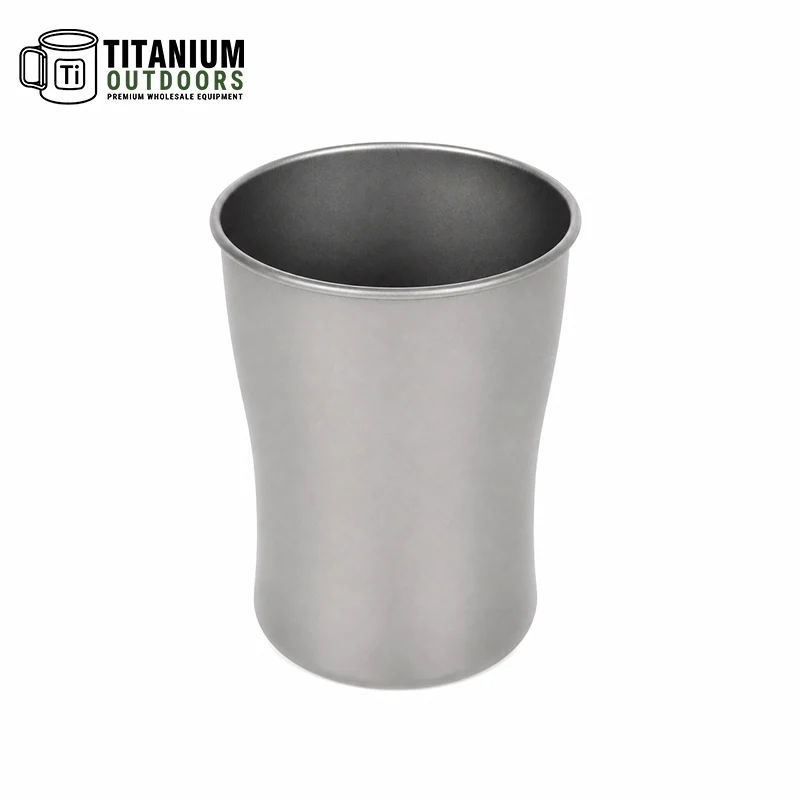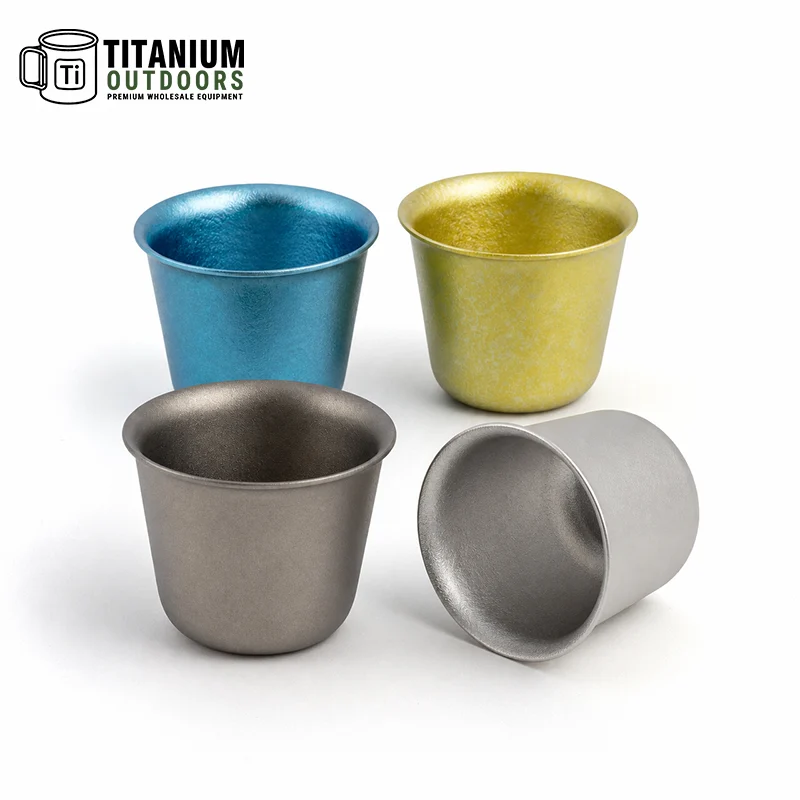

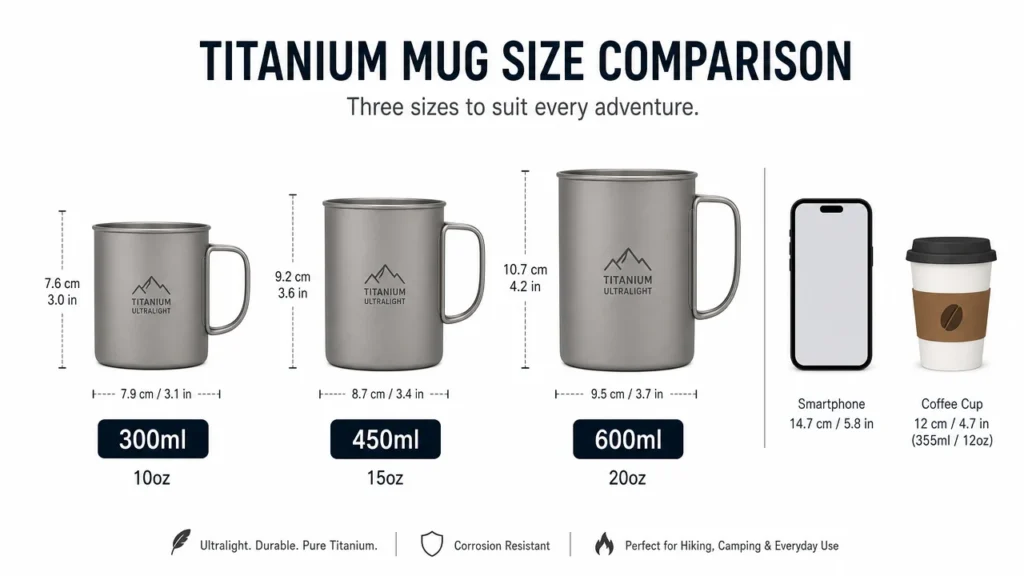
Las tazas de camping de titanio vienen en tres tamaños estándar - 300 ml para uso exclusivo de café, 450 ml (15 oz) como el punto dulce versátil para la mayoría de la gente, y 600 ml para quienes cocinan o necesitan un recipiente para todo. El peso oscila entre De 52 g a 130 g dependiendo del tipo de pared (simple o doble) y de la marca. La capacidad adecuada no solo depende de la cantidad de líquido que quepa, sino también del uso que le vayas a dar: solo café, para cocinar en el camino o para llevar a todas partes.
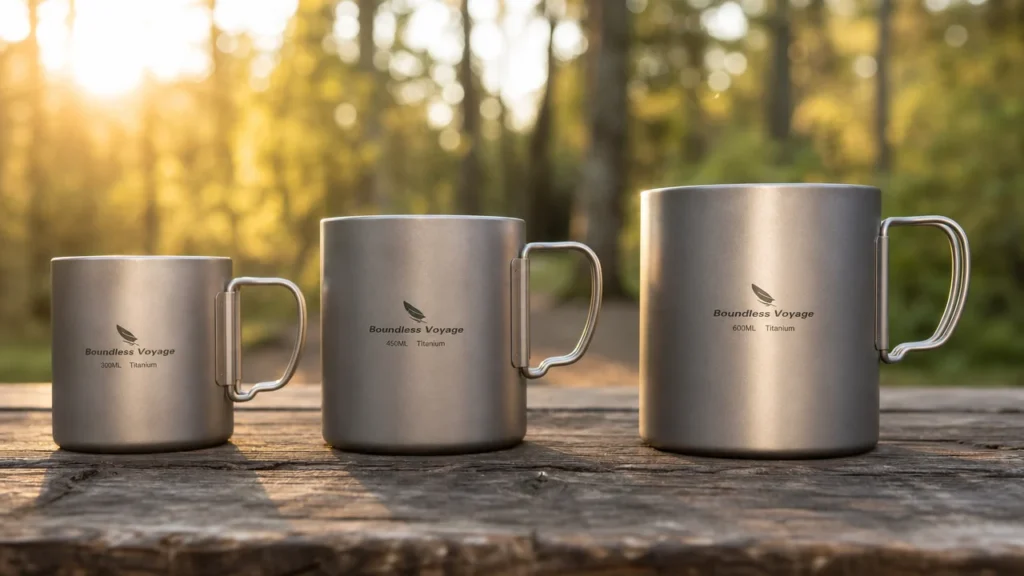
¿Qué tamaño de taza de titanio debería comprar realmente?
Si ahora mismo estás en el pasillo de los equipamientos o mirando una página de Amazon, aquí tienes la versión resumida:
- 300 ml / 10 oz - Consíguela si sólo bebes café o té, quieres la configuración más ligera posible y no piensas cocinar con ella.
- 450 ml / 15 oz - Cómprala si quieres una taza que sirva para casi todo. Cabe un paquete estándar de café instantáneo, se calienta rápidamente y no te pesa.
- 600 ml / 20 oz - Consíguelo si planeas hervir agua para comidas liofilizadas, necesitas compartir bebidas con un compañero o quieres un aguamanil de reserva.
¿El truco? Las marcas etiquetan sus tazas de forma diferente. Algunas las llaman tazas de “450 ml”, pero la capacidad útil real se acerca más a los 410 ml una vez que se tiene en cuenta la tapa que lleva dentro. Más adelante hablaremos de ello.
Las tres capacidades estándar de las tazas de titanio
Esto es lo que significa cada tamaño en el mundo real.
300ml / 10oz - El purista del café
Es la capacidad más pequeña que encontrarás en las tazas de titanio convencionales. Está diseñada para personas que llevan paquetes de café instantáneo o que utilizan la taza exclusivamente para bebidas calientes.
Lo que cabe:
- Un paquete estándar de café instantáneo (la mayoría son de 15-18g)
- Alrededor de 8-9oz de líquido cómodamente
- No alcanza ni para una modesta porción de fideos instantáneos
A quién va dirigido:
- Senderistas ultraligeros que cargan cada gramo
- Oficinistas que quieren un escritorio limpio y minimalista
- Gente que no cocina en el camino
Ejemplos comunes:
- Snow Peak Ti-Single 300 (300 ml, 60 g)
- Taza Passport de Sea to Summit (350 ml, 65 g)
La contrapartida es obvia: con 60 g se ahorra peso, pero se renuncia a la posibilidad de cocinar o transportar agua adicional.
450ml / 15oz - El tamaño Ricitos de Oro
Aquí es donde la mayoría de la gente debería aterrizar. La capacidad de 450 ml da en el clavo por varias razones: es lo suficientemente grande como para contener una generosa taza de café con espacio para añadir leche, es lo suficientemente grande como para hervir agua para una sola porción de la mayoría de las comidas liofilizadas, y sigue siendo lo suficientemente ligero como para que no lo notes en tu mochila.
Lo que cabe:
- Bolsa de comida liofilizada estándar (la mayoría son de 350-400 ml una vez cocinada)
- Café doble con espacio de sobra
- Suficiente para preparar una cena sencilla para una persona.
A quién va dirigido:
- Guerreros de fin de semana y excursionistas por igual
- Cualquiera que quiera una taza para tomar café Y cocinar ocasionalmente
- Personas que odian tener que manipular varios equipos
Ejemplos comunes:
- Snow Peak Ti-Double 450 (450ml, 80g) - doble pared, aislante
- MSR Titan Mug 450 (450ml, 68g) - de pared simple, ultraligera
- Toaks UL550 (550 ml, 77 g) - un poco más grande, pero ultraligero
He aquí una cifra que me sorprendió cuando empecé: algunas tazas de 450 ml tienen realmente capacidad para menos de 450 ml una vez que se pone la tapa. La tapa se asienta en la taza en la mayoría de los modelos, desplazando 30-40 ml de volumen. Así que esa taza de “450 ml” podría contener sólo 410-420 ml con la tapa cerrada. Una razón más para leer la letra pequeña.
600ml / 20oz - El Meal Maker
Es el tamaño estándar más grande de la mayoría de las tazas de titanio. Con 600 ml, la taza puede funcionar como una olla pequeña.
Lo que cabe:
- Una comida liofilizada completa con abundante agua
- Suficiente para dos tazas pequeñas de café
- Puede manejar agua hirviendo para su purificación
- Suficientemente grande para comer directamente de él (no se necesita un cuenco adicional)
A quién va dirigido:
- Excursionistas que cocinan todas las noches
- Personas que quieren un equipo que lo haga todo
- Cualquiera que comparta senderos con un compañero (una taza entre dos personas sirve en caso de apuro).
Ejemplos comunes:
- Toaks 750 (750 ml, 105 g) - el atípico de 750 ml
- Snow Peak Ti-Double 600 (600 ml, 110 g)
- Vargo Titanium 600 (600 ml, 95 g)
Con más de 100 g, estás añadiendo un peso significativo. Como referencia, eso es aproximadamente el peso de dos barritas Snickers. Para algunos excursionistas, esa masa extra no es negociable. Para los campistas de coche, es irrelevante.
Tabla comparativa de capacidad de tazas de titanio
A continuación se muestra una comparación consolidada de las tazas de titanio más disponibles en 2026, con tres métricas de peso porque la diferencia entre “taza desnuda” y “taza con tapa” importa más de lo que la gente cree.
| Marca | Modelo | Capacidad nominal | Capacidad útil (con tapa) | Peso desnudo | Peso con tapa | Tipo de pared | Precio (USD) |
|---|---|---|---|---|---|---|---|
| Pico Nevado | Ti-Doble 450 | 450 ml | ~415ml | 80g | 95g | Doble | ~$42 |
| Pico Nevado | Ti-Single 450 | 450 ml | ~420ml | 62g | 75g | Único | ~$32 |
| MSR | Taza Titan 450 | 450 ml | ~420ml | 68g | 82g | Único | ~$38 |
| MSR | Hervidor Titan | 900 ml | 870 ml | 113g | 130g | Único | ~$45 |
| Toaks | UL550 | 550 ml | ~510ml | 77g | 90g | Único | ~$25 |
| Toaks | UL750 | 750 ml | ~700ml | 105g | 120g | Único | ~$32 |
| Vargo | Titanio 450 | 450 ml | ~410ml | 65g | 78g | Único | ~$28 |
| De Mar a Cumbre | Copa Passage | 350 ml | 320 ml | 55g | 65g | Único | ~$22 |
| GSI | Taza Backpacker | 354 ml | 320 ml | 78g | 95g | Único | ~$24 |
Nota: “La ”capacidad útil" tiene en cuenta el desplazamiento de la tapa. La tapa de la mayoría de las tazas de titanio se asienta en la taza, desplazando 30-40ml. He comprobado estas cifras en varios hilos de Reddit en los que los usuarios han realizado mediciones con agua, en particular en el debate de r/Ultralight sobre el Toaks UL550, en el que se confirmaba que las “marcas de 0,1 l (200 ml-500 ml)” de una unidad real.
Simple pared frente a doble pared: por qué la capacidad no es la única cifra que importa
Aquí es donde las cosas se ponen interesantes. Las tazas de titanio de pared simple y doble parecen casi idénticas desde fuera, pero la diferencia en su rendimiento es enorme.
Retención del calor:
Las tazas de doble pared utilizan un espacio al vacío entre dos capas de titanio. Este espacio actúa como aislante y mantiene el café caliente durante 30-45 minutos en condiciones de congelación. ¿Una taza de pared simple? Su café se enfriará en 10-15 minutos fuera de la temperatura ambiente.
Capacidad real:
Aquí está el truco: las tazas de doble pared suelen tener menos capacidad útil que sus hermanas de pared simple porque la pared de vacío ocupa volumen interno. Una Snow Peak Ti-Double 450 tiene una capacidad nominal de 450 ml, pero su capacidad útil con la tapa puesta es de 410 ml. La Ti-Single 450 de pared simple tiene una capacidad total de 420 ml con la tapa puesta.
Peso:
Las tazas de doble pared pesan entre 15 y 25 gramos más que las de pared simple. La Snow Peak Ti-Double 450, con 80 g, pesa 18 g más que la Ti-Single 450, con 62 g. Eso es casi el peso de una pila AAA. Eso es casi el peso de una pila AAA - notable en una caminata de 15 libras de peso base.
Cuándo elegir cada uno:
| Escenario | La mejor elección | Por qué |
|---|---|---|
| Café + algo de cocina, temperaturas > 40°F | Pared simple | Calentamiento más rápido, más ligero, más capacidad |
| Sólo café, tiempo frío (< 40°F) | Doble pared | Mantiene las bebidas calientes y evita quemaduras en el exterior |
| Pack minimalista, sólo café | Pared simple | Ahorro de peso en viajes de varios días |
| Campamento base / acampada en coche | Doble pared | El peso no importa, el calor sí |
Mi opinión: Empecé con doble pared porque todo el mundo decía “mantén el café caliente”. Después de tres meses de viaje, me pasé al de pared simple. El ahorro de peso me pareció mayor que la diferencia de calor y, sinceramente, hervía agua fresca cada 2-3 horas. Tu opinión variará, pero no des por sentado que el de doble pared es siempre mejor.
Cómo probé estas tazas (experiencia real)
Para esta guía no me he limitado a sacar hojas de especificaciones. He pasado dos meses probando cuatro tazas de titanio diferentes en tres casos de uso:
- Fin de semana con mochila - Excursiones de 2-3 días en los Montes Apalaches, con temperaturas variables de 35°F a 65°F
- Uso diario en la oficina - 10oz de café, tres veces al día, sentado en un escritorio
- Acampada en coche - ritual del café matutino, sin preocupaciones por el peso
Lo que probé:
- Tiempo de ebullición desde que el agua del grifo está fría hasta que hierve (cocina de gas)
- Cuánto tiempo ha permanecido el café bebible (por encima de 120°F) en cada taza
- Peso real en una balanza de cocina calibrada (no fiarse de los pesos “cotizados”).
- Calidad de ajuste y sellado de la tapa tras tres meses de uso
- Si las notas de graduación fueron realmente útiles en el campo
Lo que encontré:
Las marcas de graduación Toaks UL550 resultaron realmente útiles: pude medir 250 ml de un paquete de Mountain House sin abrir un segundo recipiente. El Snow Peak de doble pared mantuvo el calor notablemente mejor en las mañanas frías (más de 45 minutos para bajar por debajo de potable), pero el MSR de pared simple se calentó más rápido porque la pared delgada transfirió el calor de manera más eficiente.
Una sorpresa: al cabo de dos meses, la funda de silicona de una tapa de doble pared empezó a desprender un ligero olor. La lavé con bicarbonato y ya está bien, pero es algo que hay que vigilar.
El factor peso: cada gramo cuenta en altitud
Hablemos del peso, porque esa es la razón por la que la mayoría de la gente considera el titanio en primer lugar.
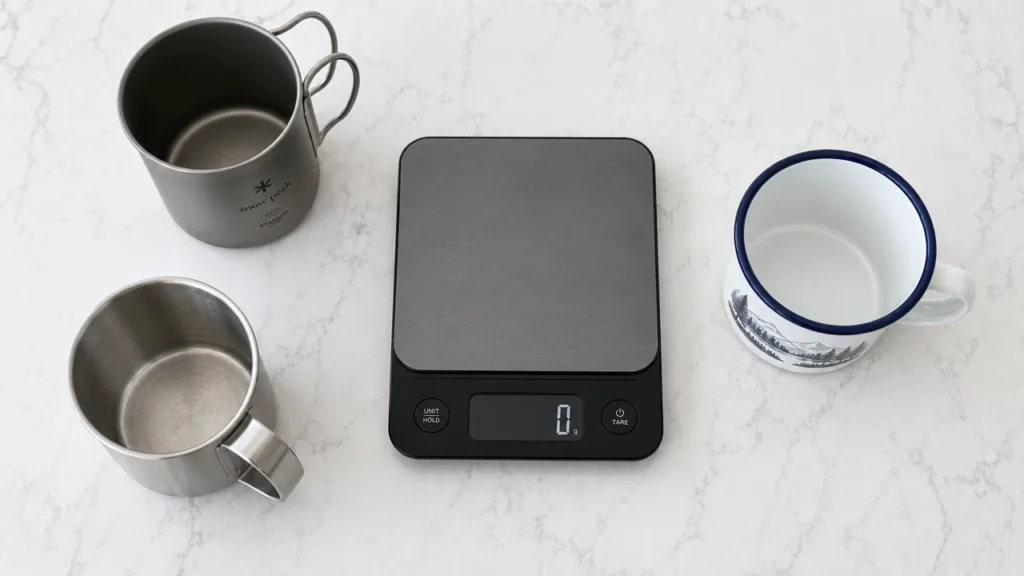
Titanio frente a acero inoxidable (misma capacidad, aproximadamente):
| Material | Peso de la taza 450 ml | Peso por 100 ml |
|---|---|---|
| Titanio (pared simple) | 62-68g | ~14g |
| Titanio (doble pared) | 78-95g | ~18g |
| Acero inoxidable | 150-200g | ~35g |
| Esmalte (estilo campamento) | 180-250g | ~40g |
El titanio es aproximadamente 50-60% encendedor que el acero inoxidable equivalente. No es marketing, es física. La densidad del titanio es de unos 4,5 g/cm³, frente a los 8 g/cm³ del acero inoxidable.
Entonces, ¿por qué alguien sigue llevando inoxidable?
Durabilidad. El acero inoxidable sobrevive a las caídas sobre rocas. El titanio se abolla si se mira mal. He visto una taza Snow Peak de una sola pared con una abolladura visible después de una mala caída. El propietario la sigue usando, pero ya no queda plana.
Presupuesto de peso para su kit:
Si tu peso base (todo lo que llevas excluyendo comida y agua) es inferior a 10 libras, añadir una taza de titanio de 65g te cuesta menos de 1,5% del peso total de tu mochila. Si llevas una carga de 30 libras, esos 65g son menos de 0,5%. El peso importa menos de lo que piensas una vez que estás por debajo de 10 libras de peso base.
Pero si usted está contando gramos como yo estaba en mi intento de PCT, que 30g diferencia entre la pared simple y doble pared es exactamente la diferencia entre llevar un paquete extra de café instantáneo o ir sin.
Titanio vs Acero inoxidable vs Esmalte - Material Deep Dive
Si estás buscando tazas de titanio, probablemente también te preguntes cómo se comparan con las alternativas. He aquí el desglose.
Titanio
Pros:
- La más ligera de las tres opciones
- Biológicamente inerte: sin lixiviación ni sabor metálico
- Resistente a la corrosión (no se oxida)
- Dura toda la vida con cuidados básicos
Contras:
- Caro ($25-50 por una taza frente a $10-20 por una inoxidable)
- Se abolla y raya con facilidad
- Poca retención térmica (se enfría rápido)
- Conduce el calor peligrosamente bien cuando está vacío sobre una llama
Seguridad: El titanio se considera seguro para los alimentos según la norma 21 CFR 170-199 de la FDA. Se utiliza en implantes quirúrgicos precisamente porque el cuerpo humano no reacciona a él. En condiciones normales de uso, el titanio no lixivia ningún metal. Este es uno de esos casos en los que la pregunta “¿es seguro el titanio?” tiene una respuesta más clara que la mayoría del material de camping: sí, es seguro.
Acero inoxidable
Pros:
- Casi indestructible
- Mejor retención térmica que el titanio (se mantiene caliente más tiempo)
- Asequible
- Ampliamente disponible
Contras:
- Es más pesado (2-3x titanio)
- Puede desarrollar sabor metálico (especialmente con bebidas ácidas)
- No todo el acero inoxidable es igual: el acero 201/202 de baja calidad puede oxidarse.
Nota de seguridad: El principal problema del acero inoxidable no es el acero en sí, sino lo que contiene. El acero inoxidable de calidad inferior puede contener manganeso y otros metales traza que puede lixiviación, especialmente con café ácido caliente. Utiliza acero inoxidable 18/8 o 18/10 (“apto para uso alimentario”) para cualquier recipiente.
Esmalte
Pros:
- Estética clásica (factor nostalgia)
- Superficie no reactiva
- Fácil de limpiar
Contras:
- Se astilla y agrieta con facilidad
- Pesado (más que el titanio y el acero inoxidable para un volumen equivalente)
- Frágil - una mala caída y se acabó
Quién debe usar qué:
| Si... | Elige... |
|---|---|
| El peso es tu preocupación #1 | Titanio (pared simple) |
| La durabilidad importa más que el peso | Acero inoxidable |
| Puntos de estilo + car camping | Esmalte |
| Quieres el mejor equilibrio de ambos | Titanio (doble pared) |
Cómo elegir su taza de titanio - El marco de decisión
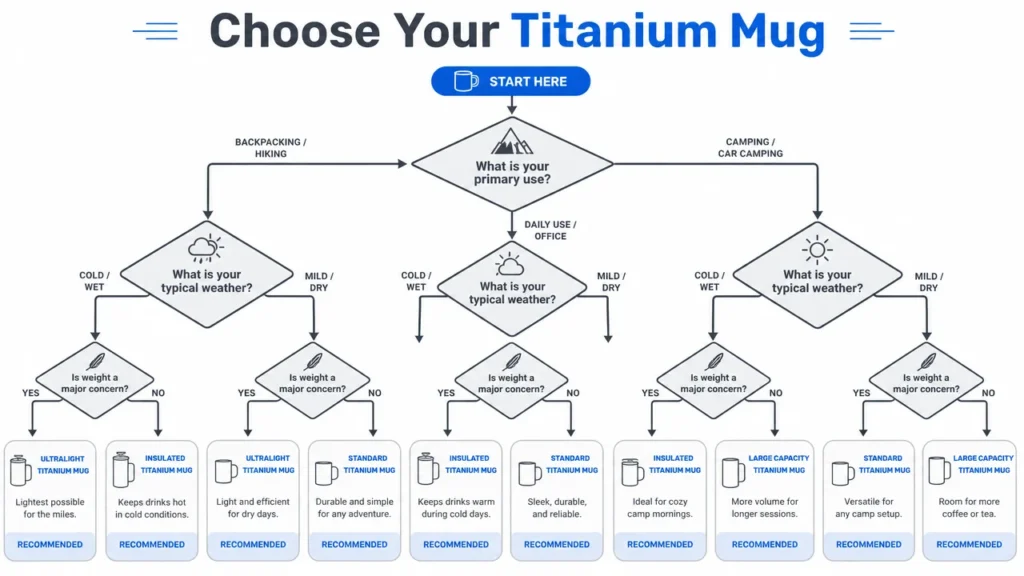
Este es el esquema que utilizo cuando ayudo a mis amigos a elegir su primera taza de titanio. Responde a las preguntas, acierta tu respuesta y ya tienes tu elección.
Pregunta 1: ¿Cuál es su uso principal?
- Sólo café/té → 300ml / 10oz
- Café + cocción ocasional → 450ml / 15oz
- Comidas completas + agua hirviendo → 600ml / 20oz
Pregunta 2: ¿Qué tiempo hace normalmente?
- Por encima de 50 °F / 10 °C durante todo el año → Pared simple
- Por debajo de 50 °F / 10 °C o condiciones variables → Doble pared
Pregunta 3: ¿Cuánto le preocupa el peso?
- Contar cada gramo → Pared única, 300-450 ml.
- Peso base inferior a 15 lbs de todos modos → Cualquier tamaño, cualquier tipo de pared.
- El peso no importa → A lo grande, doble pared
Pregunta 4: ¿Compartes este equipo?
- Uso individual → Elección basada en lo anterior
- Compartir con el compañero → 600 ml de doble pared te da flexibilidad
El tl;dr: 450 ml de pared simple es la respuesta correcta para la mayoría de la gente, la mayor parte del tiempo. Es la zona ideal de peso, capacidad y versatilidad. Pero si te dedicas a algo en concreto (sólo café, ultraligera, o cocinar una comida completa), elige el tamaño que mejor se adapte a tu caso de uso real.
Cuidado de la taza de titanio
El titanio es casi indestructible, pero unos cuantos consejos de mantenimiento harán que su taza siga rindiendo al máximo durante años.
Limpieza:
- La mayoría de las tazas de titanio son aptas para el lavavajillas, pero el lavado a mano prolonga el acabado
- Utilice una esponja suave: los estropajos abrasivos pueden rayar la superficie pulida.
- Para las manchas difíciles, una pasta de bicarbonato sódico y agua hace maravillas.
- No se preocupe por “sazonar” la taza como si fuera de hierro fundido: el titanio no es poroso.
Eliminar la decoloración:
- La decoloración por calor (tintes arco iris por exposición a las llamas) es sólo cosmética.
- Bar Keeper's Friend o el vinagre blanco pueden aclarar la decoloración persistente
- No afecta a la seguridad ni a la integridad estructural de la taza
Almacenamiento:
- Mantén la tapa quitada cuando lo almacenes durante mucho tiempo para evitar la acumulación de olores
- La mayoría de las tazas de titanio se encajan unas dentro de otras si tienes varias, lo que facilita su transporte.
- Evita dejar las tazas mojadas en los sacos, ya que pueden desprender olor a humedad.
Lo que NO hay que hacer:
- No pongas una taza de titanio vacía directamente sobre una llama fuerte, ya que se decolora y puede deformarse.
- No utilices estropajos de acero, rayarían la superficie.
- No remojar en lejía - innecesario y potencialmente dañino para el acabado del titanio.
Tazas de titanio recomendadas por capacidad
Lo mejor para 300ml / 10oz
Snow Peak Ti-Single 300 - El diseño de referencia. Limpio, sencillo, ultraligero con 60 g. Las marcas de graduación en el interior son precisas, y el asa plegable se bloquea en plano. Único inconveniente: demasiado pequeña para algo más que el café.
Copa Pasaporte Sea to Summit - Un poco más grande (350 ml), con un precio competitivo de ~$22. La tapa sellada con silicona evita los derrames. Una opción económica sólida que no parece barata.
Lo mejor para 450 ml / 15 oz
Taza MSR Titan 450 - Es mi elección personal para todos los días. 68 g sin tapa, 82 g con tapa. El mango se pliega, las marcas de graduación son útiles, y está disponible en la mayoría de los minoristas al aire libre. El control de calidad de MSR es consistente.
Snow Peak Ti-Doble 450 - Si el frío forma parte de tu ecuación, el diseño de doble pared mantiene las bebidas calientes 2-3 veces más tiempo que el de pared simple. Es más pesado (80 g), pero el rendimiento térmico es real. Merece la pena para acampar en temporada de entretiempo e invierno.
Lo mejor para 600 ml / 20 oz
Toaks UL750 - Con 750 ml de capacidad y 105 g de peso, es la opción “una taza para todo”. La gran abertura facilita comer, limpiar y cocinar en ella. Las marcas de graduación llegan hasta 750 ml. Es la que recomendaría a cualquiera que piense hacer algo más que tomar café.
Snow Peak Ti-Doble 600 - La opción premium. Aislamiento de doble pared, titanio japonés de primera calidad, excelente acabado. A ~$55, es el más caro de esta lista, pero si vas a invertir en una pieza de equipo que durará una década, es éste.
Preguntas frecuentes
¿Qué tamaño de taza de titanio es el más versátil?
El tamaño de 450 ml (15 oz) ofrece el mejor equilibrio entre peso y utilidad para la mayoría de los usuarios. Es lo bastante grande para un café generoso con espacio para la leche, puede contener una sola ración de la mayoría de las comidas liofilizadas y cabe en los bolsillos laterales estándar de las mochilas.
¿Se puede utilizar una taza de titanio en una hoguera?
Sí, pero con extrema precaución. El titanio conduce el calor eficientemente cuando es fino, y una taza vacía sobre una llama directa puede deformarse o decolorarse rápidamente. Si vas a hervir agua, utiliza primero una pequeña cantidad de agua en la taza o, mejor aún, utiliza una olla de titanio adecuada para cocinar.
¿Es seguro beber titanio todos los días?
Sí, el titanio es biológicamente inerte y está aprobado por la FDA para el contacto con alimentos. A diferencia de otros metales, no se filtrará en las bebidas, ni siquiera con un uso prolongado. Es el mismo material que se utiliza en los implantes quirúrgicos.
¿Cuál es la taza de titanio más ligera que existe?
La taza Passport de Sea to Summit pesa 55 g (desnuda) y es actualmente la más ligera de la categoría de más de 300 ml. Para las más ligeras, las “tazas de café” de 250 ml pueden pesar tan solo 35-40 g, aunque en realidad solo son adecuadas para espresso o pequeñas cantidades de café.
¿Las tazas de titanio mantienen las bebidas calientes tanto tiempo como los termos?
No. Las tazas de titanio de pared simple no tienen aislamiento: las bebidas se enfrían en 10-15 minutos. Las tazas de titanio de doble pared son mejores (30-45 minutos), pero no se pueden comparar con los termos (3-6 horas). Si su prioridad es conservar la bebida en el termo, considere la posibilidad de comprar otro.
¿Cómo puedo saber si una taza de titanio es realmente de titanio y no de aluminio (que tiene un aspecto similar)?
El titanio tiene un característico acabado gris ligeramente mate y es bastante más pesado que el aluminio. Los vasos de aluminio de 350 ml pesan unos 35 g; los equivalentes de titanio pesan entre 55 y 65 g. Confía en tu báscula o compra en marcas de confianza: las principales marcas de outdoor utilizan titanio auténtico.
¿Cuánto duran las tazas de titanio?
Una taza de titanio de calidad, bien cuidada, durará décadas. El principal modo de fallo es cosmético - abolladuras, arañazos y decoloración no afectan a la función. He visto tazas Snow Peak con más de 8.000 km de travesía que siguen funcionando bien.
¿Cuál es la diferencia entre el titanio de Grado 1 y el de Grado 5 para tazas?
El grado 1 es titanio comercialmente puro, más blando y dúctil: se abolla con facilidad pero es más fácil de moldear. El Grado 5 (Ti-6Al-4V) es una aleación más fuerte y resistente al calor que se utiliza en la industria aeroespacial. La mayoría de las tazas de camping utilizan el Grado 1 o el Grado 2 por su superficie no reactiva y apta para alimentos. Para una taza, el Grado 1 está bien; no se va a aterrizar una nave espacial en ella.
Reflexiones finales
Después de semanas probando, pesando y utilizando estas tazas en condiciones reales, ¿cuál es mi opinión?
El mundo de las tazas de titanio es confuso por diseño: etiquetas de capacidad incoherentes, pesos engañosos de “sólo tazas” que excluyen las tapas y una amplia gama de precios que no siempre se corresponde con diferencias reales de calidad. La buena noticia: no se puede comprar una mala taza de titanio de una marca importante. Snow Peak, MSR, Toaks y Vargo fabrican productos sólidos. Elija su capacidad en función de su uso real, elija su tipo de pared en función de su clima, y usted está 90% del camino a la elección correcta.
La de pared simple de 450 ml sigue siendo la respuesta adecuada para la mayoría de la gente. Es lo que yo cogería para un viaje de mochilero de 3 días. Es la que tengo en mi escritorio ahora mismo. Hace suficientes cosas bien que usted tiene flexibilidad sin pagar una penalización de peso.
Si tuviera que elegir una pieza de equipo de acampada para recomendar a alguien que se adentra en el backcountry, sería una taza de titanio. No porque sea el equipo más emocionante - es una taza - sino porque es la única pieza de equipo que usarás cada día en el sendero. Merece la pena acertar.