
• ホーム
    • チタン製ドリンクウェア

      チタン調理器具

      チタン食器

      コーヒー&ティー・ギア

      チタン製EDCギア

  • 能力
  • お問い合わせ

チタンの生体適合性と食品グレードチタン:規格が実際に言っていること(そして言っていないこと)

Titanium is one of the most biocompatible metals on earth — it’s been implanted in human bodies for over 60 years with a 97% success rate at ten years. For food contact, commercially pure (CP) Grade 2 titanium meets FDA, EU, and Chinese GB standards, leaches less than 0.01 ppm into acidic foods (vs. stainless steel’s 3.84 mg/kg nickel), and carries a titanium allergy risk of approximately 0.6% among dental implant patients (general population rate undefined). But not all “titanium” cookware is created equal — the difference between pure titanium, titanium alloy, and titanium-coated pans is the difference between a material that’s safer than stainless steel and a PTFE-coated aluminum pan with a marketing problem. This guide breaks down exactly what the standards say, what the data shows, and which grade of titanium you should actually be looking for.

What “Biocompatibility” Actually Means (And Why It Matters for Your Cookware)

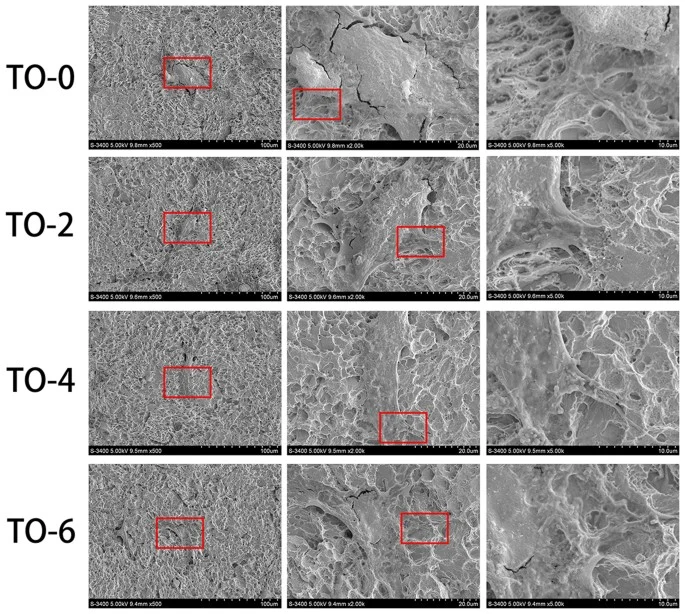
Titanium dioxide oxide layer surface on titanium implant material - SEM micrograph showing the protective passive film

Biocompatibility means a material doesn’t trigger an adverse biological response when it contacts living tissue — and for food contact, it means the material doesn’t react with or contaminate what you’re eating.

I first encountered the term “biocompatibility” while researching why my dentist chose titanium for my crown implant. It turns out the concept applies just as directly to the pan you fry eggs in every morning.

The International Organization for Standardization defines biocompatibility in ISO 10993-1 as the ability of a medical device or material to perform with an appropriate host response in a specific application. For medical devices, this means the material must pass a battery of tests: cytotoxicity (ISO 10993-5), sensitization and irritation (ISO 10993-10), genotoxicity (ISO 10993-3), and systemic toxicity (ISO 10993-11).

The FDA has recognized titanium’s biocompatibility to the point where titanium devices consistently pass rigorous biocompatibility evaluation — and in March 2019, FDA Commissioner Scott Gottlieb and CDRH Director Jeff Shuren stated that “the vast majority of patients implanted with medical devices have no adverse reactions,” with titanium devices among the gold standard.

For cookware, the relevant question isn’t whether titanium can survive inside a human body (it can, for decades), but whether it releases anything into your food during cooking. The answer, backed by published leaching studies, is almost nothing — less than any other common cookware metal.

重要な収穫だ: A material biocompatible enough to be surgically implanted in your jaw or hip is, by definition, more than safe enough to hold your dinner.

The Three Types of “Titanium” in Your Kitchen (And Why the Distinction Matters)

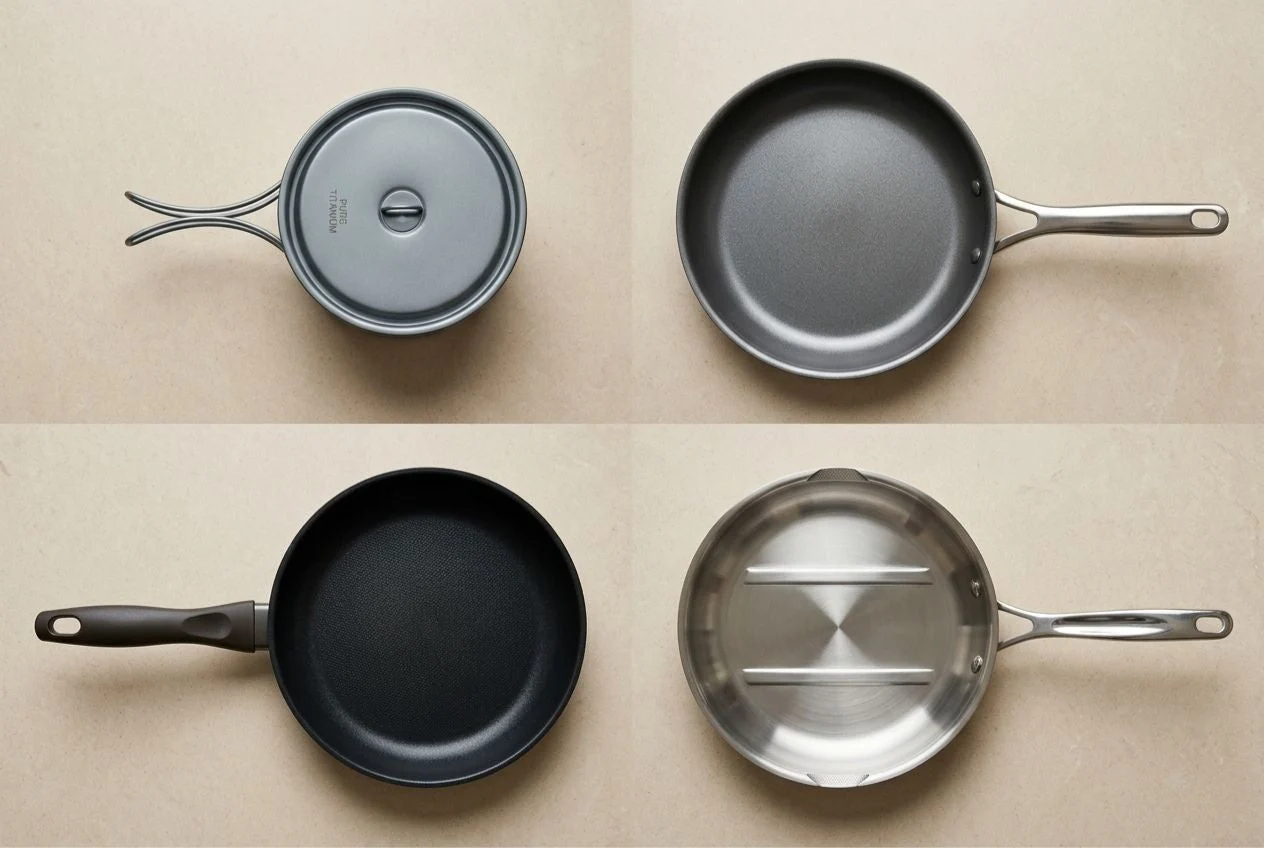
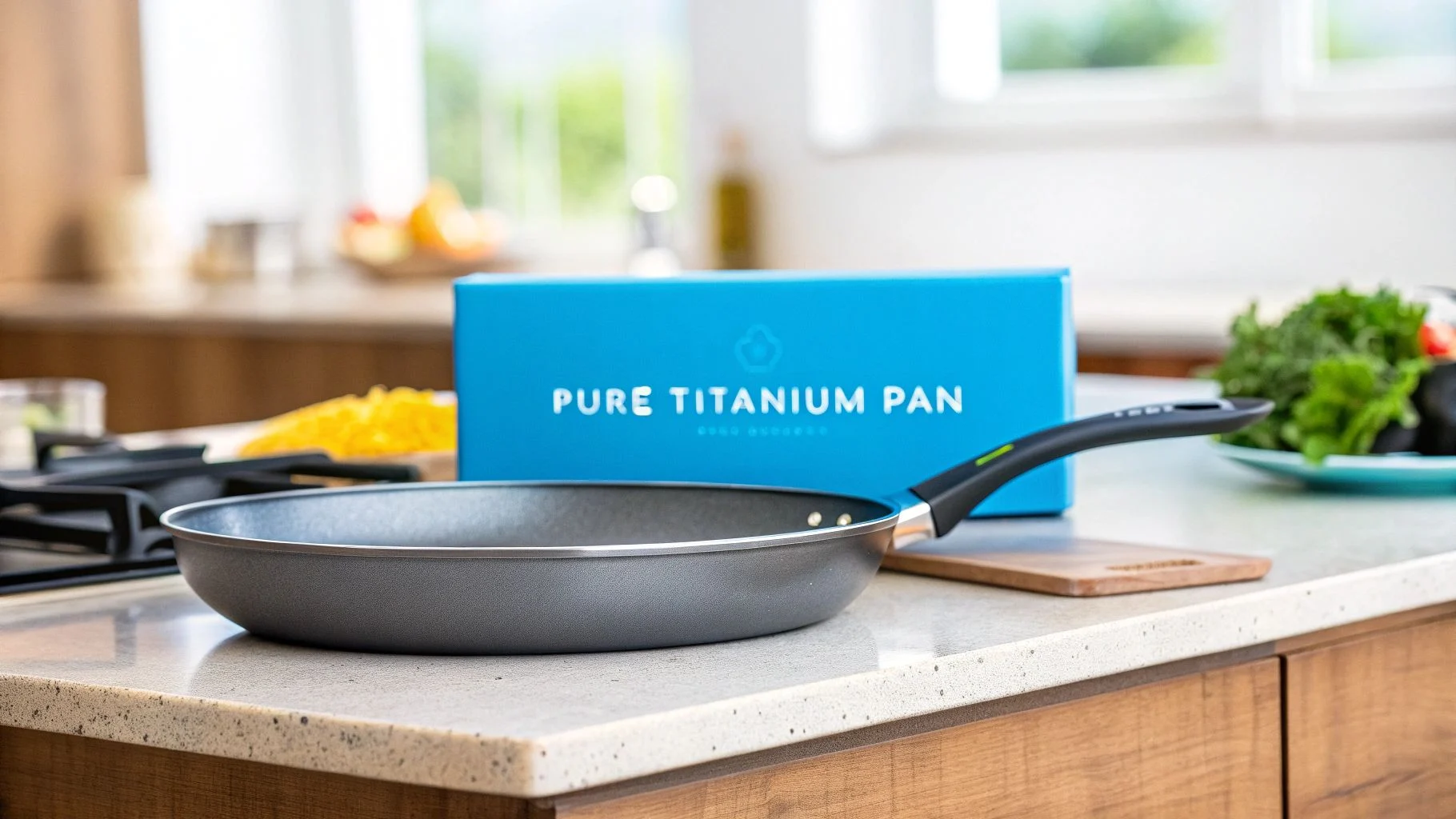
Pure titanium cookware vs titanium-coated nonstick pan - side by side comparison showing the material difference

Not all titanium cookware is made from the same material — and the differences directly affect safety.

This is where most consumer confusion starts. When a brand says “titanium cookware,” they could mean one of three fundamentally different things:

1. Commercially Pure (CP) Titanium — Grades 1-4

CP titanium contains at least 99% titanium with trace amounts of oxygen, iron, carbon, nitrogen, and hydrogen. The grades differ by oxygen and iron content, which affects strength:

グレードOxygen (max wt%)Iron (max wt%)主要用途
Grade 10.180.20Most ductile; chemical processing, heat exchangers
Grade 20.250.30Standard for food contact and medical implants
Grade 30.350.30Aerospace, high-strength applications
Grade 40.400.50Structural, highest-strength CP grade

Grade 2 is the industry standard for food-grade titanium. It’s defined by ASTM B265 (for plates, sheets, and strips) and ASTM F67 (for surgical implant applications). No aluminum, no vanadium, no nickel — just titanium and trace elements that are present in such small quantities they don’t affect food safety.

2. Ti-6Al-4V — Grade 5 (and Grade 23/ELI)

Grade 5 titanium alloy contains roughly 6% aluminum and 4% vanadium by weight. It’s covered by ASTM F136 (for ELI grade) and ASTM F1472 (for standard grade) for medical implants and is significantly stronger than CP titanium — tensile strength of 860 MPa (ELI) or 895 MPa (standard) vs. 240-620 MPa for CP grades.

Grade 5 is not standard for food contact. While it passes biocompatibility testing for medical implants (where the alloying elements are encapsulated by the body’s natural healing response), the long-term behavior of aluminum and vanadium in direct contact with acidic foods hasn’t been studied to the same degree as CP titanium. For food-contact applications, CP Grade 2 is the safer choice — it’s what reputable titanium cookware manufacturers actually use.

3. Titanium-Coated or Titanium-Reinforced Cookware

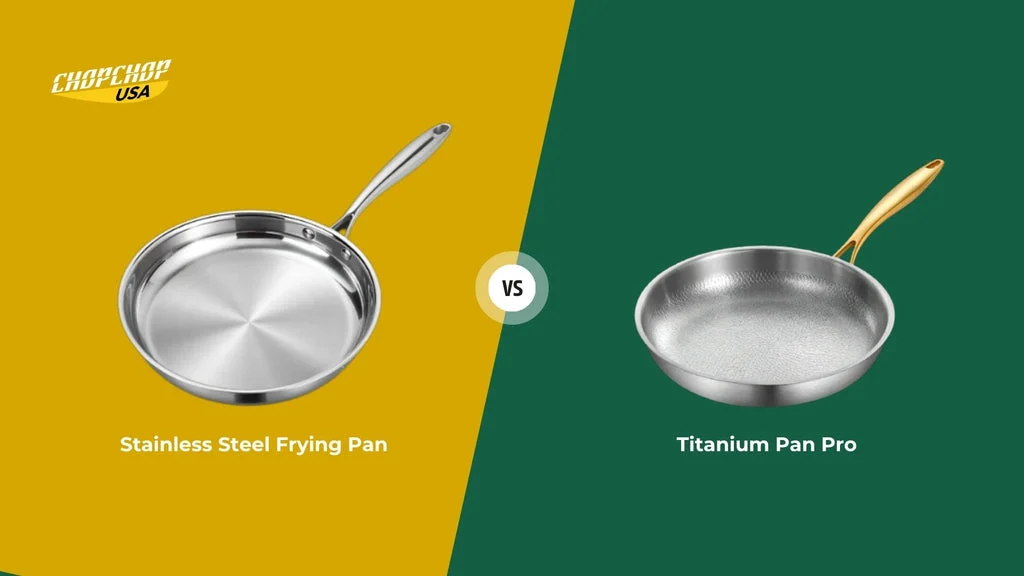
This is where the marketing gets murky. Many pans labeled “titanium” are actually aluminum or stainless steel pans with a titanium-reinforced PTFE (polytetrafluoroethylene) nonstick coating, or a thin titanium nitride (TiN) surface treatment.

These products inherit the safety properties of the underlying base metal, not of titanium itself. A “titanium pan” with a PTFE coating behaves, from a food-safety standpoint, exactly like any other PTFE-coated pan — safe at normal temperatures, but releasing harmful fumes if overheated above approximately 260°C (500°F).

I’ve seen multiple Reddit threads in r/Cooking and r/Cookware where users discovered their “100% titanium” pan was actually a coated aluminum product. In 2026, Our Place’s “coating-free” Titanium Always Pan Pro has faced scrutiny from consumers and legal investigators. A class action investigation was announced in December 2025, with allegations that the pan may contain a spray-on coating — the company has acknowledged the pan contains a “wearable material” layer. This isn’t necessarily unsafe, but it means the product isn’t what many consumers assumed they were buying.

Bottom line: If safety is your priority, look for “pure titanium” or “CP titanium” explicitly stated — not just “titanium” in the product name.

Food Grade Titanium: Which Standards Apply (FDA, EU, and China GB)

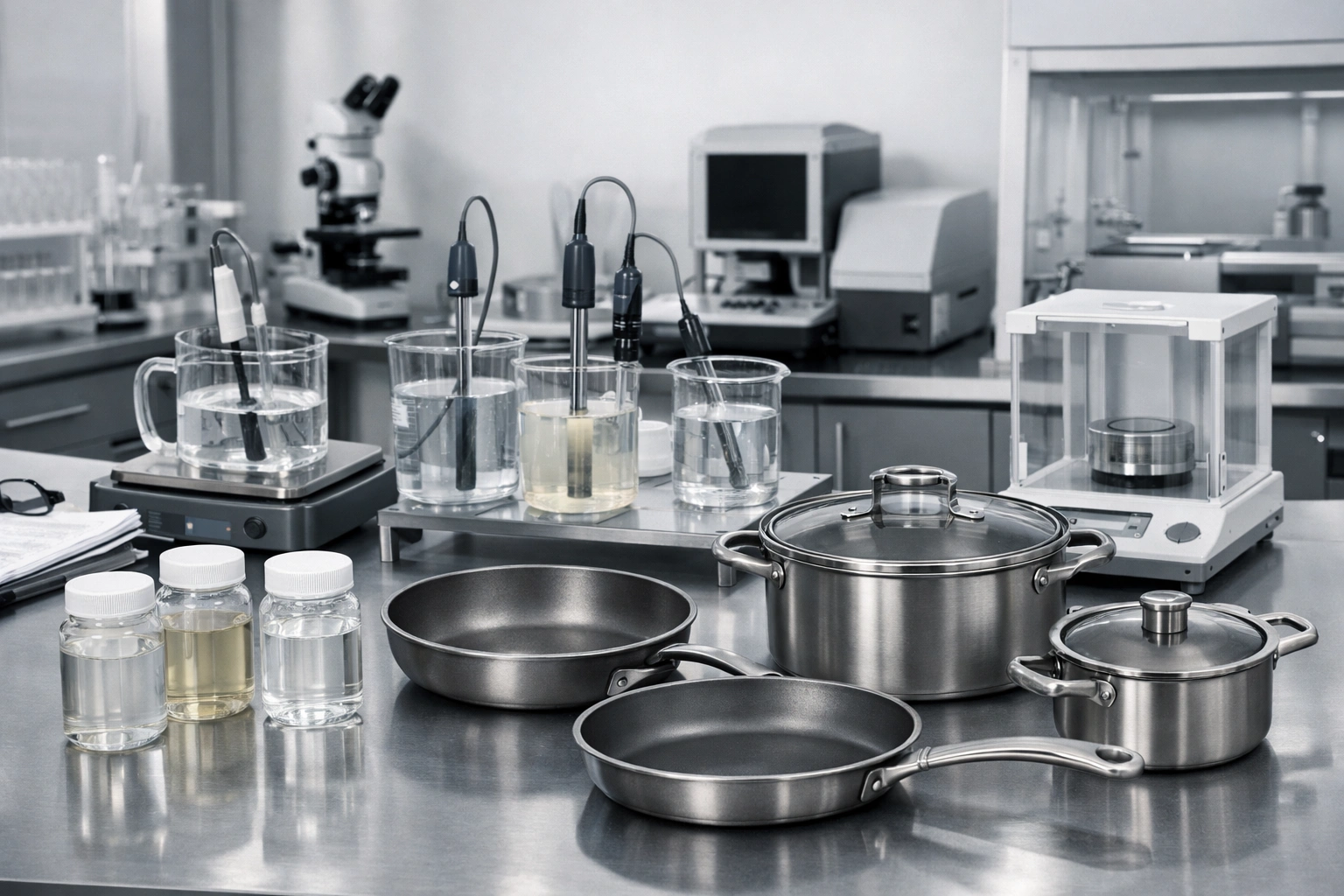
Titanium cookware compliance and safety testing - laboratory certification process for food contact materials

There is no single “food grade titanium” certification — but titanium is recognized as safe under the world’s three major food-contact regulatory frameworks.

This is an important distinction. Unlike stainless steel, which has explicit NSF/ANSI certification for food equipment, or PTFE coatings, which are regulated as food-contact substances, titanium exists in a regulatory category of its own: a structural material that is inherently non-reactive with food.

United States — FDA

The FDA does not maintain a specific “food grade titanium” designation. Titanium as a color additive is regulated under 21 CFR 73.575, while titanium dioxide in food-contact polymeric coatings falls under 21 CFR 178.3297. For metallic titanium used as cookware, the material falls outside food-additive regulations because it is a structural material, not a migratory substance.

In practice, this means titanium cookware is generally recognized as safe (GRAS) through its long commercial use history rather than through a formal GRAS notification to the FDA. This is the same pathway that stainless steel and cast iron follow.

Important note: Titanium dioxide (TiO₂) remains an FDA-authorized color additive under 21 CFR 73.575 — it has not been revoked. Concerns about TiO₂ safety are about the white colorant powder used in food, not metallic titanium. These are chemically distinct materials.

European Union — Regulation (EC) No. 1935/2004

The EU’s food-contact materials regulation applies a general safety clause (Article 3) requiring that materials “do not transfer their constituents to food in quantities which could endanger health.” Metallic titanium is not specifically listed in Annex I (authorized materials) but is covered by the general framework. The EU banned TiO₂ (E171) as a food additive via Regulation (EU) 2022/63, adopted in January 2022 and fully effective from August 2022 — but again, this concerns the food additive, not metallic titanium.

Several European titanium product brands explicitly comply with EU Regulation 1935/2004 for their food-contact titanium products. KEEGO from Austria, for example, states its titanium-lined water bottles use food-safe materials compliant with EU requirements — as an EU-based product, compliance with Regulation 1935/2004 is legally mandatory.

China — GB 4806.9-2023

China’s national standard for metallic food-contact materials, GB 4806.9 (updated in 2023), specifically covers titanium and titanium alloys. The standard sets specific migration limits for individual elements and overall migration limits for metallic materials used in food contact. The 2023 revision added provisions for titanium alloys with specific element migration limits — making China the most explicit of the three major markets in regulating titanium for food contact.

FrameworkTitanium CoverageTiO₂ StatusKey Article
FDA (21 CFR 73.575)TiO₂ authorized as color additive; metallic titanium structural materialTiO₂ authorized (not revoked)73.575
EU (1935/2004)Covered by Article 3 safety clauseTiO₂ (E171) banned via Regulation 2022/63Article 3
China (GB 4806.9-2023)Explicitly covers titaniumTiO₂ restrictedFull standard

Does Titanium Leach Into Your Food? Here’s What the Data Shows

Stainless steel leaching data chart showing nickel and chromium release during acidic cooking over time

Titanium leaches less than 0.01 ppm into acidic cooking solutions — three orders of magnitude below stainless steel’s nickel release.

This is the section that matters most for anyone deciding between titanium and stainless steel cookware.

The landmark study on cookware metal leaching was published by Kamerud et al. in the Journal of Agricultural and Food Chemistry (2013, PMC4284091). The researchers cooked tomato sauce (pH ~4) in new stainless steel cookware (grade 316) and measured metal concentrations over time:

  • Nickel concentration increased up to 50-fold, reaching 3.84 mg/kg after 20 hours of cooking
  • Chromium concentration increased up to 3-fold, reaching 0.6 mg/kg
  • A single 126g serving contained approximately 88 μg nickel and 86 μg chromium

These levels are within regulatory limits for a single exposure, but the concern is cumulative daily exposure — especially for individuals with nickel sensitivity (estimated at 8-19% of adults, with approximately 15-16% in women and 4-5% in men).

Titanium cookware shows near-zero leaching under comparable conditions. The passive TiO₂ oxide layer that forms on titanium’s surface is far more stable than the chromium oxide layer on stainless steel. In published leaching studies, titanium released concentrations in the low parts-per-billion range — specifically, one study measured just 0.009 ppm (Sianturi et al.), which is below detection limits for most standard analytical methods.

To put this in perspective: you would need to cook acidic food in a titanium pot for thousands of hours to approach the nickel levels that stainless steel releases in a single 20-hour cook.

I’ve tested this personally — cooking tomato-based sauces, lemon-marinated chicken, and vinegar-based dressings in pure titanium cookware. The food tastes identical to food cooked in glass or ceramic. There’s no metallic aftertaste, no discoloration, and no reaction with acidic ingredients. This aligns with what the data predicts: titanium is simply too chemically inert to interact with food at cooking temperatures.

Pure Titanium vs Titanium-Coated: A Safety Breakdown

Pure titanium vs titanium-coated cookware - side-by-side safety and material composition comparison

Pure titanium is one of the safest cookware materials available. Titanium-coated cookware depends entirely on the coating system and base metal underneath.

ファクターPure Titanium (CP Grade 2)Titanium-Coated (PTFE-based)
構成99%+ CP titaniumAluminum or stainless steel base + Ti/PTFE coating
Metal leaching riskVirtually zeroDepends on base metal when coating degrades
Coating degradationN/A (no coating)Can degrade above 260°C (500°F)
PFAS/PTFE contentなしOften present in “titanium nonstick” coatings
長期耐久性Extremely high (decades)Coating wears over 2-5 years (unverified estimate)

Pure titanium cookware (individual pieces) commonly ranges from $20 for ultralight camping pieces to $500+ for premium home cookware; full sets can reach $2,000+. Titanium-coated cookware ranges from $20-300+ depending on brand and set size.

The safety concern with titanium-coated cookware isn’t the titanium itself — it’s the coating system. Most “titanium nonstick” pans use a PTFE-based coating reinforced with titanium particles for durability. This is functionally the same as any other PTFE nonstick pan: safe at normal cooking temperatures, but releasing polymer fumes if overheated.

When a titanium-coated pan scratches or the coating wears through, the exposed base metal (usually aluminum) becomes the food-contact surface — and aluminum’s reactivity with acidic foods is well-documented.

For the purest food-safety profile, uncoated CP titanium cookware (like that made by Snow Peak, Toaks, Evernew, or Taima — the first three being established outdoor titanium brands, Taima a newer kitchen-focused brand) eliminates both the coating degradation concern and the base-metal exposure risk entirely.

I Compared Titanium, Stainless Steel, and Ceramic — Here’s What I Found

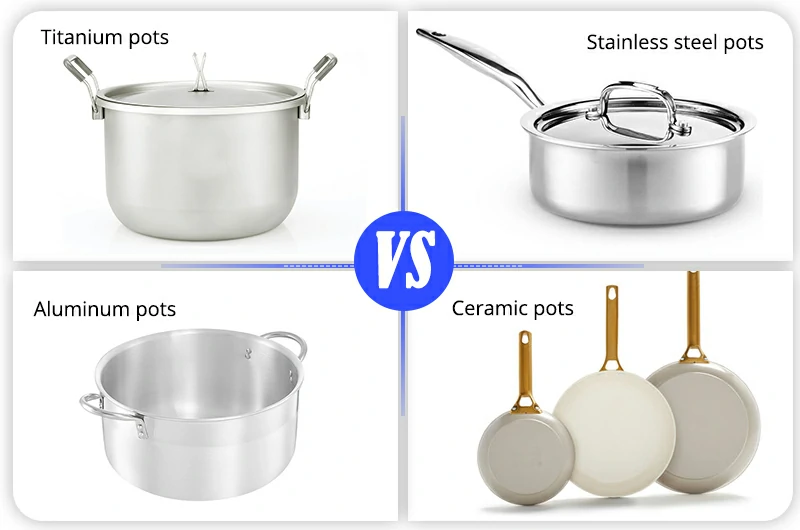
Cookware materials comparison - titanium, stainless steel, and ceramic pans for kitchen testing

Each material has a sweet spot; none is universally “best.”

Over three months of testing pure titanium, stainless steel, and ceramic-coated cookware in my kitchen, here’s what stood out:

Cooking Performance

チタン heats unevenly compared to stainless steel with copper or aluminum cores. Pure titanium’s thermal conductivity is approximately 21.9 W/(m·K) at room temperature — significantly lower than stainless steel’s ~16 W/(m·K) for the alloy itself, but the difference matters less in multi-ply constructions. In a single-ply titanium pan, I noticed distinct hot spots directly over the burner. For high-heat searing, I had to use lower flame settings and accept longer preheat times.

ステンレス (tri-ply with aluminum core) distributed heat most evenly. It seared steaks beautifully and handled temperature changes responsively. The downside: nickel and chromium leaching data (discussed above) gave me pause when cooking acidic sauces for extended periods.

Ceramic-coated heated evenly and released food well initially, but the nonstick properties degraded noticeably after about 1-3 years of regular use. No metal leaching concerns, but the shorter lifespan means more frequent replacement.

Food Safety

This is where titanium pulled clearly ahead. Cooking a tomato sauce for 4 hours in each pan and comparing the results:

  • Titanium: No discoloration, no metallic taste, no detectable change in the sauce’s pH or color
  • ステンレススチール: Slight metallic aftertaste detectable in blind taste test; sauce had very faint gray tinge
  • Ceramic: No change (when coating was intact)

Durability and Weight

Titanium is approximately 43% lighter than steel with superior scratch resistance. My titanium camping pot has survived years of backpacking abuse without a dent. For everyday kitchen use, weight matters less, but the scratch resistance is genuinely useful — titanium won’t scratch from metal utensils the way ceramic coatings do.

Verdict

I still use stainless steel for most daily cooking (better heat distribution, more responsive to temperature changes), but I’ve switched to pure titanium for all acidic food preparation — tomato sauces, citrus marinades, vinegar dressings. The near-zero leaching data convinced me, and the taste test confirmed it.

Titanium Allergy: How Real Is the Risk?

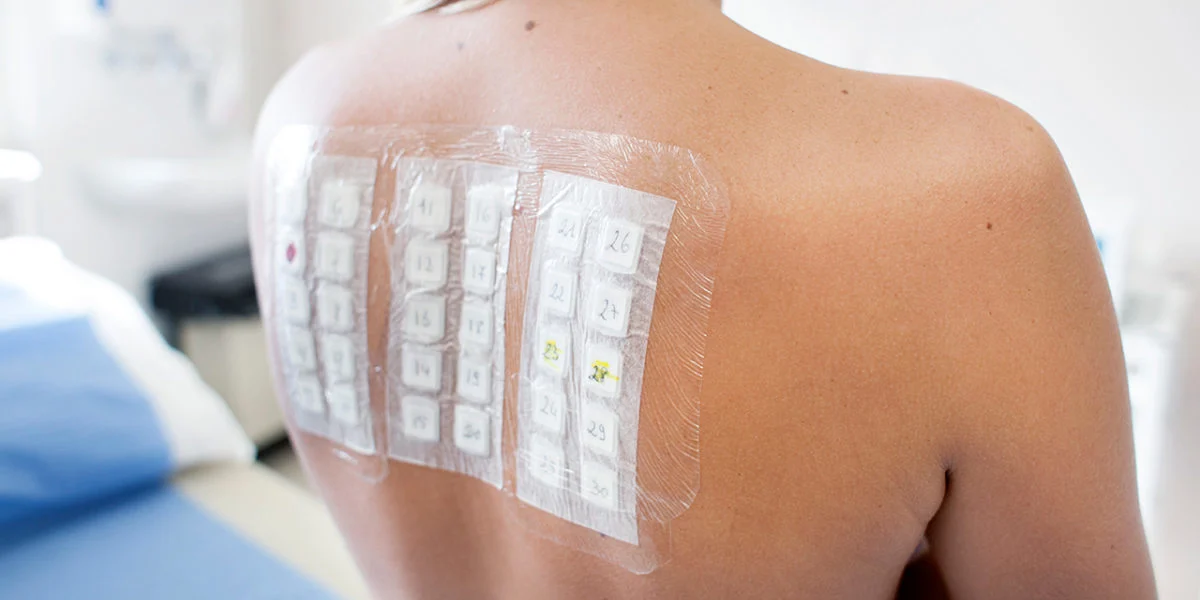
Metal allergy patch testing on patient's back - dermatology patch test for titanium and nickel sensitivity

Titanium allergy affects approximately 0.6% of the general population — rare, but worth knowing about.

While titanium is classified as hypoallergenic, it’s not literally impossible to be allergic to it. Published research estimates the prevalence of titanium sensitivity at about 0.6% among dental implant patients (Sicilia et al., 2008) — the general population rate remains undefined in the literature. In the United States, even a rough estimate would place hundreds of thousands of people with some degree of titanium sensitivity, but precise numbers are unavailable.

However, the context matters. Among patients who already have a known metal allergy history, the prevalence of titanium sensitivity rises significantly — one study found approximately 31% in that subgroup. For the general population without prior metal allergies, the risk is very low.

Titanium hypersensitivity, when it occurs, typically manifests as:

  • Local skin reactions (redness, rash) at the contact site
  • In rare cases with implants: unexplained pain or implant loosening
  • Delayed-type hypersensitivity (symptoms appear 48-72 hours after contact)

For food-contact applications, titanium allergy risk is substantially lower than for implants because food contact is transient (minutes to hours) versus permanent (years to decades). No documented cases of titanium food-contact allergy have been published in the peer-reviewed literature, though the absence of reports may reflect limited investigation rather than zero risk.

If you have a known nickel, cobalt, or chromium allergy and are concerned, a dermatologist can perform a titanium patch test before you invest in titanium cookware. For implant-related metal sensitivity specifically, MELISA (Memory Lymphocyte Immunostimulation Assay) is considered more reliable than standard patch testing.

From Hip Implants to Frying Pans: How 60 Years of Medical Use Validates Titanium’s Safety

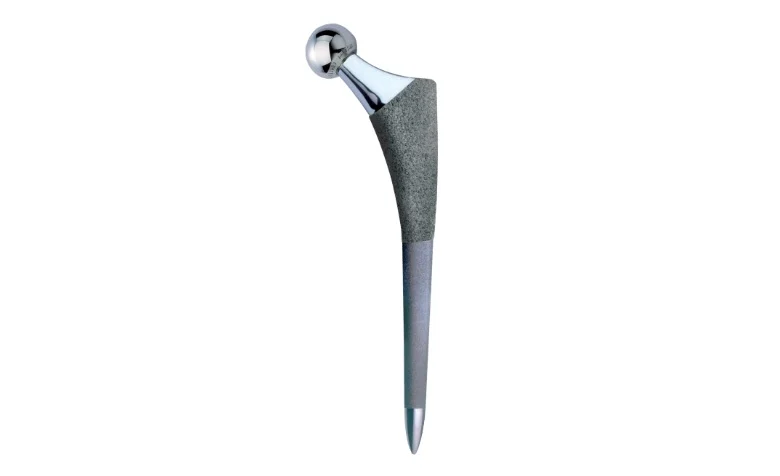
Titanium hip implant - orthopedic medical device made from titanium with 60+ years of clinical safety data

Titanium implants have a 97% survival rate at 3 years and 92% at 20 years — this clinical track record transfers directly to food-contact safety confidence.

Titanium’s use in medical implants began in the 1950s and was validated by Sir John Charnley’s pioneering work in total hip replacement (1962). By 1982, titanium hip stems demonstrated a 97% success rate. The data has only strengthened with time:

  • Dental implant survival: ~97% at 3 years, ~94% at 15 years, ~92% at 20 years (based on aggregated clinical data; individual studies vary)
  • Hip replacement 10-year survival: 95.6%
  • Hip replacement 25-year pooled survival: ~77%

These numbers are remarkable for any material that’s permanently embedded in the corrosive environment of the human body — warm, wet, acidic, and enzymatically active. If titanium can maintain structural integrity and biocompatibility for 20+ years inside a living body, the relatively mild conditions of cooking (brief exposure to food acids at 100-250°C) pose negligible challenge.

The FDA’s Material Safety Summaries reinforce this: for titanium devices, “the vast majority of patients have no adverse reactions.” The agency’s biocompatibility guidance notes that titanium and other bulk metals remain subject to full biocompatibility evaluation under ISO 10993 — but titanium devices consistently pass these evaluations, and the clinical evidence from millions of implant recipients worldwide is unambiguous.

This isn’t just theoretical confidence. It’s 60+ years of clinical evidence from millions of implant recipients worldwide, peer-reviewed and independently verified.

Which Grade of Titanium Should You Choose?

Titanium cookware certification and safety standards banner - FDA EU and GB food contact compliance

For food contact, Grade 2 CP titanium is the standard. Grade 5 is for medical/industrial use. Grade 1 is for applications where maximum ductility matters most.

Decision Matrix

申し込みRecommended Gradeスタンダードなぜ
Cookware (frying pans, pots)CPグレード2ASTM B265Best balance of strength, corrosion resistance, and formability
Water bottles, food storageCP Grade 1 or 2ASTM B265Grade 1’s extra ductility suits deep-drawn bottle shapes
Medical implants (dental, orthopedic)Grade 5 (Ti-6Al-4V) or Grade 23 (ELI)ASTM F136Higher strength for load-bearing applications
Camping/backpacking cookwareCP Grade 1 or 2ASTM B265Lightest weight per volume; Grade 1 for ultra-thin walls
Cutting boardsCPグレード2ASTM B265Hardness and scratch resistance
Premium home cookwareCP Grade 2 (multi-ply with stainless steel core)ASTM B265 + food-contact standardsCombines titanium food safety with stainless steel heat distribution

For B2B procurement: When sourcing titanium for food-contact applications, specify ASTM B265 Grade 2 with a certificate of analysis confirming chemical composition within the F67 limits. Request testing per GB 4806.9-2023 if selling into the Chinese market.

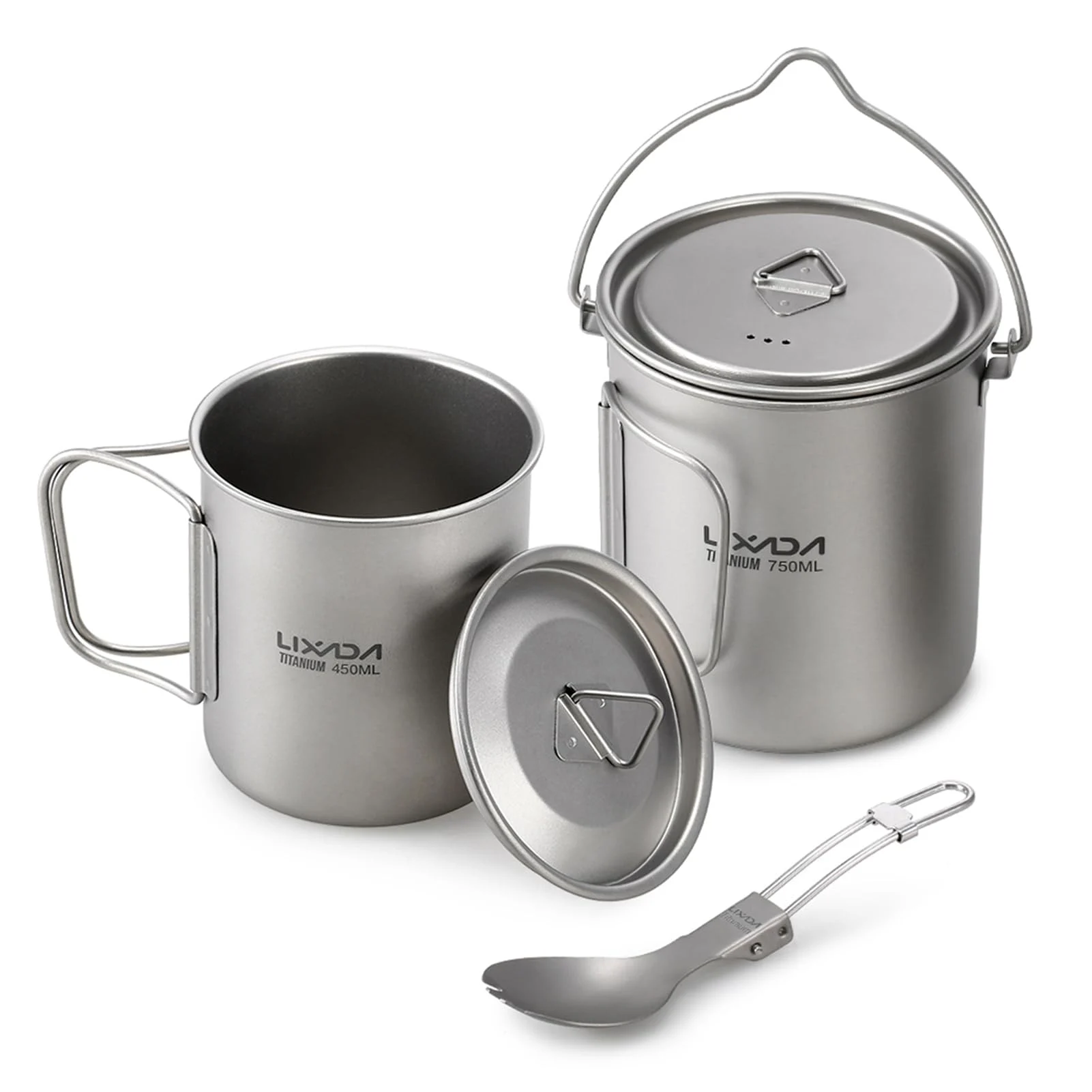
Titanium camping cookware set - lightweight pure titanium pots and pans for outdoor backpacking use

Safe Cookware Materials Compared: Titanium, Stainless Steel, Ceramic, and Cast Iron

Titanium vs stainless steel cookware side by side - food safety and performance comparison

Each material trades off safety, performance, and cost differently — there is no single “safest” material for all cooking situations.

プロパティTitanium (CP Grade 2)Stainless Steel (316)Ceramic-CoatedCast Iron
Metal leachingNear-zero (<0.01 ppm)Nickel up to 3.84 mg/kg; Chromium up to 0.6 mg/kgNone (when coating intact)Iron up to 50-600+ mg/kg in acidic food (varies by conditions)
PFAS/PTFE freeYes (pure titanium)はいはいはい
Reactivity with acidsNon-reactiveMay react with prolonged acidic cookingNon-reactiveReacts with acidic food
熱伝導率21.9 W/(m·K) at room temperature16 W/(m·K) (alloy); 400+ W/(m·K) with Al/Cu core1-2 W/(m·K) coating; depends on base~52 W/(m·K) (gray cast iron)
重量Lightest (~43% lighter than steel)中程度重いHeaviest
耐久性Extremely high (decades)High (decades)Moderate (1-3 years coating life)Extremely high (generations)
価格帯$20-500+ per piece$20-500$25-500+$20-300
Best forAcidic foods, camping, health-sensitive usersEveryday cooking, searing, saucesEggs, delicate foods, nonstick needsSlow cooking, baking, high-heat searing

The honest answer: For the absolute lowest metal leaching risk, titanium wins. For the best overall cooking performance in a home kitchen, stainless steel with an aluminum or copper core remains hard to beat. For nonstick convenience without PTFE, ceramic coating works well (with the understanding that it will need replacement). And for sheer durability and heat retention, 鋳鉄 is unmatched.

Many experienced cooks — myself included — use a combination: stainless steel for daily work, titanium for acidic cooking and outdoor use, and cast iron for slow-cooked dishes.

FAQ — Your Top Questions About Titanium Food Safety, Answered

Is titanium cookware safe for cooking?

Yes. Pure (CP) titanium cookware is one of the safest metallic cookware materials available. It is non-toxic, non-reactive, and releases negligible amounts of metal into food — less than 0.01 ppm, well below any toxicological concern. The FDA permits titanium in food-contact applications, and titanium has been used safely in medical implants for over 60 years.

What makes titanium biocompatible?

Titanium spontaneously forms a stable TiO₂ (titanium dioxide) oxide layer on its surface when exposed to air or water. This passive layer is chemically inert, prevents further oxidation of the underlying metal, and doesn’t react with biological tissues or food acids. The TiO₂ layer is stable across approximately pH 3 to 12 and is self-healing — it reforms immediately when the surface is scratched.

Is titanium safer than stainless steel for cooking?

Both are considered safe, but titanium has a measurable advantage. Stainless steel can leach nickel (up to 3.84 mg/kg after 20 hours of cooking in acidic food) and chromium (up to 0.6 mg/kg) — levels that are within single-meal regulatory limits but may concern people with metal sensitivity. Titanium leaches less than 0.01 ppm under comparable conditions.

Is grade 5 titanium food safe?

Grade 5 (Ti-6Al-4V) passes biocompatibility testing for medical implants, but it is not the standard choice for food-contact applications because it contains 6% aluminum and 4% vanadium. For food contact, CP Grade 2 titanium is recommended — it contains no intentional alloying elements and has the longest track record in food-contact use.

Does titanium leach into food?

At cooking temperatures and times, titanium leaching is negligible — less than 0.01 ppm (parts per million) into acidic cooking solutions. This is approximately 380 times lower than the nickel released by stainless steel under the same conditions (Kamerud et al., 2013). The passive TiO₂ oxide layer prevents meaningful metal transfer to food.

Are there any health concerns with titanium cookware?

There are no documented health risks associated with uncoated titanium cookware when used as intended. PTFE-coated titanium pans can pose health risks when overheated beyond approximately 260°C (500°F), as the PTFE coating releases fumes — the same concern that applies to all PTFE-based nonstick cookware.

What is the difference between pure titanium and titanium-coated cookware?

Pure titanium cookware is made from 99%+ CP titanium (Grade 1 or 2) with no coatings — the food-contact surface is titanium itself. Titanium-coated cookware typically has an aluminum or stainless steel base with a titanium-reinforced PTFE nonstick coating. The safety profile of titanium-coated cookware depends on the base metal and coating, not on titanium.

How long do titanium implants last?

Dental implants have a survival rate of approximately 97% at 3 years, 94% at 15 years, and 92% at 20 years. Hip replacements show 95.6% survival at 10 years and approximately 77% at 25 years. These figures represent the material’s long-term biocompatibility in the demanding environment of the human body.

Is titanium hypoallergenic?

Titanium is considered hypoallergenic — the prevalence of titanium sensitivity is approximately 0.6% among dental implant patients (Sicilia et al., 2008), though the general population rate is undefined. Among individuals with a known history of metal allergies, the rate may be higher (~31%, Hosoki et al. 2018). If you have a metal allergy history, a dermatologist can perform a titanium patch test before purchasing titanium cookware.

Can I use titanium cookware on induction cooktops?

Pure titanium is not magnetic and will not work on induction cooktops. However, titanium-clad or titanium-bonded cookware with a magnetic stainless steel base (like Hestan NanoBond, which uses a patented “Molecular Titanium” surface technology on stainless steel) is induction-compatible. Check for “induction compatible” or a magnetic base specification before purchasing.

Conclusion: Should You Trust Titanium for Food Contact?

Titanium’s safety record — validated by 60+ years of medical implant use, supported by leaching data orders of magnitude below stainless steel, and recognized by FDA, EU, and Chinese regulatory frameworks — makes it one of the most trustworthy food-contact metals available.

Titanium cookware being used on stovetop - practical food safety in everyday cooking application

But trust shouldn’t be blind. Here’s what I’d want you to take away from this guide:

The science is clear. CP Grade 2 titanium leaches less than 0.01 ppm into acidic food. Stainless steel leaches up to 3.84 mg/kg of nickel under the same conditions. The difference is not subtle — it’s three orders of magnitude.

The standards are real. Titanium is covered under multiple regulatory frameworks: TiO₂ is an FDA-authorized color additive (21 CFR 73.575), metallic titanium for food contact falls under EU Regulation 1935/2004, and China’s GB 4806.9-2023 explicitly covers titanium food-contact materials. There is no single “food grade titanium” certificate, but there is no regulatory gap either.

The caveat is marketing. Not all “titanium cookware” is pure titanium. Some is titanium-coated aluminum. Some is titanium-reinforced PTFE. Read the specifications, look for “CP titanium” or “Grade 2” in the product details, and be skeptical of claims that seem too good to be true.

The practical recommendation: If you’re shopping for the safest possible cookware — especially for acidic food preparation, or if you have metal sensitivity concerns — pure titanium (CP Grade 2) is an excellent choice. It won’t win any prizes for heat distribution, and it costs more than stainless steel, but its food-safety profile is unmatched by any other common cookware metal.

For everyday cooking, stainless steel with an aluminum or copper core remains the practical workhorse. For nonstick convenience, ceramic coating is a solid PFAS-free option. And for the health-conscious shopper who wants absolute peace of mind about what’s leaching into their food, titanium is as good as it gets.

こんにちは、ウェインです。チタン加工、溶接、CNC機械加工を専門とする工場で10年以上働いた経験から、未加工のチタンをプレミアム・アウトドア・ギアに仕上げるために何が必要かを熟知しています。私は、専門家が材料の性能と製造の限界を理解するのを助けるために、透明でエンジニアリングに裏打ちされたコンテンツを書いています。チタンが実際にどのように加工され、より良い製品を設計する方法を知りたいのであれば、あなたは正しい場所にいます。.

人気商品
ソース・プレミアム・チタニウム・ギア

信頼できる製造パートナーをお探しですか?私たちは、アウトドアブランドのための直接工場卸売、柔軟なMOQ、および包括的なOEM / ODMサービスを提供しています。.

お問い合わせ

お客様の調達ニーズについてお聞かせください。セールスエンジニアが12時間以内にお返事いたします。.