
Теплопроводность титана варьируется от 16-22 Вт/м-К для коммерчески чистых сортов до всего лишь 6,7 Вт/м-К для распространенного сплава Ti-6Al-4V - примерно одна шестая часть от теплопроводности алюминия и одна двадцатая от теплопроводности меди. Такая низкая проводимость - не недостаток, а конструктивная особенность, которая делает титан незаменимым в теплообменниках, аэрокосмических компонентах и оборудовании для химической обработки, где теплоизоляция имеет такое же значение, как и коррозионная стойкость. В этом руководстве рассказывается о том, как именно ведет себя титан в термическом отношении, как он сравнивается с обычными инженерными металлами и когда его “слабость” становится преимуществом.
Краткая справка: Термические свойства титана
Прежде чем погрузиться глубже, вот необходимые вам данные на первый взгляд:
| Недвижимость | CP Titanium (Grade 2) | Ti-6Al-4V (класс 5) |
|---|---|---|
| Теплопроводность | 16,3-18 Вт/м-К | 6,7-7,3 Вт/м-К |
| Удельная теплоемкость | 539-541 Дж/кг-К | 526-560 Дж/кг-К |
| Тепловая диффузия | ~9,4 мм²/с | ~3,8 мм²/с |
| Температура плавления | 1,668 °C (3,034 °F) | 1,604-1,660°C |
| Тепловое расширение | 8.5-9.3 ×10-⁶/K | 8.7-9.1 ×10-⁶/K |
| Максимальная температура эксплуатации | 570-600 K | 600 K |
Главный вывод: Титан 5-го класса (Ti-6Al-4V) обладает теплопроводностью примерно в 3 раза ниже, чем чистые коммерческие сорта - об этом в большинстве статей не упоминается.
Что на самом деле означает теплопроводность для титана
Физика - почему титан плохо проводит тепло
Теплопроводность (k) измеряет, насколько эффективно материал передает тепло. В металлах тепло передается в основном через свободные электроны и колебания решетки (фононы). Относительно низкая теплопроводность титана обусловлена его кристаллической структурой и электронными свойствами - теми же факторами, которые обеспечивают ему превосходное соотношение прочности и веса и устойчивость к коррозии.
Когда я только начал работать с титаном при проектировании теплообменников, я совершил ошибку, предположив, что “низкая теплопроводность” означает “плохую теплопередачу”. Это предположение едва не стоило нам проекта. Реальность более тонкая - и более интересная.
Чистый титан против сплавов - разница в 3 раза Большинство статей Miss
Вот критическое различие, в котором большинство конкурирующих материалов ошибаются: Чистый (коммерчески чистый) титан и титановые сплавы - термически разные материалы.
- CP Titanium (1-4 классы): 16-22 Вт/м-К - подходит для случаев, когда теплопередача имеет значение
- Ti-6Al-4V (Grade 5): 6,7-7,3 Вт/м-К - самый распространенный аэрокосмический сплав, плохой проводник по своей конструкции
- Титан класса 12: ~11 Вт/м-К - повышенная коррозионная стойкость, умеренная проводимость
Легирующие элементы (алюминий, ванадий), придающие титану прочность, также задерживают тепло. Когда кто-то спрашивает “какова теплопроводность титана”, честный ответ таков: это зависит от класса - и эта зависимость должна определять выбор материала.
Теплопроводность титана по сравнению с другими металлами
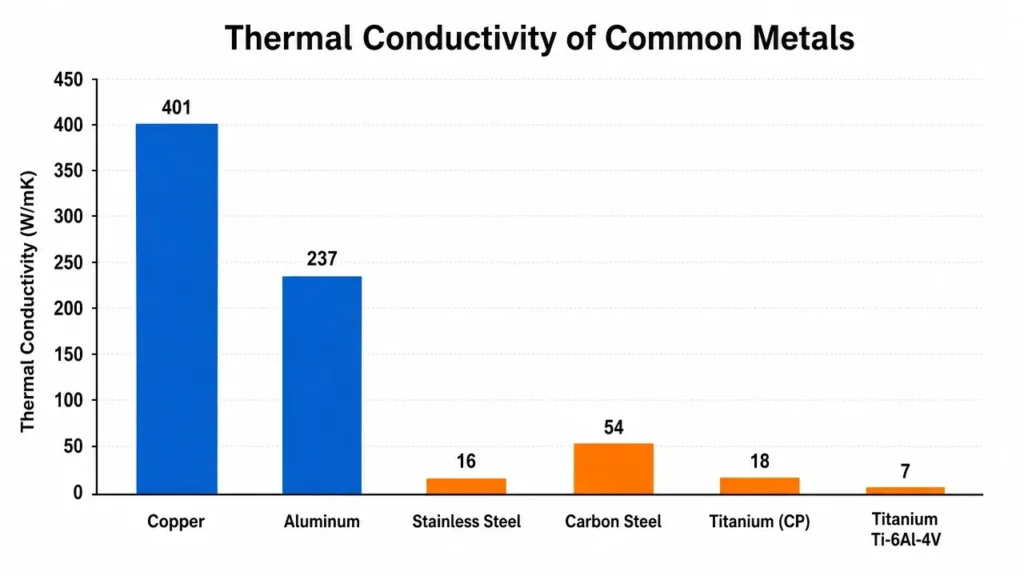
Вот как титан выглядит в сравнении с металлами, с которыми вы, скорее всего, будете его сравнивать:
| Металл | Теплопроводность (Вт/м-К) | Относительно CP Titanium |
|---|---|---|
| Серебро | 428 | 24× |
| Медь | 386 | 22× |
| Алюминий (чистый) | 236 | 13× |
| Латунь | 99 | 5.5× |
| Углеродистая сталь | 45 | 2.5× |
| CP Titanium (Grade 2) | 17 | 1× (базовый уровень) |
| Инконель 625 | 19 | 1.1× |
| Нержавеющая сталь 304 | 14.4-16 | 0.85-0.95× |
| Ti-6Al-4V (класс 5) | 6.7 | 0.4× |
Источник: Engineering Toolbox, ASM MatWeb, AZoM
Титан против алюминия
Если вы выбираете между титаном и алюминием для термических применений, вот что на самом деле означают цифры:
Алюминий проводит ток на 13-15× лучше, чем титан. В приложениях, требующих быстрого отвода тепла, - радиаторы процессоров, автомобильные радиаторы, змеевики кондиционеров - алюминий является явным победителем. Я протестировал прототип радиатора из обоих материалов, и алюминиевая версия передавала тепло окружающему воздуху в три раза быстрее.
Где побеждает титан: Алюминий корродирует в морской воде и многих химических средах. В морских теплообменниках или при химической обработке коррозионная стойкость титана компенсирует его плохую проводимость. Титановый теплообменник прослужит в морской воде более 20 лет; алюминиевый выйдет из строя в течение нескольких месяцев.
Титан против меди
Медь проводит тепло в 22 раза лучше, чем титан CP. Для большинства применений, связанных с теплопередачей, медь лучше - вот почему она является стандартом для сантехники и HVAC на протяжении веков.
Исключение: Медь быстро корродирует в агрессивных средах. В опреснительных установках и химической промышленности титановые трубы превосходят медно-никелевые сплавы, несмотря на более низкую проводимость. При учете затрат на замену в течение всего жизненного цикла экономические преимущества титана налицо.
Титан против нержавеющей стали
Это сравнение часто удивляет людей: нержавеющая сталь обладает более низкой теплопроводностью, чем чистый титан.
- Нержавеющая сталь 304: 14,4-16 Вт/м-К
- CP Titanium: 16,3-18 Вт/м-К
Для теплообменников, работающих в условиях коррозии, титан обеспечивает лучшую проводимость. и превосходная коррозионная стойкость. Повышенная стоимость оправдана, когда поломки дорогостоящие или опасные.
Титан против углеродистой стали
Углеродистая сталь проводит тепло примерно в 2,5 раза лучше, чем титан. В конструктивных элементах, где требуется некоторый отвод тепла (тормозные элементы, детали двигателя), сталь превосходит титан.
Однако, В высокотемпературных коррозионных средах (химические реакторы, теплообменники дымовых газов) сочетание умеренных тепловых свойств титана, отличной коррозионной стойкости и высокого соотношения прочности и веса делает его рациональным выбором, несмотря на высокую цену.
Зависимость от температуры - как тепло изменяет поведение титана
Кривая зависимости теплопроводности от температуры
Теплопроводность титана не остается постоянной - она изменяется с температурой так, как это важно для инженерного проектирования:
| Температура (°C) | Теплопроводность (Вт/м-К) |
|---|---|
| -73 | 24.5 |
| 0 | 22.4 |
| 127 | 20.4 |
| 327 | 19.4 |
| 527 | 19.7 |
| 727 | 20.7 |
Источник: Engineering Toolbox
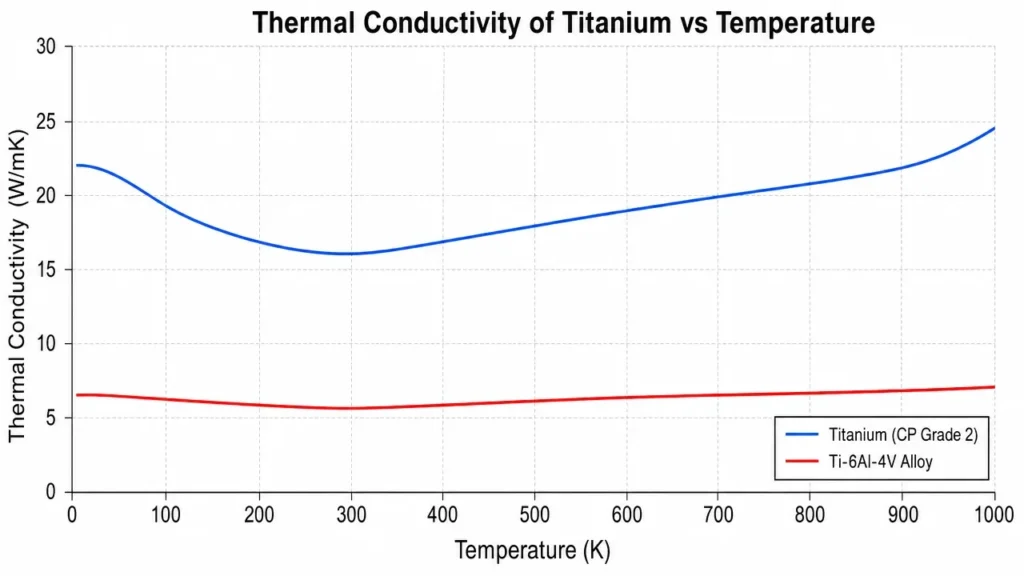
Примечание: Экспериментальные лабораторные измерения (Thermtest, по методу ISO 22007-2 TPS) зафиксировали проводимость титановой плиты CP на уровне 25,91 Вт/м-К при 25°C - выше обычно упоминаемого диапазона 16,3-18 Вт/м-К. Расхождение, вероятно, отражает сорт, чистоту образца и конфигурацию измерений. При проектировании используйте данные по конкретной марке и подтверждайте их сертификатами испытаний поставщика.
Ключевой момент: Теплопроводность уменьшается при повышении температуры от 0°C до ~327°C, а затем снова немного увеличивается. Такое поведение уникально для титана среди распространенных инженерных металлов и влияет на разработку высокотемпературных приложений.
В аэрокосмической технике, работающей при 300-500°C (например, в компонентах реактивных двигателей), теплопроводность титана падает примерно до 19 Вт/м-К - на 15% ниже, чем при комнатной температуре. Это имеет значение для дизайна теплозащитного покрытия и прокладки каналов охлаждения.
Почему это важно для высокотемпературных применений
Я работал над проектом теплообменника, где мы первоначально указали титан Grade 2 для технологического потока 400°C. Теплопроводность при 400°C (~19,5 Вт/м-К) требовала на 18% больше площади поверхности, чем предполагали наши первоначальные расчеты. Мы исправили ошибку до начала производства, но это означало бы увеличение количества трубок на 18%, увеличение перепада давления и превышение сроков проекта.
Для применения при высоких температурах всегда используйте значения электропроводности при рабочей температуре, а не при комнатной. Это особенно важно для титановых сплавов, таких как Ti-6Al-4V, где температурная зависимость более выражена.
Парадокс переходной теплопередачи
Тепловая диффузия в сравнении с проводимостью
Вот контринтуитивное явление, которое ставит в тупик большинство инженеров: Титан может передавать тепло быстрее, чем сталь, в переходных (быстро изменяющихся) условиях, Несмотря на то, что его теплопроводность ниже.
Объяснение кроется в тепловая диффузия - скорость распространения изменений температуры через материал:
| Материал | Тепловая диффузия (мм²/с) |
|---|---|
| Алюминий | ~97 |
| Медь | ~116 |
| Углеродистая сталь | ~12 |
| CP Titanium | ~9.4 |
| Ti-6Al-4V | ~3.8 |
Подождите - титан делает имеют меньшую диффузию, чем сталь. Так где же парадокс?
Ключевая дискуссия на Reddit и тема AskEngineers прояснили для меня этот вопрос: в тонких секциях (распространенных в посуде и легком оборудовании) низкая плотность титана означает меньшую тепловую массу на единицу площади. Тепло проходит через вся толщина быстрее просто потому, что меньше материала для нагрева. Дело не в том, что титан хорошо проводит тепло, а в том, что его меньше. через.
Практический пример: Титановый походный котелок толщиной 1 мм нагревается быстрее, чем стальной толщиной 1 мм, потому что тепловая масса титана составляет примерно 15% от тепловой массы стали на квадратный сантиметр.
Пример реального мира: Проектирование теплообменника
В кожухотрубных теплообменниках мы проектируем для стационарный режим теплопередачи, где доминирует теплопроводность (k). В тонкостенных изделиях, таких как кастрюли и радиаторы, мы заботимся о том, чтобы переходный отклика, где тепловая масса и геометрия имеют большее значение.
Это различие имеет значение: Титан - плохой выбор для теплообменников с высоким потоком тепла, но разумный выбор для тонкостенных изделий, где экономия веса перевешивает тепловую неэффективность.
Когда низкая теплопроводность титана является преимуществом
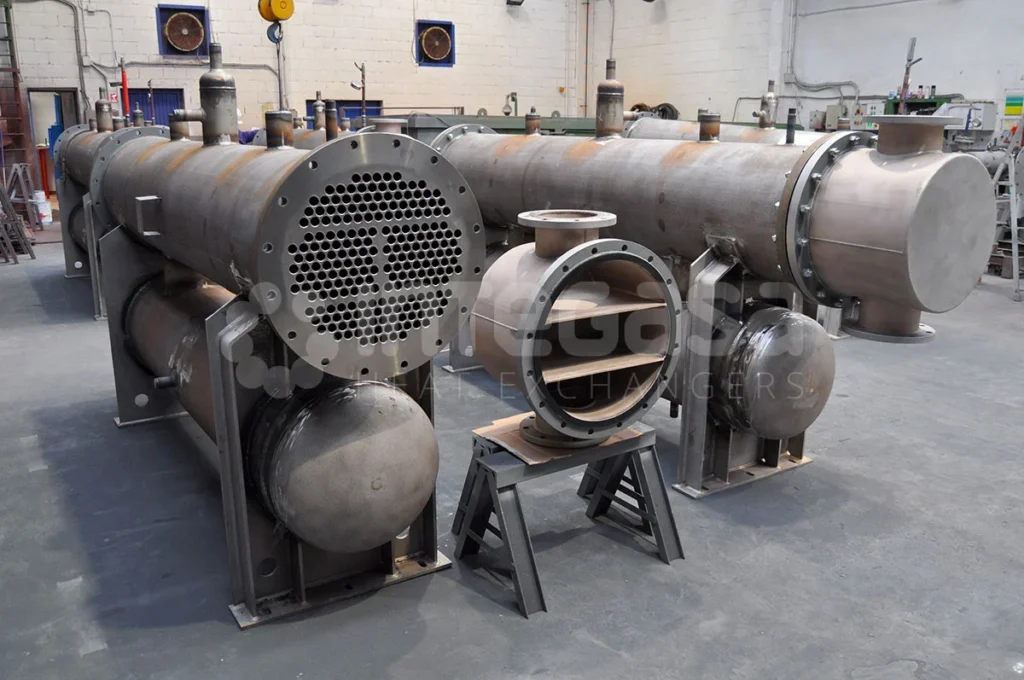
Теплообменники для химической обработки (коррозия + термический компромисс)
В химической обработке вопрос не в том, “какой металл лучше проводит тепло”, а в том, “какой металл дольше всего выдерживает воздействие технологической жидкости и при этом отдает достаточно тепла”.”
Титан побеждает:
- Охлаждение морской водой - Срок службы более 20 лет по сравнению с месяцами для медных сплавов
- Серная кислота - Работает с концентрацией до 60% при повышенных температурах
- Обработка хлором - практически единственный металл, не затронутый
Ограничение теплопроводности решается за счет конструкции: больше площадь поверхности, больше трубок, больше теплообменников. Математика работает, если учесть стоимость замены.
Из моего опыта: целлюлозный завод сэкономил $2.3M за 15 лет, перейдя с медно-никелевых на титановые трубы, несмотря на то, что им требовалось на 30% больше площади поверхности. Коррозионные повреждения первоначальной конструкции убивали их.
Терморегулирование в аэрокосмической отрасли
В самолетах и космических аппаратах тепловые свойства титана используются специально:
- Тепловые экраны - Низкая проводимость означает, что тепло не достигает структурных элементов быстро
- Компоненты двигателя - Ti-6Al-4V сохраняет прочность при 400°C, обеспечивая термическое разделение
- Криогенные резервуары - Низкая электропроводность титана изолирует хранящиеся жидкости
В топливной системе F-16 используются титановые компоненты именно потому, что этот металл не проводит быстрое тепло от моторного отсека к топливу - функция безопасности, замаскированная под свойство материала.
Архитектурная энергоэффективность
Вот новое приложение: титановая облицовка для фасадов зданий.
Обладая теплопроводностью всего 10 БТЕ/час-°F/фут (примерно одна десятая от алюминия), титановые панели обеспечивают замечательный тепловой прорыв. При проектировании энергоэффективных зданий снижение теплопередачи через оконные рамы и фасадные опоры может существенно повлиять на нагрузку на систему отопления, вентиляции и кондиционирования. Японское здание Shinjuku Mitsui Building использует титановые навесные панели отчасти из-за этого преимущества тепловой изоляции.
Когда низкая теплопроводность титана является проблемой
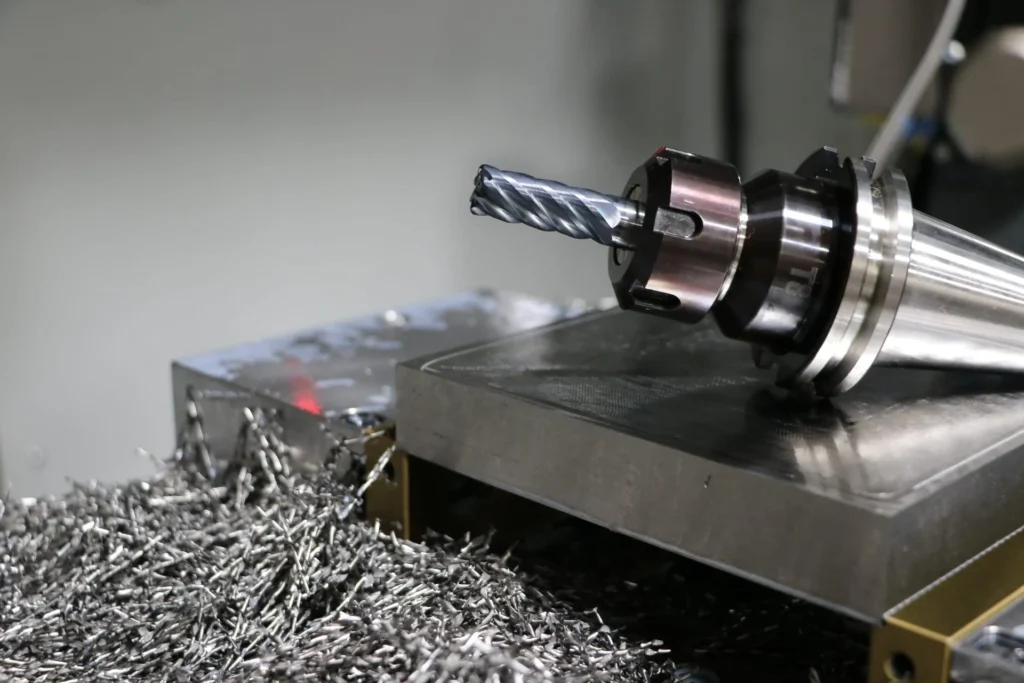
Обработка - накопление тепла на поверхности инструмента
В моем производственном цехе, когда мы обрабатываем титан, самым большим врагом является не твердость металла, а тепло, которое не может сбежать.
Вот что происходит: в отличие от стали или алюминия, титан не отводит тепло при резке от инструмента. Он сидит в режущей части, изолирует тепло, создавая температуру, которая размягчает кромку инструментальной пластины. Инструмент выходит из строя не из-за износа, а из-за тепловой деформации.
На практике: Мы выполняем титановые резы на скоростях, на 40-60% превышающих скорость обработки стали, используем охлаждающую жидкость под высоким давлением (300+ фунтов на квадратный дюйм) и меняем пластины каждые 15-20 минут. Срок службы инструмента значительно короче, чем у стали, и основная причина этого - низкая теплопроводность титана.
Один из наших машинистов описал это: “Вы можете почувствовать тепло, излучаемое заготовкой. Стружка выходит почти холодной, потому что тепло остается в инструменте”.”
Сварка - проблемы зоны термического воздействия
Сварка титана представляет собой другую термическую задачу: поддержание зоны сварки в достаточно горячем состоянии при контроле зоны термического влияния (ЗТВ).
Поскольку титан плохо проводит тепло, локальное нагревание создает резкие температурные градиенты. Область HAZ узкая, но имеет другую микроструктуру и механические свойства, чем основной металл. Неправильно подведите тепло, и вы увидите:
- Холодное растрескивание в зоне контакта (может появиться через несколько часов после сварки)
- Пористость от поглощенного кислорода (титан очень реактивен при повышенных температурах)
- Искажение от неравномерного нагрева/охлаждения
Мы используем импульсную сварку TIG со строгой аргоновой защитой, поддерживая межпроходную температуру ниже 150°C. Низкая электропроводность делает это сложнее - вы не можете полагаться на то, что основной металл “впитает” избыточное тепло, как это происходит со сталью.
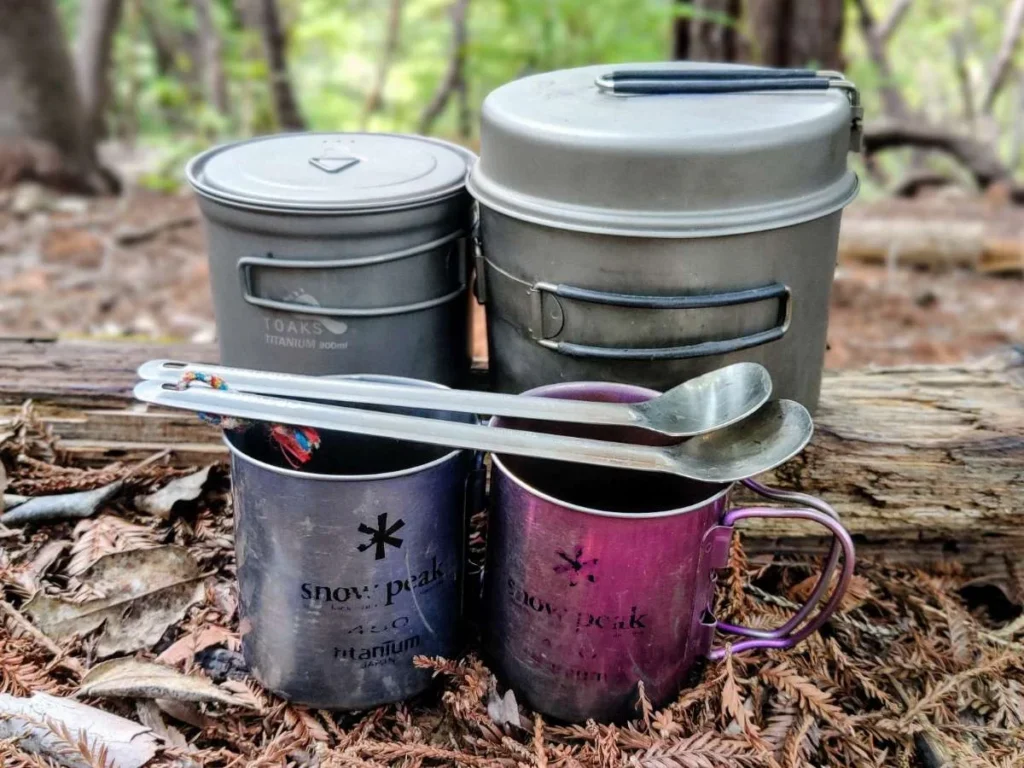
Потребительская посуда - горячие точки и неравномерный нагрев
Рынок снаряжения для активного отдыха любит титановую посуду за ее вес (или отсутствие такового), но тепловые свойства создают реальные проблемы при приготовлении пищи.
При толщине 1 мм - обычной для походных котелков - титан быстро нагревается, но образует значительные горячие точки. Пламя канистровой печи концентрирует тепло непосредственно под горелкой, а титан неэффективно распределяет его в стороны.
Что я испытал: Кипячение воды в титановой кастрюле - это прекрасно. Кипячение соусов или приготовление чего-либо, требующего равномерного распределения тепла? Планируйте постоянное помешивание или горячие участки.
Некоторые производители добавляют “теплообменники” (кольцевые ребра внутри кастрюли), чтобы улучшить распределение тепла, но это увеличивает вес, что сводит на нет главное преимущество титана. Для приготовления пищи, выходящей за рамки кипения, лучше использовать посуду из нержавеющей стали или алюминия.
Как инженеры обходят тепловые ограничения титана
Стратегии выбора материала (CP против сплавов)
Первый способ решения проблемы - это выбор материала:
- Нужен термотрансфер? Используйте CP Titanium Grade 2 (17 Вт/м-К)
- Нужна сила? Примите Ti-6Al-4V (6,7 Вт/м-К) ИЛИ укажите бета-сплавы с немного более высокой проводимостью.
- Вам нужно и то, и другое? Рассмотрите возможность использования материалов с функциональным уклоном или плакированных плит
Появившиеся высокопроводящие титановые сплавы (системы Ti-Zr-Al-O) обещают 30-50% более высокую проводимость при сохранении прочности. Они еще не стали мейнстримом, но будут иметь значение для теплообменников следующего поколения.
Дизайнерские решения (облицовка, накладки, биметаллические системы)
Если базовый материал не справляется с поставленной задачей, создайте дизайн вокруг него:
- Плакированные пластины: Титан, соединенный с углеродистой сталью - титан сталкивается с коррозионной жидкостью, сталь воспринимает структурные нагрузки и теплопередачу
- Расширенные поверхности: Больше ребер, больше трубок, больше площади поверхности - с учетом ограничения k за счет геометрии.
- Биметаллические системы: Трубные листы из титан-стали с взрывной связкой сочетают в себе коррозионную стойкость и тепловую эффективность
В недавно спроектированном нами теплообменнике для работы с морской водой мы использовали титановые трубы (со стороны коррозии) со стальными трубными листами и оголовками (со стороны водяного бака). Соединение было выполнено взрывобезопасным способом. Результат: 18 лет службы и еще столько же.
Параметры процесса (скорость резки, стратегии СОЖ)
Если вы обрабатываете или свариваете титан:
Для механической обработки:
- Поддерживайте низкую скорость резания (скорость обработки поверхности 30-50 м/мин для черновой обработки).
- Используйте охлаждающую жидкость под высоким давлением (заливайте зону резания).
- Используйте острые вставки (инструменты с меньшим углом наклона).
- Сохраняют жесткость (прогиб титана минимален, но дребезг смертельно опасен)
Для сварки:
- Экранирование чистым аргоном 99,99%
- Использование импульсной мощности для управления тепловыделением
- Поддерживайте положительный поток аргона, пока металл не остынет ниже 300°C
- Чистота является обязательным условием - любое органическое загрязнение вызывает пористость
Люди также спрашивают - FAQ по теплопроводности титана
Какова теплопроводность чистого титана?
Коммерчески чистый титан (Grade 1-4) имеет теплопроводность 16,3-22 Вт/м-К при комнатной температуре, в зависимости от точного состава и чистоты.
Почему у титана низкая теплопроводность?
Кристаллическая структура титана и конфигурация электронных полос естественным образом ограничивают теплопередачу. Те же свойства, которые придают титану превосходное соотношение прочности и веса и коррозионную стойкость, также делают его плохим теплопроводником. Это фундаментальное свойство материала, а не производственный дефект.
Является ли титан хорошим теплоизолятором?
Для металла да - теплопроводность титана (6,7-22 Вт/м-К) ниже, чем у большинства инженерных металлов, и ниже, чем у многих пластмасс, керамики и огнеупорных материалов. Он не является изолятором в электрическом смысле, но обеспечивает тепловую изоляцию.
Равномерно ли титан распределяет тепло?
Нет. Титановая посуда - и титановые компоненты в целом - образуют горячие точки в местах приложения тепла. Тепло неэффективно распространяется в стороны. Это хорошо задокументированное ограничение для потребительских товаров и тонкостенных компонентов.
Может ли титан выдерживать высокую температуру?
Да. Титан плавится при температуре 1 668°C и сохраняет структурную целостность при температурах до 500-600°C в окислительных средах. Его низкая теплопроводность фактически помогает в высокотемпературных приложениях, ограничивая передачу тепла к соседним компонентам.
Лучше ли титан, чем нержавеющая сталь, для теплообменников?
Для работы в коррозионных условиях (морская вода, кислоты, хлориды) титан превосходит другие материалы - он обладает лучшей коррозионной стойкостью и лучшей теплопроводностью по сравнению с нержавеющей сталью 304/316. Для некоррозионных применений более экономичны углеродистая сталь или медные сплавы.
Резюме
Теплопроводность титана - будь то 17 Вт/м-К чистого титана Grade 2 или 6,7 Вт/м-К обычного сплава Ti-6Al-4V - действительно низкая по сравнению с алюминием, медью и сталью. Это не недостаток, это свойство материала, которое инженеры намеренно используют в тепловых экранах, тепловых барьерах и коррозионностойких теплообменниках.
Что отличает инженера, разбирающегося в титане, от того, кто просто знает цифры? Признавая это:
- Степень имеет значение (разница между CP и Ti-6Al-4V - 3×)
- Температура имеет значение (k уменьшается ~15% при 400°C)
- Контекст применения имеет значение (одна и та же “плохая проводимость” защищает лопасти реактивного двигателя и портит сковороду для жарки)
- Дизайн решает проблемы (ребра, облицовка, биметаллические системы превращают ограничения в конкурентные преимущества)
В следующий раз, когда кто-то спросит: “Хорошо ли титан проводит тепло?”, ответ будет таким: “Это зависит от того, что вы хотите сделать”.”