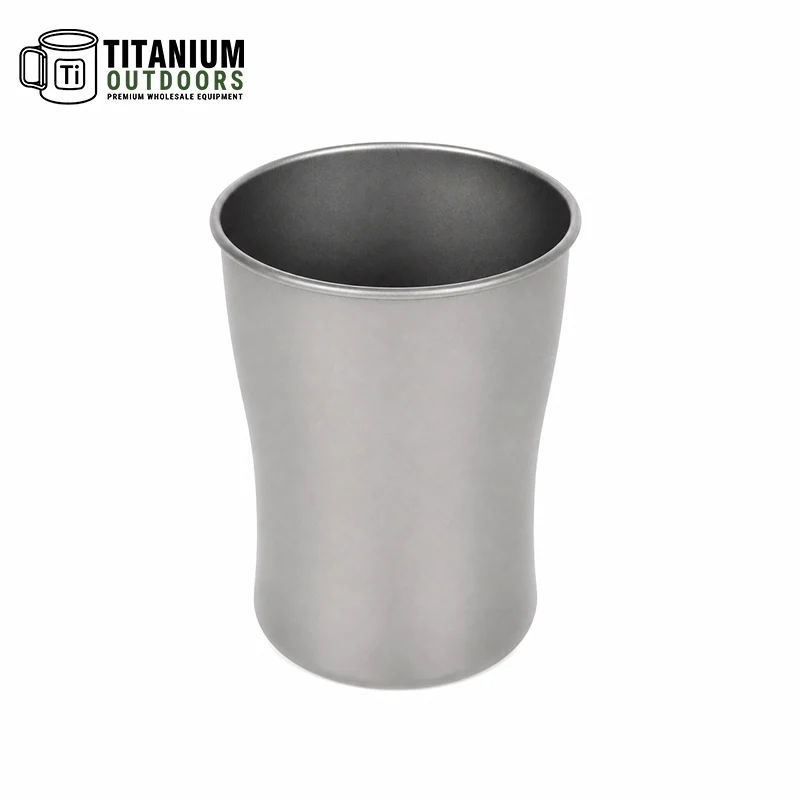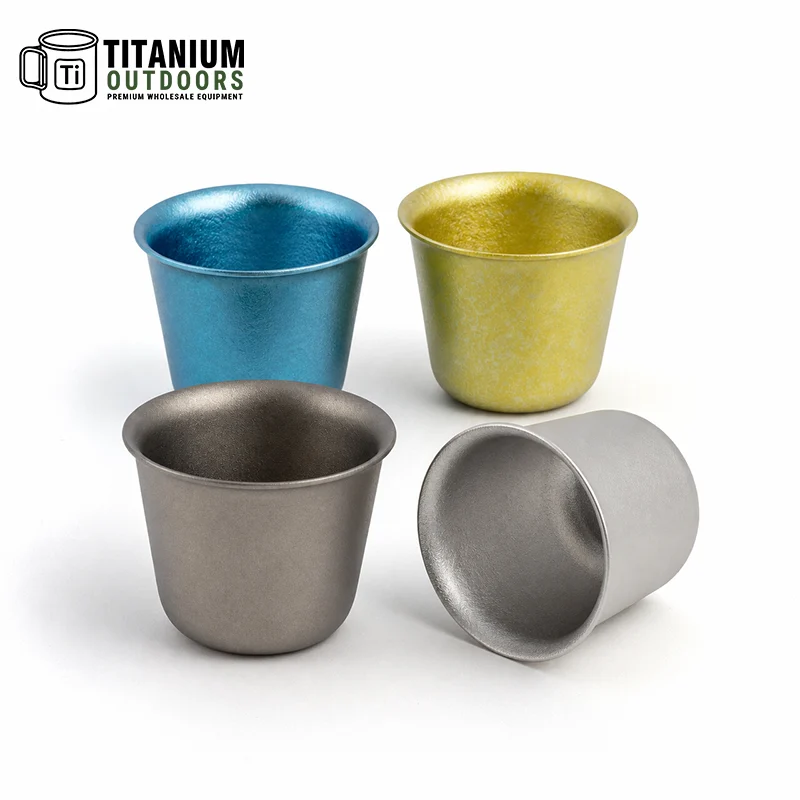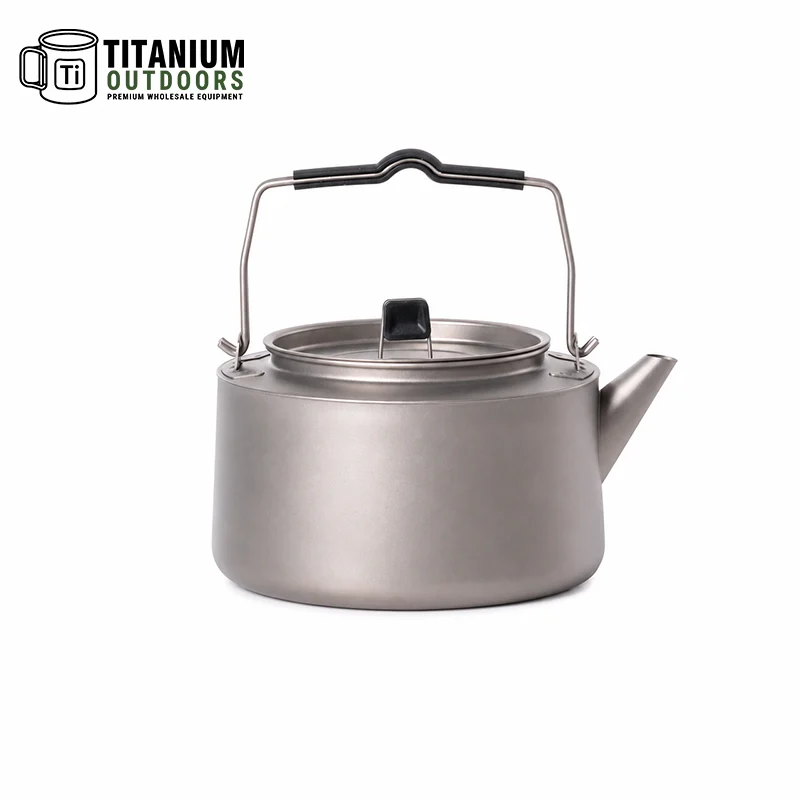

Титановая посуда требует иного ухода, чем традиционные материалы, благодаря самообразующемуся оксидному слою TiO2. Для ежедневной очистки используется теплая вода и мягкое мыло - никаких жестких моющих средств не требуется. Для удаления нагара используйте кипящую воду с пищевой содой - это проверенный на Reddit способ #1. Радужное окрашивание - это нормально. В отличие от чугуна, приправа не обязательна. Всестороннее сравнение показывает, что титан служит более 10 лет при минимальном уходе, а затраты на чистящие средства составляют менее $20 в год.
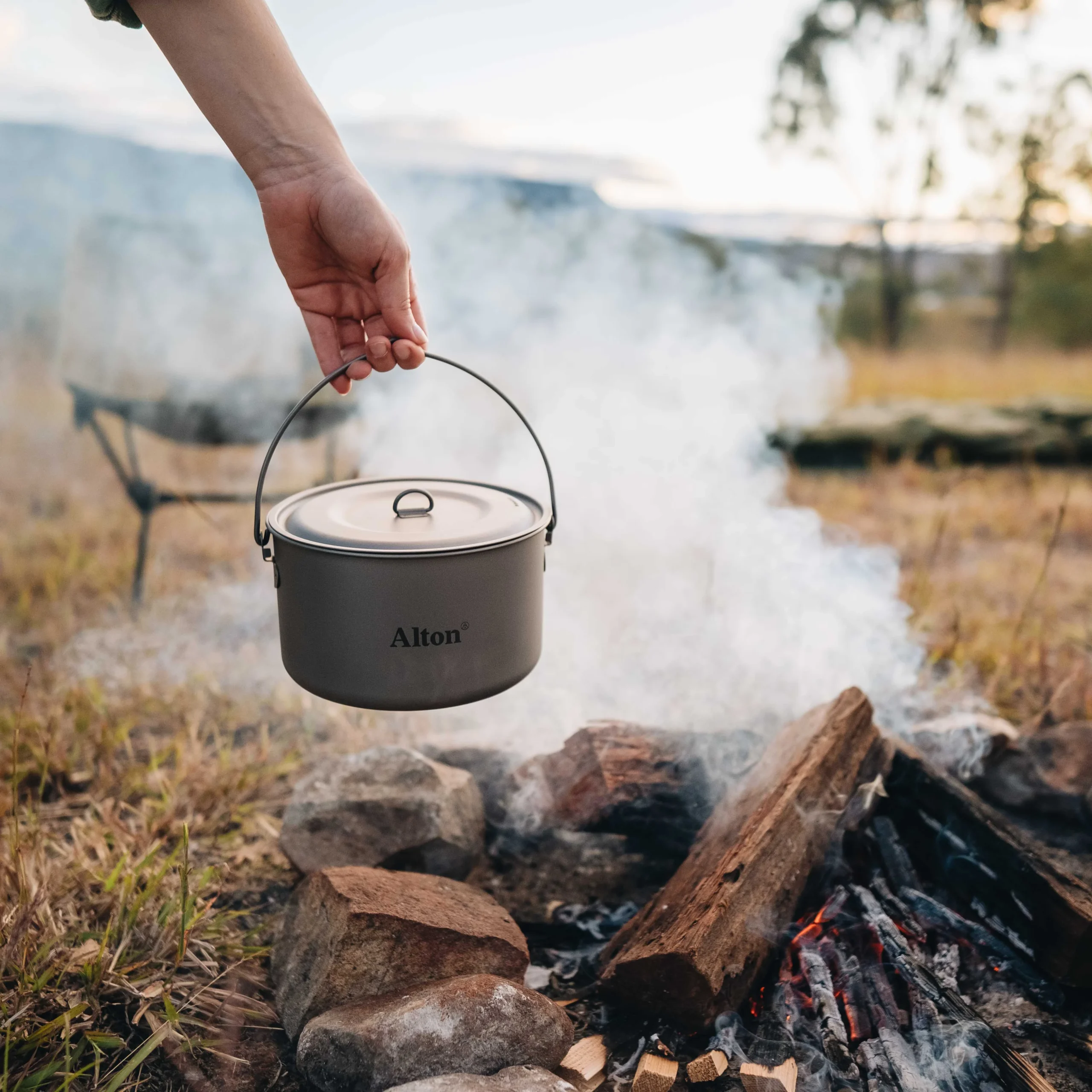
Чем отличается титан - и почему это меняет способ его очистки
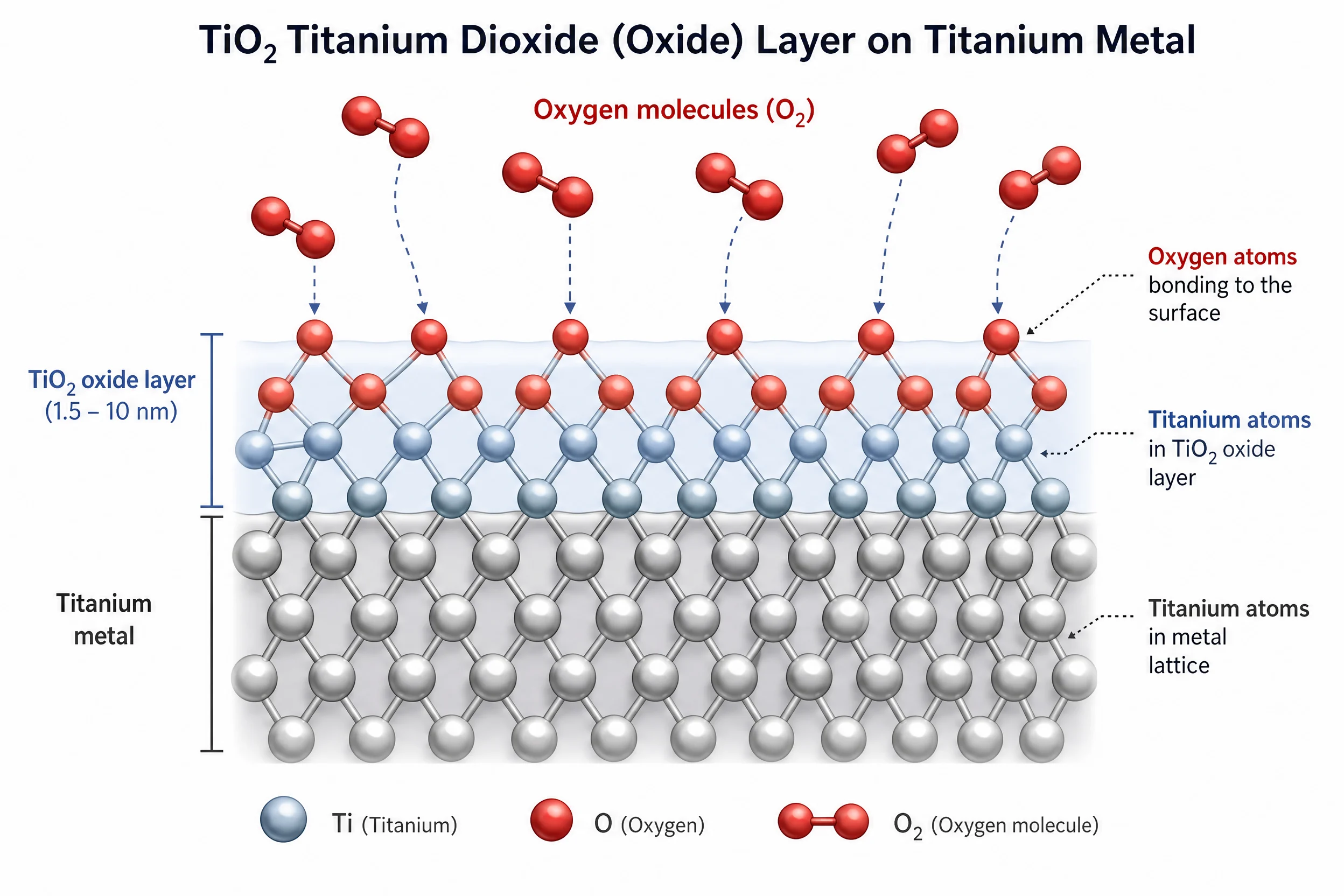
При контакте с кислородом титан образует на своей поверхности тонкий слой диоксида титана (TiO2). Это не покрытие, которое может сойти, - это меняется сам металл, и при повреждении он самовосстанавливается. Я убедился в этом на собственном опыте: во время поездки мой котелок Snow Peak поцарапался металлической ложкой, и через несколько недель царапина исчезла, поскольку оксидный слой образовался заново.
Это меняет все представления о том, как ухаживать за титаном. В отличие от нержавеющей стали, коррозионная стойкость которой обеспечивается оксидом хрома, слой TiO2 титана биологически инертен - это тот же материал, который используется в хирургических имплантатах и стоматологических приспособлениях с 1940-х годов (см.Исследование PMC о безопасности TiO2). Это означает, что вам не нужно беспокоиться о вымывании металлов в пищу. Испытания показали, что титан выделяет примерно 0,0087 промилле в растворы для приготовления пищи - один из самых низких показателей среди всех протестированных металлов, согласно исследованию Сиантури и др. от 2020 года, которое цитирует Valtcan.
Но есть и компромисс. Теплопроводность титана составляет 21,9 Вт/м-К, что значительно ниже, чем у меди (401 Вт/м-К) или алюминия (237 Вт/м-К). Именно поэтому титановая посуда нагревается неравномерно, а пища в ней пригорает легче, чем в традиционных кастрюлях. Знание этого факта поможет вам скорректировать свою технику: более низкие настройки нагрева и немного больше масла помогут изменить ситуацию.
Слой оксида TiO2 также объясняет, почему титан со временем приобретает такие радужные цвета. Когда слой достигает определенной толщины (обычно от 1,5 до 10 нанометров), световые волны, отражаясь от поверхности, интерферируют друг с другом. Это называется тонкопленочной интерференцией - то же явление, которое создает цвета на мыльных пузырях и нефтяных пятнах.
Ваш первый титановый горшок - нужно ли его приправлять?
Здесь советы могут запутать, и я сам с этим сталкивался.
В официальных руководствах TOAKS и Snow Peak говорится, что приправа не нужна. TOAKS прямо заявляет на своей странице FAQ: “Никаких покрытий на наших изделиях - здоровье клиентов является нашим главным приоритетом’. В руководстве по уходу Snow Peak рекомендуется мыть мягким мылом и водой, о приправе маслом не упоминается.
Однако SilverAnt, другой бренд титановой посуды, опубликовал руководство под названием “Как приправить титановую посуду”, утверждая, что это “крайне важно, как и в случае с чугунной сковородой”. Они утверждают, что она заполняет микроскопические поры и улучшает распределение тепла.
Мой реальный отзыв после трех лет использования кастрюли TOAKS 750 мл: Я никогда не приправлял ее, и она отлично подходит для кипячения воды и приготовления простых блюд. Я не готовлю в ней нежные яйца или блины - ограничение распределения тепла делает это непрактичным. Для того, что титан делает лучше всего (легкое кипячение и основные блюда), приправы не нужны.
На Reddit's r/Ultralight один из пользователей протестировал приправу для титановой сковороды и заключил: “Вы можете приправить титановую сковороду, как чугунную, но хотя это делает ее менее липкой, это не делает ее хорошей для приготовления пищи”.”
Итог: Приправа необязательна. Если вы хотите немного улучшить антипригарное покрытие для приготовления яиц или блинов, легкое протирание маслом после чистки не повредит. Но не верьте тем, кто говорит, что ваша титановая кастрюля “испорчена”, потому что вы пропустили этап приправы.
Ежедневная уборка (кухня в помещении + на улице/в рюкзаке)
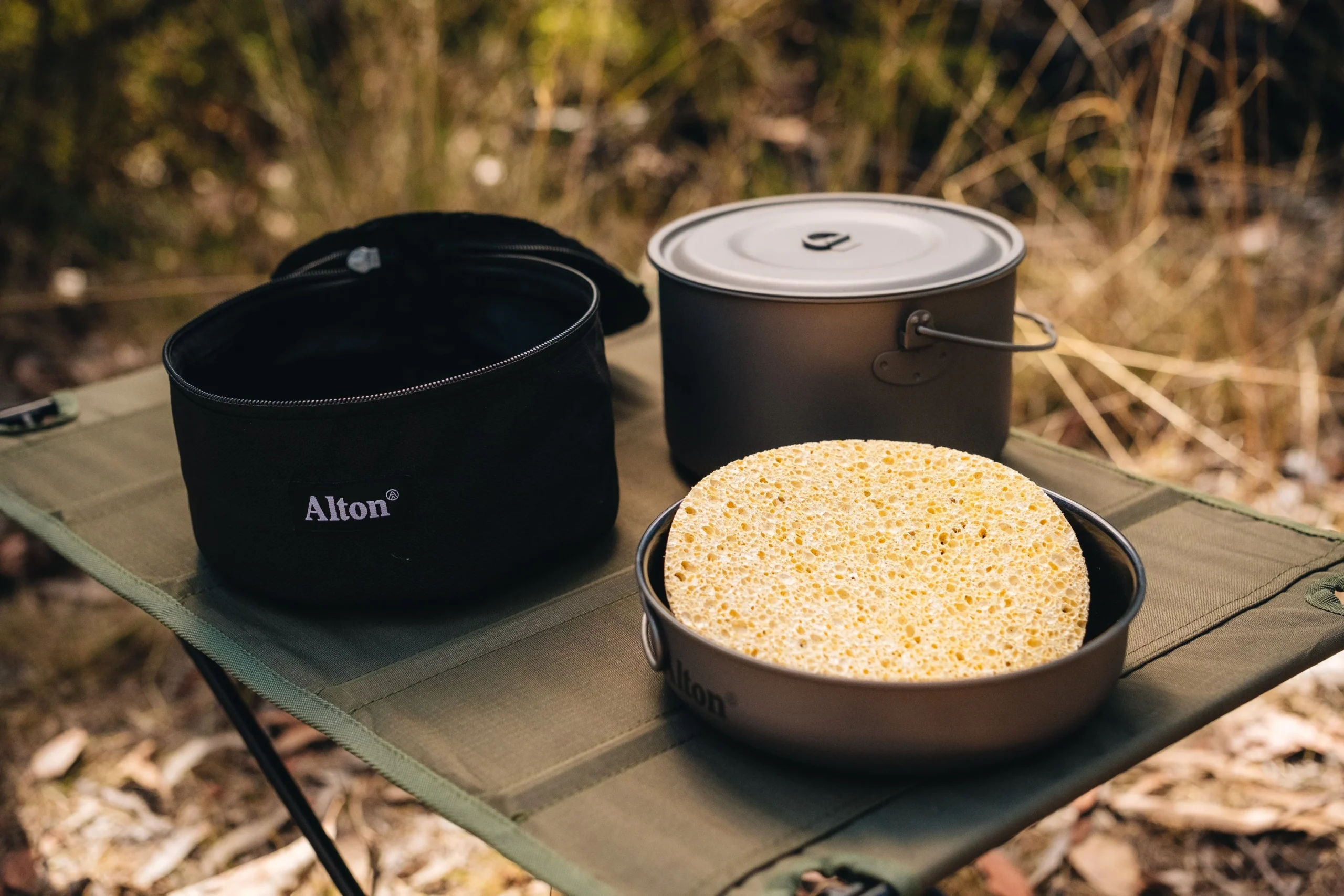
Способ очистки зависит от того, где вы будете использовать титановую посуду.
Уход за внутренней кухней
Для домашнего использования чистка титана не представляет сложности:
- Перед чисткой дайте сковороде полностью остыть - резкие перепады температуры могут деформировать тонкий титан.
- Мойте теплой водой с мягким мылом для посуды, используя мягкую губку или ткань.
- Для засохшей пищи замочите на 15-20 минут, прежде чем чистить.
- Тщательно просушите полотенцем - при воздушной сушке во влажной среде могут образоваться водяные пятна.
- Хранить с мягкой тканью между сложенными в стопку предметами, чтобы предотвратить появление царапин.
Snow Peak, GSI Outdoors и TOAKS рекомендуют эту базовую процедуру. Она практически идентична у всех брендов, поскольку свойства материалов одинаковы.
Уход за вещами на открытом воздухе и рюкзаками
В бэккантри вы столкнетесь с другими проблемами: отсутствие водопровода, ограниченное количество чистящих средств и остатки костра, с которыми придется бороться.
Лучше всего работает “метод очистки кипячением”, рекомендованный компанией MSR и проверенный бесчисленными пользователями Reddit:
- Наполните кастрюлю водой и небольшим количеством биоразлагаемого мыла.
- Доведите до кипения и кипятите 2-3 минуты.
- Вылейте воду (подальше от места приготовления).
- Скрестите щеткой или сосновыми шишками, если нет ничего другого.
- Если есть возможность, промойте чистой водой; в противном случае просто дайте ему высохнуть.
Для таких моментов, когда “у меня нет чистящих средств”, вот трюк от сообщества r/camping на Reddit: перед началом готовки натрите дно кастрюли, где оно соприкасается с пламенем, посудным мылом. Дайте ему высохнуть, а затем готовьте как обычно. Это предотвратит пригорание и значительно облегчит последующую уборку.
Биоразлагаемые средства, такие как Wilderness Wash или Dr. Bronner's, отлично подходят для бэккантри. Просто следуйте принципам LNT - используйте их по минимуму вдали от источников воды.
Как удалить нагар, пригоревшую пищу и черные пятна
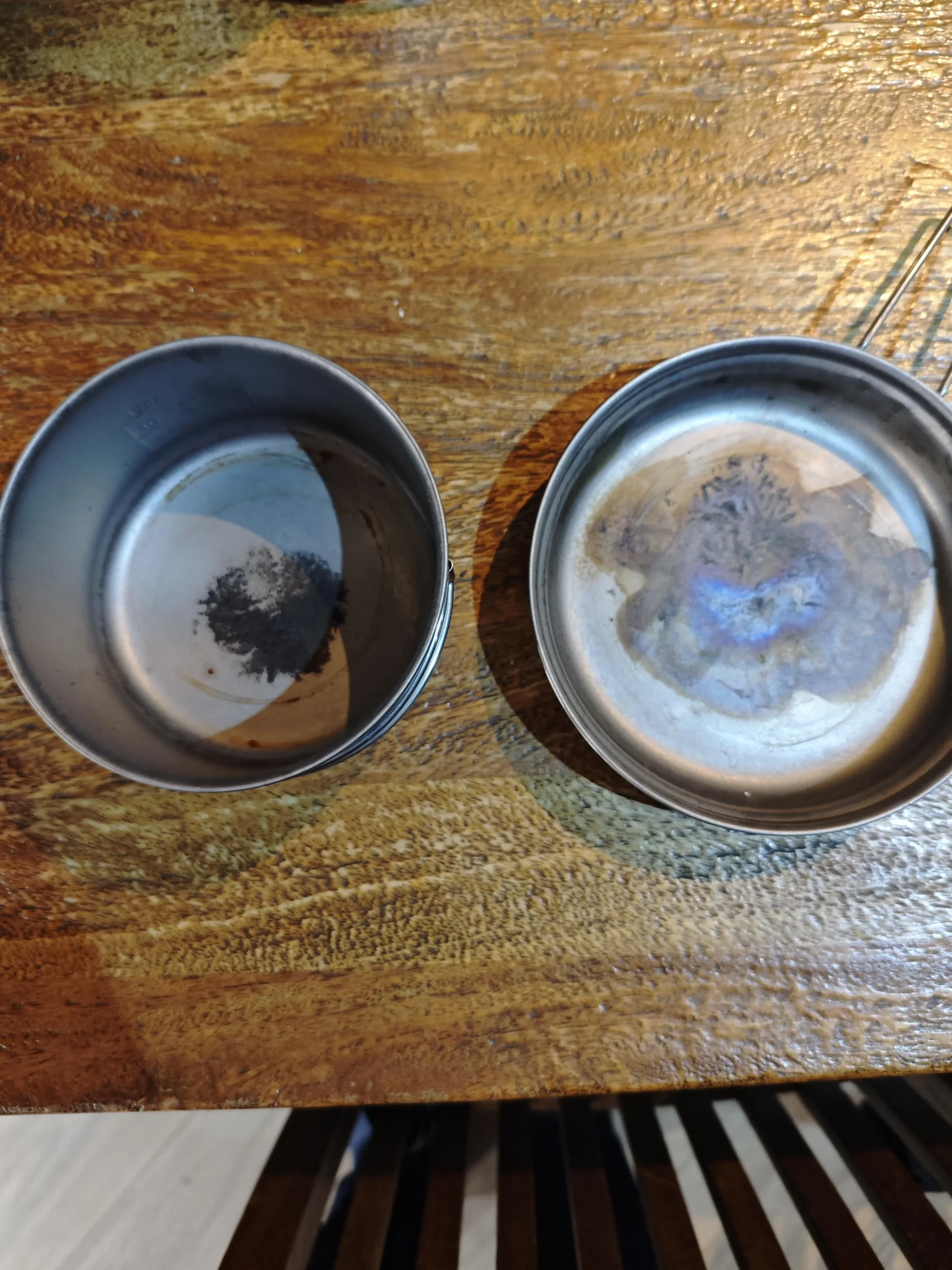
Это проблема #1, с которой сталкиваются владельцы титановой посуды, и я сам с ней сталкивался. В прошлом году я случайно оставил свою кастрюлю на плите слишком долго. В результате образовался толстый черный слой углерода, который выглядел катастрофически.
Вот что действительно работает, в порядке убывания эффективности:
Способ 1: Пищевая сода + кипяток (проверено Reddit #1)
Самый рекомендуемый метод - из темы Reddit от марта 2024 года в r/CampingGear. Пользователи постоянно рекомендуют: “Положите примерно чайную ложку пищевой соды в воду и доведите до слабого кипения. Она разобьет углерод и сразу же всплывет. Затем очистите все оставшиеся кусочки с помощью Bon Ami”.”
Я попробовал именно этот метод на своей сгоревшей кастрюле: добавьте 1-2 чайные ложки пищевой соды в воду, доведите до кипения в течение 5 минут, дайте впитаться в течение 20 минут, затем почистите неабразивной губкой. Нагар легко соскользнул.
- Лучшее для: Сильное накопление углерода
- Требуется время: 30-40 минут
- Необходимые продукты: Пищевая сода + вода
Способ 2: друг смотрителя бара
Для стойких пятен, с которыми не может справиться пищевая сода, Bar Keeper's Friend работает с титаном так же, как и с нержавеющей сталью. Нанесите порошок на влажную ткань, аккуратно потрите и тщательно промойте.
В официальных рекомендациях Keith Titanium упоминается Bar Keeper's Friend для сильных пятен. Однако используйте его осторожно - мягкая щавелевая кислота может повлиять на качество поверхности, если использовать ее слишком часто.
- Лучшее для: Пятна, которые не отстирываются
- Требуется время: 10-15 минут
- Необходимые продукты: Друг содержателя бара
Способ 3: Таблетка для посудомоечной машины в кипящей воде
Еще один одобренный на Reddit способ: растворите таблетку для посудомоечной машины в кипятке, оставьте на 30 минут, а затем почистите. Пользователи отмечают, что это хорошо помогает при умеренных загрязнениях.
Метод 4: Сжигание в костре (последнее средство)
Алтон Гудс описывает метод для экстремальных случаев: поставьте кастрюлю прямо на раскаленные угли на 15-20 минут. Углерод сгорает, окрашивая кастрюлю в синий, фиолетовый или белый цвет (это оксидный слой, реформирующийся при сильном нагреве, а не повреждение).
Важно: Никогда не используйте стальную вату или абразивные скребки для титана. Вы не пытаетесь удалить металл - вы удаляете углерод, и более мягкие методы работают отлично.
Почему ваш титановый горшок стал синим, фиолетовым или радужным
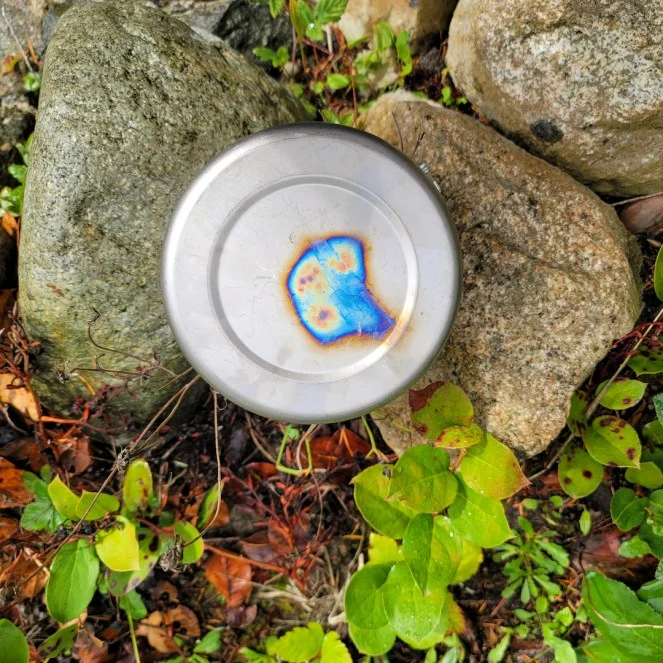
Если вы долгое время использовали титановую посуду на огне, то наверняка заметили следующее: в вашей блестящей серебряной кастрюле появились участки, которые выглядят радужно-голубыми на дне, фиолетовыми в середине и, возможно, золотистыми у ободка.
Вот что произошло. Слой оксида TiO2 на титане становится толще при тепловом воздействии. Когда слой достигает определенной толщины (обычно от 1,5 до 10 нанометров), световые волны, отражаясь от поверхности, интерферируют друг с другом. Это называется тонкопленочной интерференцией - то же явление, которое создает цвета на мыльных пузырях и нефтяных пятнах.
Это не ущерб. Компания Keith Titanium прямо заявляет, что радужное окрашивание “является нормальным явлением при тепловом воздействии” и не влияет на безопасность или функциональность горшка.
Помню, как впервые на моем горшке появилась такая картина. Я была уверена, что испортила его из-за неправильного использования. Быстрый поиск показал, что это совершенно нормально, и теперь мне даже нравится этот “патиновый” вид - он показывает, что горшок хорошо использовался.
В зависимости от угла обзора и точной толщины слоя цвета могут меняться между синим, фиолетовым, золотым и серебряным. Это не ржавчина (титан не ржавеет, как железо) - это оксидный слой, который делает именно то, что должен делать.
Одно предостережение: Если вы видите точечные повреждения, шелушение или поверхность стала шероховатой, а не просто окрасилась, это отличается от обычного обесцвечивания при нагревании и может указывать на то, что кастрюля была перегрета или повреждена. Но чистое изменение цвета? Абсолютно нормально.
Шпаргалка по уходу за титановой посудой - титан против нержавеющей стали против антипригарного покрытия
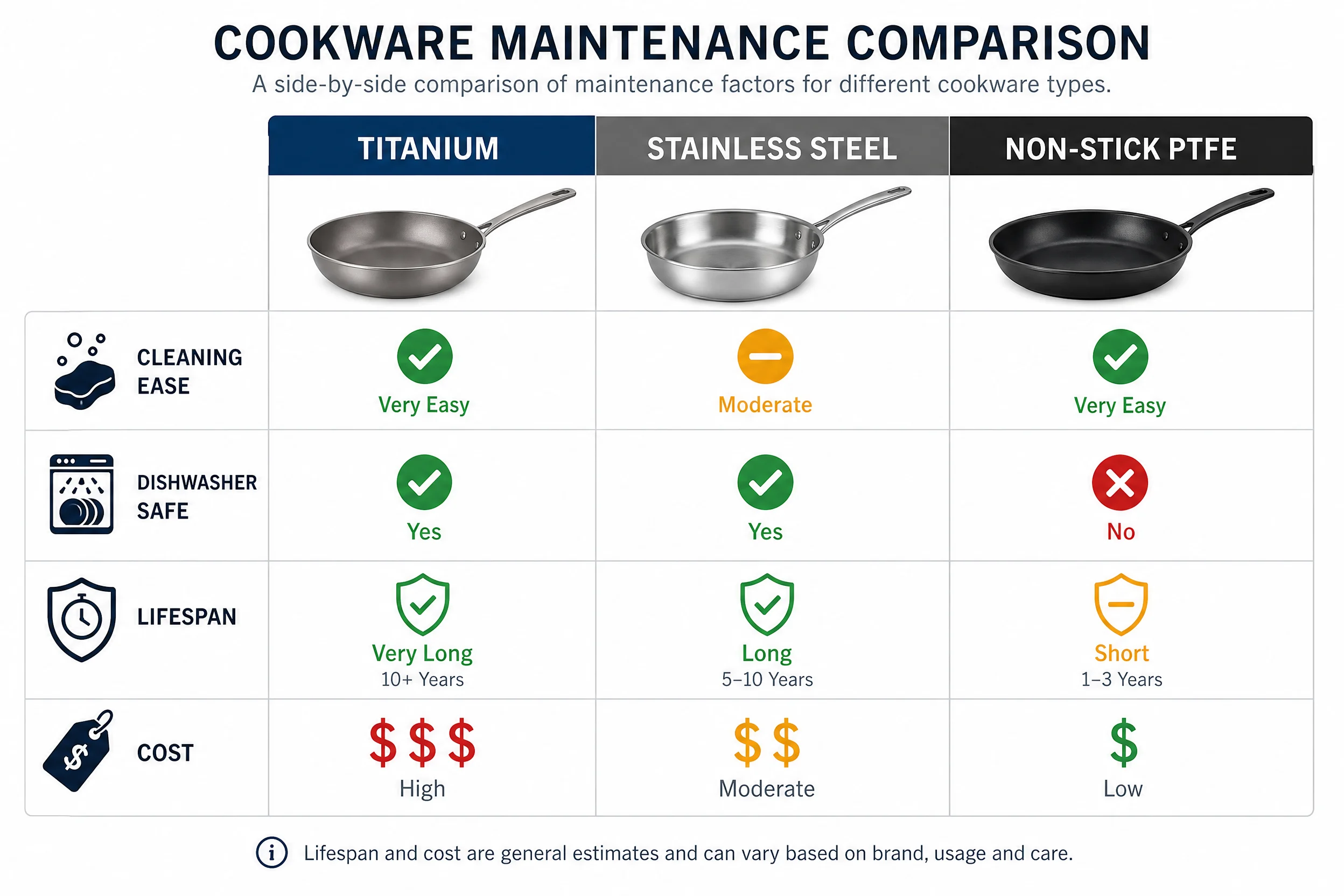
Вот сравнительная таблица, которой нет в других статьях, - прямая картина различий в обслуживании, которые имеют значение, когда вы решаете, какая посуда подходит для вашего образа жизни.
| Атрибут | Титан | Нержавеющая сталь | Антипригарное покрытие (PTFE) |
|---|---|---|---|
| Ежедневная уборка | Простая теплая вода + мыло | Умеренная - требует чистки для удаления застрявших продуктов | Очень легко очищается |
| Частота глубокой очистки | Ежемесячно при частом использовании | Еженедельно для достижения наилучшей производительности | По мере необходимости, когда начинается наклеивание |
| Можно ли мыть в посудомоечной машине? | В целом да, но предпочтительна ручная стирка | Да | Нет-покрытия повреждены |
| Нужны ли приправы? | Дополнительно | Нет | Нет |
| Металлическая посуда? | Не рекомендуется для титана с покрытием | Безопасный | Нет-разрушает покрытие |
| Необходимы специальные продукты? | Периодически используйте пищевую соду | Друг хозяина бара время от времени | Неабразивные материалы |
| Годовая стоимость уборки | ~$10-15 | $15-25 | $5-10 |
| Ожидаемый срок службы | 10-15+ лет | 20-30 лет | 3-5 лет |
| Стоимость замещения | $30-120 | $30-200 | $15-80 |
Что это означает на практике:
- Титан это самый легкий вариант с самым долгим сроком службы среди легких вариантов. Уход за ним минимален, но он не обеспечивает “антипригарного” эффекта, как PTFE.
- Нержавеющая сталь Служит дольше всех и выдерживает наибольшее количество воздействий, но требует правильной техники (предварительный нагрев + масло) для предотвращения пригорания.
- Антипригарное покрытие (PTFE) Легче всего очищается, но имеет самый короткий срок службы и небезопасен при высоких температурах.
Для использования в походе титан доминирует из-за своего преимущества в весе. Для домашней кухни, где важно переворачивать яйца, больше подойдет нержавеющая сталь или качественное антипригарное покрытие.
Вопрос о посудомоечной машине - и еще 5 мифов об уходе за титаном
Существует много дезинформации об уходе за титаном. Позвольте мне рассказать о самых распространенных мифах, с которыми я сталкивался:
Миф 1: “Посудомоечные машины подходят для титана”
Реальность: Это сложно.
Alpkit, британский бренд для активного отдыха, утверждает, что титан “абсолютно не вреден в посудомоечной машине”. Но SOTO Outdoors с этим не согласна, предупреждая, что “моющие средства и струи высокого давления могут повредить покрытие или обесцветить поверхность”.”
Вот мое мнение, основанное на рекомендациях бренда: если ваша титановая посуда имеет какое-либо антипригарное покрытие (даже “усиленное титаном”), откажитесь от посудомоечной машины. Простой титан без покрытия технически можно мыть в посудомоечной машине, но ручная мойка продлевает срок его службы и предотвращает появление пятен от воды, которые ухудшают внешний вид.
Миф 2: “Металлическая посуда безопасна”
Реальность: Не для титана с покрытием.
Алтон Гудс прямо заявляет: “Титан - не самый твердый металл”. Металлическая посуда может поцарапать как чистый титан, так и покрытия на его основе. Для изделий с покрытием используйте дерево, силикон или пластик. Для чистого титана царапины в основном косметические - оксидный слой восстановится, но зачем рисковать?
Миф 3: “Титан не нуждается в уходе”
Реальность: Он требует меньшего ухода, чем чугун, но не нулевого.
Нагар образуется, если вы готовите жирную пищу и не проводите своевременную очистку. Хорошая новость: титан легко очищается при регулярной чистке. Плохая новость: если углерод запекся, для его удаления требуется больше усилий.
Миф 4: “Титан нагревается равномерно, как медь”
Реальность: Это распространенное заблуждение.
Титан обладает низкой теплопроводностью - он быстро нагревается, но не распределяет тепло равномерно по варочной поверхности. Вот почему профессиональные повара часто предпочитают нержавеющую сталь с алюминиевыми или медными сердечниками. Для варки в походных условиях это не имеет большого значения. А вот для приготовления пищи, требующей точного контроля тепла, разница будет заметна.
Миф 5: “Вся титановая посуда одинакова”
Реальность: Качество значительно различается.
Чистый титан (Grade 1 или Grade 2) легок и прочен, но плохо проводит тепло. В титановые сплавы и посуду с титановым покрытием (например, NanoBond от Hestan) добавляют другие металлы для улучшения распределения тепла. Кастрюля $30 TOAKS и сковорода $300 Hestan - оба “титановые”, но работают совершенно по-разному.
Миф 6: “Предварительный нагрев пустой титановой сковороды - это нормально”
Реальность: Это может привести к деформации и изменению цвета.
Алтон Гудс прямо предостерегает от того, чтобы ставить пустую кастрюлю на горячие угли или погружать горячую кастрюлю в холодную воду. Тонкие стенки большинства титановой посуды делают ее восприимчивой к тепловому удару. Дайте кастрюле нагреться, добавив в нее немного масла или воды.
Сезонный календарь ухода для владельцев титановой посуды
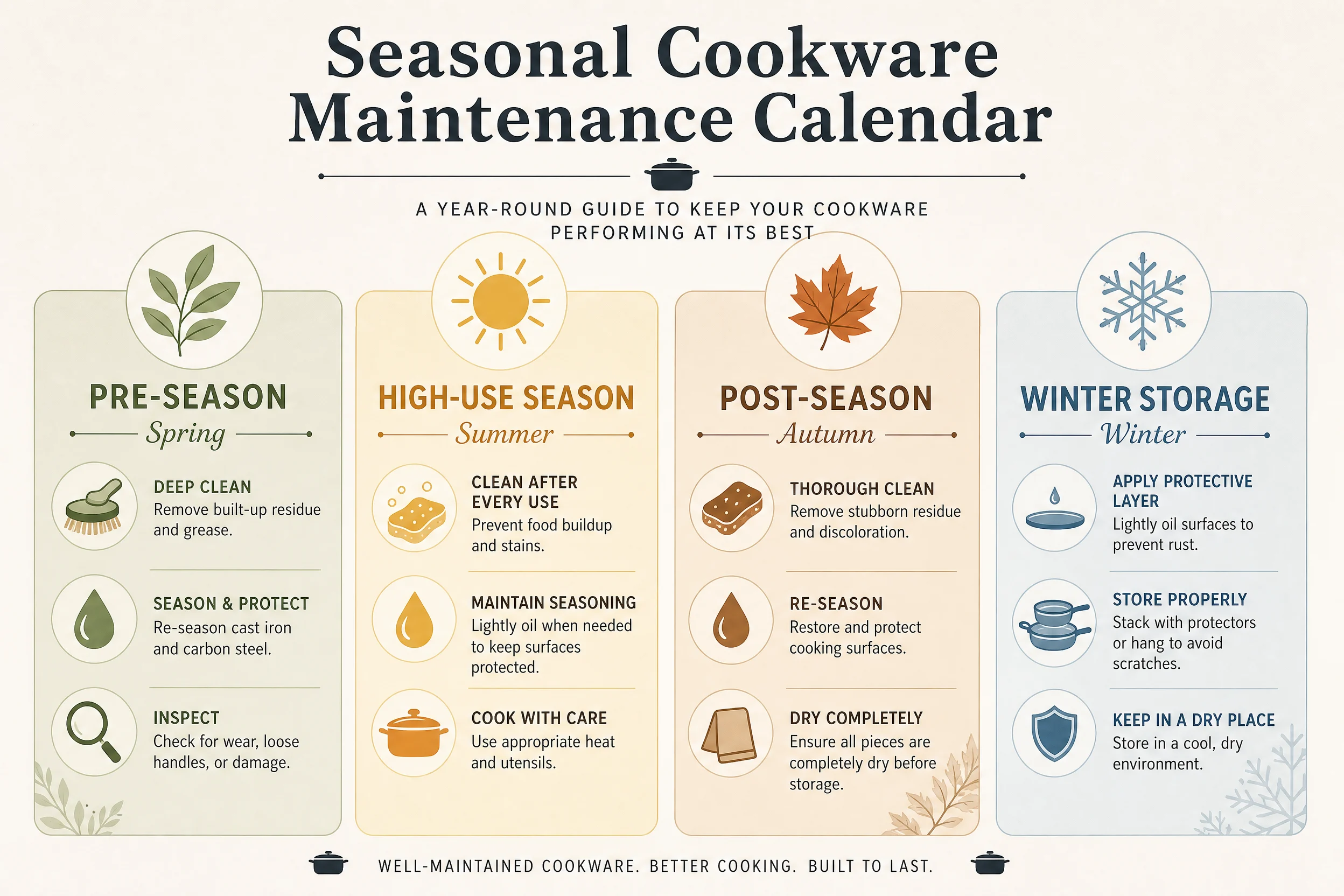
Ни одна статья в результатах SERP не рассказывает об этом, но это то, что владельцам титанов действительно нужно знать. Вот мой календарь ежегодного обслуживания, составленный на основе трех лет использования:
Предварительное путешествие (до начала туристического сезона)
- Осмотрите рукоятки: Проверьте, нет ли ослабления или трещин в местах крепления.
- Проверьте, нет ли протечек: Если у вас есть кастрюля с крышкой, наполните ее водой и проверьте на герметичность.
- Проверка работоспособности: вскипятите воду в кастрюле, чтобы убедиться, что ваш источник тепла по-прежнему работает
- Легкое протирание маслом: При желании нанесите тонкий слой пищевого масла на внутреннюю поверхность.
В сезон интенсивного использования (лето)
- После каждой поездки: Тщательно вымойте и высушите
- Ежемесячно: Глубокая очистка с помощью пищевой соды, если вы готовите жирную пищу
- Проверьте места швов: Посмотрите, где крепятся ручки, особенно после первого года эксплуатации
Постсезон (конец походного сезона)
- Глубокая очистка: Полная обработка пищевой содой для удаления любых углеродистых отложений
- Полностью высушите: Оставьте крышку открытой на 24-48 часов, чтобы не осталось влаги
- Осмотрите на предмет повреждений: Ищите вмятины, трещины, изменения цвета.
- Храните отдельно: При штабелировании прокладывайте мягкую ткань между горшками.
Зимнее хранение (если применимо)
- Обеспечьте полное высыхание - влага в холодных условиях может вызвать точечную коррозию
- Избегайте пластиковых пакетов, которые могут задерживать влагу: используйте хлопчатобумажные или сетчатые мешки для хранения.
- При хранении в сарае или гараже используйте пакет с влагопоглотителем.
Этот календарь подходит как для титана для бэккантри, так и для титана для домашней кухни. Единственное отличие: пользователи домашней кухни должны чистить его после каждого использования, а не после каждой поездки.
Опыт из первых рук - чему я научился, ухаживая за титановой посудой в течение 3 с лишним лет
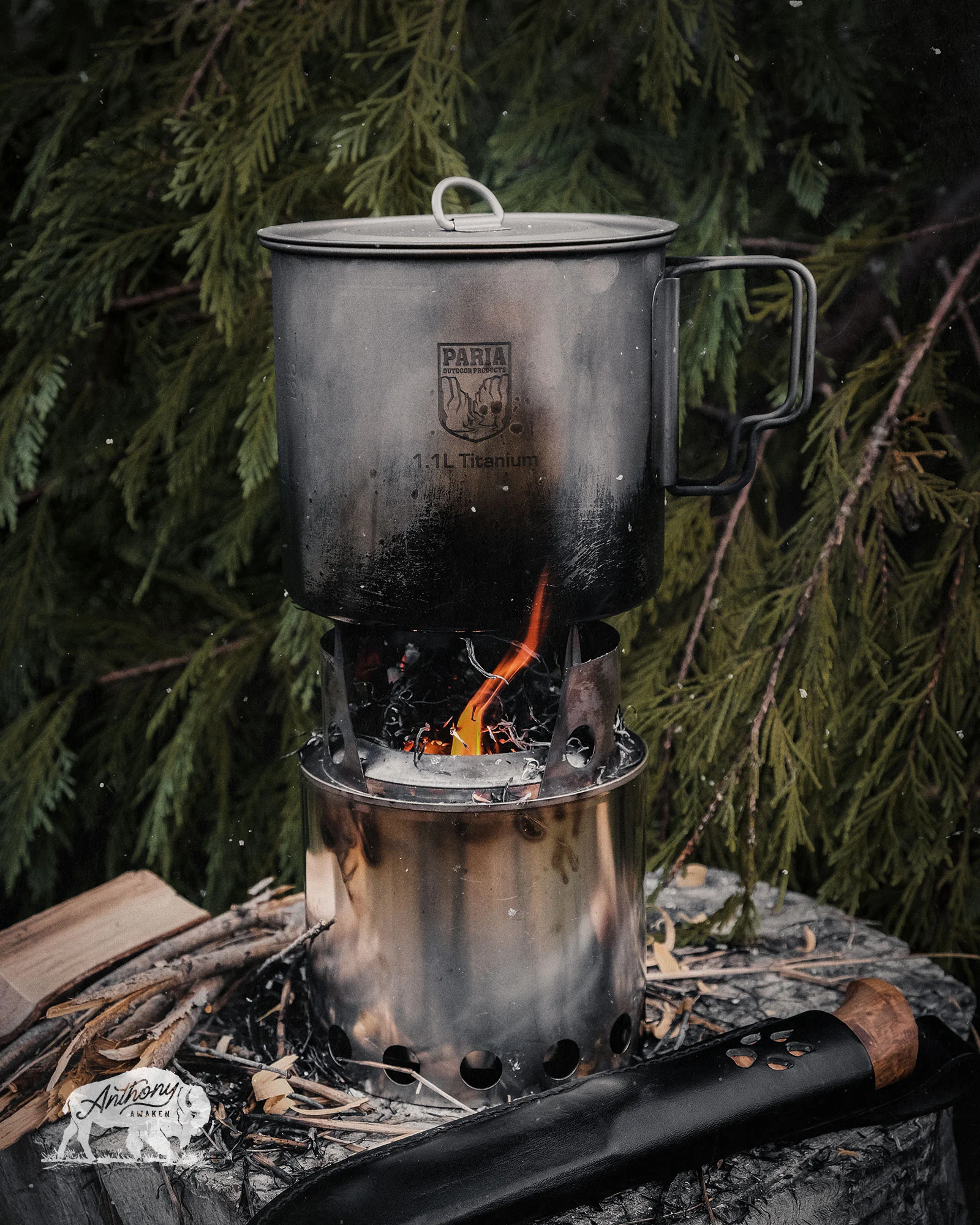
После трех лет использования титановой кастрюли TOAKS 750 мл (купленной в 2023 году) вот что я узнал:
Ошибки, которые я совершил:
- Вначале использовал металлическую вилку. - Первый месяц я использовал для перемешивания обычную титановую вилку. Я заметил мелкие царапины на внутренней поверхности. Перешел на силикон, и царапины прекратились. Царапины носят чисто косметический характер - слой TiO2 восстановился, - но я жалею, что не начал использовать более мягкую посуду.
- Слишком долгое хранение углеродных отложений - В одной из поездок я готовил обезвоженную пищу несколько дней подряд без надлежащей очистки (воды не было). Для полного удаления образовавшегося слоя углерода потребовалось три обработки пищевой содой. Немедленное устранение скоплений делает огромную разницу.
- Разогретый пустой - Однажды я разогрел кастрюлю на плите с канистрой, чтобы ускорить процесс кипения. Локальный нагрев привел к заметному изменению цвета в одном месте. Не “повреждение” как таковое, но ненужный износ.
Что работает лучше всего:
- Кипяток с пищевой содой - Мой основной метод при появлении карбона. Он еще ни разу меня не подвел.
- Силиконовая посуда - Силиконовая вилка $5 из любого магазина для активного отдыха полностью решает проблему царапин.
- Предварительное нанесение мыла - Хитрость, которой я научился на Reddit: нанесите каплю мыла на внутреннюю поверхность перед приготовлением, дайте ему высохнуть, а затем готовьте. Это значительно уменьшает прилипание и делает очистку практически мгновенной.
- Терпение при сушке - Теперь я оставляю кастрюлю перевернутой на полотенце как минимум на час после чистки, особенно в условиях повышенной влажности. Это предотвращает появление водяных пятен, из-за которых титан выглядит потертым.
Что бы я сделал по-другому:
TOAKS предлагает два варианта толщины стенок: 0,3 мм (серия ultralight, для кастрюль объемом до 650 мл) и 0,35 мм (серия standard, для 750 мл и больше). Вариант 0,35 мм отлично подходит для периодического использования, но признаки износа проявляются быстрее. Если вы используете титан ежедневно, стандартная толщина стоит дополнительных граммов.
Стоит ли титановая посуда того, чтобы за ней ухаживать? Анализ стоимости владения
Давайте посчитаем. Вот реальная стоимость владения титановой посудой в течение 5 лет по сравнению с альтернативными вариантами:
Титановые инвестиции
- Начальная стоимость: от $40-150 (цельный титан) до $150-400+ (плакированный титан)
- Ежегодные средства для уборки: $10-15 (пищевая сода, мягкое мыло, иногда Bar Keeper's Friend)
- Сроки замены: 10-15+ лет
- 5-летняя общая стоимость: $50-175 + $50-75 = $100-250
Инвестиции в нержавеющую сталь
- Первоначальная стоимость: $30-200
- Средства для ежегодной уборки: $15-25 (Bar Keeper's Friend, соответствующие моющие средства)
- Срок замены: 20-30 лет
- 5-летняя общая стоимость: $30-200 + $75-125 = $105-325
Антипригарное покрытие (PTFE) Инвестиции
- Первоначальная стоимость: $15-80
- Ежегодная замена: Большинство сковородок с антипригарным покрытием требуют замены каждые 3-5 лет
- Специальные чистящие средства: Минимум
- 5-летняя общая стоимость: $15-80 × 1-2 замены + $25-40 = $55-200
Вердикт:
Титан - не самый дешевый вариант, но его долговечность делает его конкурентоспособным с нержавеющей сталью по долгосрочным затратам. Кроме того, “обслуживание” минимально по сравнению с мнением - все, что требуется на самом деле, это элементарная чистка.
Что сложнее оценить: экономия веса для рюкзаков. Титановый котелок TOAKS объемом 750 мл весит 103 г (с крышкой). Сопоставимый котелок из нержавеющей стали весит более 200 г. Для путешественников, считающих каждую унцию, эта разница в 95 г имеет огромное значение.
Для домашних кухонь, где вес не имеет значения, преимущество титана заключается прежде всего в биосовместимости (отсутствие проблем с вымыванием металлов) и долговечности. Если вы цените эти факторы, титан стоит того, чтобы вложить в него деньги.
FAQ - Люди тоже спрашивают ответы
Нужно ли обрабатывать титановую посуду?
Нет. Приправа является необязательной, а не обязательной. Хотя некоторые бренды, например SilverAnt, рекомендуют ее для улучшения антипригарных свойств, TOAKS и Snow Peak прямо заявляют, что она не нужна. Если ваша титановая посуда предназначена в основном для кипячения воды и приготовления простых блюд, пропустите этап приправы.
Можно ли мыть титановую посуду в посудомоечной машине?
Для чистого титана (без покрытия) - технически да, но настоятельно рекомендуется мыть вручную. Для титана с любым антипригарным покрытием - категорически нет. Моющие средства для посудомоечных машин и струи высокого давления могут повредить покрытие или привести к его обесцвечиванию. Рекомендации брендов разнятся: Alpkit говорит, что это “нормально”, а SOTO предостерегает от этого.
Как вывести пятна с титановой посуды?
Для легких пятен: постирайте теплой водой с мягким мылом. Для умеренных пятен: замочите в воде с пищевой содой на 20 минут, затем почистите. Для сильного нагара: прокипятите с пищевой содой в течение 5 минут, затем замочите и почистите. Для трудновыводимых пятен подойдет Bar Keeper's Friend.
Почему мой титановый горшок становится синим/фиолетовым?
Радужные цвета - это тонкопленочная интерференция в оксидном слое диоксида титана (TiO2), которая образуется естественным образом при тепловом воздействии. Это 100% нормальное и косметическое явление, не являющееся повреждением. Горшок остается безопасным для использования. В зависимости от толщины оксидного слоя цвета обычно бывают синими, фиолетовыми или золотыми.
Как долго служит титановая посуда?
При правильном уходе титановая посуда может прослужить 10-15 с лишним лет. Материал не ржавеет и не изнашивается, как антипригарные покрытия. Основными ограничениями по сроку службы являются физические повреждения (вмятины, трещины) или, если речь идет о титане с покрытием, разрушение покрытия.
Как лучше всего чистить титановое снаряжение для кемпинга?
Для бэккантри: вскипятите воду с небольшим количеством биоразлагаемого мыла, вылейте воду, почистите щеткой и, по возможности, ополосните. Для удаления нагара: добавьте ложку пищевой соды в кипящую воду, дайте закипеть, затем почистите. Эти методы работают и без доступа к проточной воде.
Можно ли использовать металлическую посуду на титановой плите?
Не рекомендуется. Хотя чистый титан устойчив к царапинам, металлическая посуда может нанести косметические царапины, особенно на тонкой посуде. Для титана с любым покрытием металлическая посуда повредит поверхность. Вместо них используйте деревянные, силиконовые или пластиковые инструменты.
Окончательный вердикт - отзывы владельцев титановой посуды
После тщательного изучения этой темы и трех лет жизни с титановой посудой вот моя честная оценка:
Титан - правильный выбор, если для вас важна легкая прочность для использования на открытом воздухе или биосовместимость для приготовления пищи в домашних условиях. Уход за ней минимален - простая чистка после использования, периодическая глубокая чистка от нагара и правильное хранение. Она не так требовательна, как чугун (который нуждается в регулярной обработке), и гораздо более долговечна, чем антипригарные варианты.
Для разных пользователей вот мой индивидуальный совет:
- Ультралегкие рюкзаки: Титановый котелок толщиной 0,4 мм от TOAKS или Snow Peak - это золотой стандарт. Чистите после каждой поездки, храните в сухом месте и ожидайте 10+ лет службы.
- Домашняя кухня: Рассмотрите варианты с титановым покрытием, например NanoBond от Hestan, если вам нужно лучшее распределение тепла. Чистите посуду сразу после приготовления, избегайте абразивных средств и не используйте приправы, если вас не устраивают антипригарные свойства.
- Случайные туристы: Достаточно простого мытья. Не задумывайтесь об уходе - просто чистите, сушите и храните должным образом между поездками.
Ключевой момент: “уход” за титаном сводится в основном к его чистке. Нет никаких специальных процедур, которые нужно соблюдать, никаких таинственных масел, которые нужно применять, никаких дорогих продуктов, которые нужно покупать. Пищевая сода и мягкое мыло справятся с 95% из того, что вам когда-либо понадобится.
Если вы размышляете, стоит ли титан инвестиций, ответ прост: да, если для вас важна экономия веса или биосовместимость. При этом нагрузка по обслуживанию действительно невелика, и в этом руководстве есть все, что нужно для правильной работы с ним.