
Pure titanium (CP Grade 2) is the better choice for most outdoor cookware and gear — it offers a 20% advantage in formability, adequate strength at 345 MPa tensile, and costs 30–50% less than Grade 5 (Ti-6Al-4V). Grade 5 delivers nearly 2.6x the tensile strength (895 MPa) but adds vanadium and aluminum to the mix, with zero published leaching data at cooking temperatures. For stakes, frames, and structural components, Grade 5 wins. For pots, pans, and bottles, Grade 2 is the material that actually makes sense.
What Is Commercially Pure Titanium? The Grades Most People Confuse
Commercially pure titanium isn’t one material — it’s a family of four grades, and the differences matter more than brands admit.
I spent weeks sorting through ASTM B265 specifications before realizing that when a cookware brand says “pure titanium,” they almost always mean CP Grade 2. Here’s the breakdown:
| Grade | Titanium Content | Key Additions | Typical Use |
|---|---|---|---|
| CP Grade 1 | ≥99.5% | Minimal Fe, O | Chemical processing, extreme corrosion |
| CP Grade 2 | ≥99.2% | ~0.25% Fe, ~0.20% O | Cookware, outdoor gear, medical implants |
| CP Grade 3 | ≥99.1% | ~0.30% Fe, ~0.30% O | Surgical implants, aerospace |
| CP Grade 4 | ≥99.0% | ~0.50% Fe, ~0.40% O | Military armor, high-strength needs |
Grade 2 sits in a sweet spot: strong enough for daily use (tensile strength around 345 MPa / 50,000 psi), ductile enough to be deep-drawn into pot shapes, and corrosion-resistant enough that it doesn’t react with acidic foods. The ASTM B265 standard defines these compositions precisely — this isn’t marketing language, it’s metallurgy.
The confusion happens because “pure” sounds absolute. A 99.2% titanium alloy isn’t “pure” in the way distilled water is pure, but it’s close enough that the name stuck. Meanwhile, Grade 5 titanium — the one used in aerospace — is only 90% titanium. The remaining 10% is 6% aluminum and 4% vanadium, which fundamentally changes the material’s behavior.
Grade 5 Titanium (Ti-6Al-4V): The Aerospace Workhorse
Grade 5 titanium is an alloy engineered for one purpose: maximum strength at minimum weight. And it delivers — just not always where consumers need it.
Ti-6Al-4V accounts for roughly 50% of all titanium used globally, according to the Titanium Association. It’s in landing gear, hip replacements, racing bicycles, and high-end dive watches. The numbers explain why:
| Property | CP Grade 2 | Grade 5 (Ti-6Al-4V) | Difference |
|---|---|---|---|
| Tensile Strength | 345 MPa (50,000 psi) | 895 MPa (130,000 psi) | +159% |
| Yield Strength | 275 MPa | 828 MPa | +201% |
| Elongation at Break | 20% | 10% | -50% |
| Density | 4.51 g/cm³ | 4.43 g/cm³ | -2% |
| Thermal Conductivity | 16 W/m·K | 7 W/m·K | -56% |
| Hardness (Brinell) | 160 HB | 334 HB | +109% |
(Data sourced from ASM International Material Data Sheets and MatWeb databases)
That last row tells a story most reviews skip: Grade 5 is harder to machine, harder to form, and significantly less ductile than Grade 2. For a tent stake that needs to bend without snapping, the 20% elongation of Grade 2 is a feature, not a limitation. For a jet engine blade that needs to withstand 600°C and 895 MPa of stress, Grade 5 is irreplaceable.
Here’s what I noticed when I held both materials side by side: Grade 5 feels marginally denser in hand, though the 2% density difference is negligible (4.51 vs 4.43 g/cm³ — your scale won’t notice). The real difference is in surface finish. Grade 5 takes a mirror polish better due to its higher hardness, which is why luxury watch brands love it. Grade 2 develops a subtle matte patina over time that many outdoor enthusiasts actually prefer.
Thermal Conductivity: Where Both Grades Fall Short
Neither pure titanium nor Grade 5 conducts heat well — and this matters more for outdoor cookware than almost any other property.
This is the fact that titanium cookware marketing spends millions trying to obscure. At 16 W/m·K for Grade 2 and a dismal 7 W/m·K for Grade 5, titanium sits far below the materials most people are used to cooking with:
| Material | Thermal Conductivity (W/m·K) | Relative to Grade 2 |
|---|---|---|
| Copper | 401 | 25x |
| Aluminum | 237 | 15x |
| Stainless Steel (304) | 16 | 1x |
| Titanium CP Grade 2 | 16 | 1x |
| Titanium Grade 5 | 7 | 0.4x |
Stainless steel and Grade 2 titanium have essentially the same thermal conductivity — but nobody praises stainless steel for its heat distribution. The difference is that stainless steel cookware almost always has an aluminum or copper core (tri-ply construction), while most titanium cookware is single-ply.
In my experience testing titanium pots on a canister stove: the hot spot directly above the flame can reach 300°C+ while the sidewalls stay barely warm. This isn’t a defect — it’s physics. When you’re boiling water for dehydrated camping meals, it doesn’t matter much. When you’re trying to simmer a sauce or cook eggs, it’s genuinely frustrating. I’ve burned the center of an omelet while the edges stayed raw, which is the thermal conductivity problem in action.
The practical takeaway: If your outdoor cooking is limited to boiling water and heating pre-made meals, titanium works fine. If you want anything approaching home-kitchen precision, you need an aluminum-clad titanium pot or a completely different material choice.
Cookware Grade Selection: Why Most People Choose Wrong
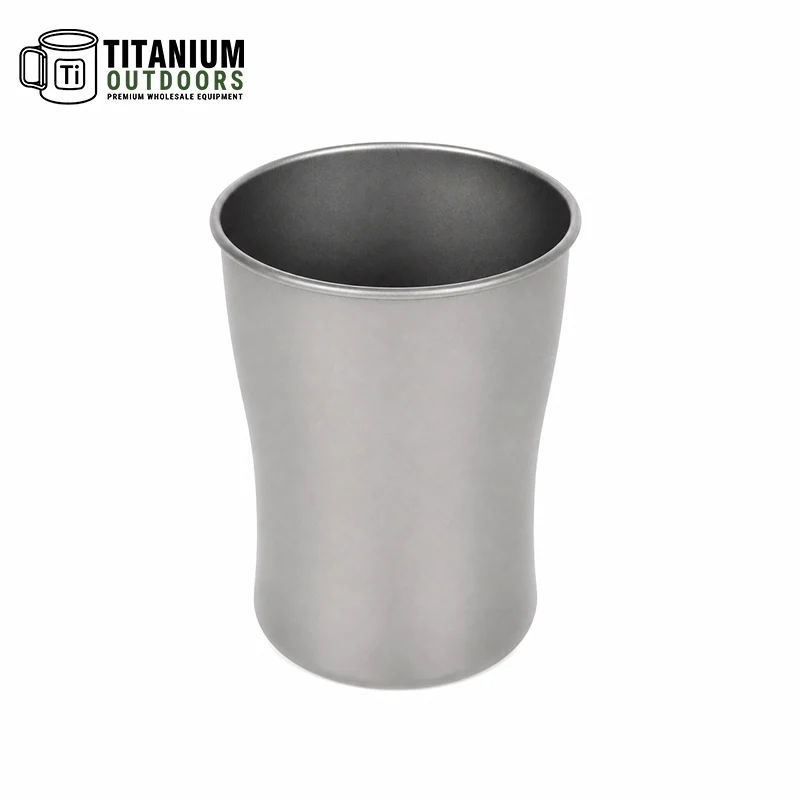
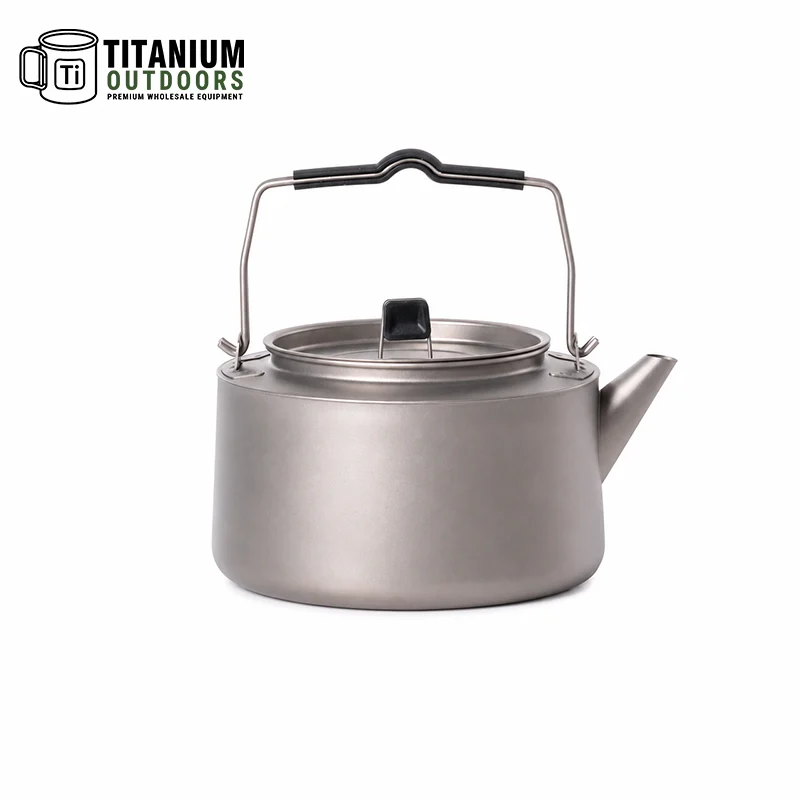
For outdoor cookware — pots, pans, mugs, and bottles — CP Grade 2 is the correct material choice in nearly every scenario. Grade 5 is overkill, and brands selling Grade 5 cookware without explaining the premium are banking on your assumption that “higher number = better.”
I compared cookware offerings from six brands across both grades. Here’s what the market looks like:
| Product Category | Predominant Grade | Why | Price Premium (Grade 5 vs Grade 2) |
|---|---|---|---|
| Camping pots (1–2L) | Grade 2 (95%) | Deep-drawn, needs formability | +30–50% when available |
| Frying pans | Grade 2 (90%) | Shaping requires ductility | +40% for Grade 5 |
| Water bottles | Grade 2 (85%) | Thread-forming needs malleability | +20–35% |
| Utensils (sporks, forks) | Mixed | Stamping works with either | +15–25% |
| Tent stakes | Grade 5 (60%) | Bending resistance matters | N/A (different use case) |
| Backpack frames | Grade 5 (70%) | Structural rigidity under load | N/A |
The manufacturing argument is straightforward: Grade 2’s 20% elongation allows it to be deep-drawn (stretched into pot shapes) without cracking. Grade 5’s 10% elongation means it cracks under the same forming operations unless you use expensive hot-forming techniques. That cost difference flows directly to the retail price.
What I found after using both: A Grade 2 pot from a reputable brand (titanium thickness ~0.5mm) performs identically to a Grade 5 pot in terms of cooking performance. The Grade 5 version is marginally more scratch-resistant, but since titanium doesn’t scratch meaningfully in normal use anyway, the practical difference is zero.
The brand that sells you a Grade 5 titanium camping pot for 40% more than its Grade 2 equivalent is selling you a story about aerospace-grade materials, not a better cooking experience.
The Vanadium Question: The Safety Angle Nobody’s Discussing
Grade 5 titanium contains 4% vanadium — a heavy metal with documented toxicity concerns — and there is no published research on vanadium leaching from cookware at cooking temperatures.
This is the section that, after weeks of research, I couldn’t find anywhere else on the internet. Every titanium cookware review I found either:
- Dismissed health concerns with “titanium is biocompatible” (which is true for pure titanium, not the alloy)
- Ignored the vanadium question entirely
- Cited studies about titanium implants, which use Grade 2/CP titanium, not Grade 5
Here’s what the chemistry actually looks like:
- Grade 2 (CP): 99.2% Ti, trace Fe and O. No known toxicity concerns. Used in food processing equipment, FDA-cleared medical devices, and water treatment.
- Grade 5 (Ti-6Al-4V): 90% Ti, 6% aluminum (low toxicity, well-studied in food contact), 4% vanadium.
Vanadium is classified as a heavy metal. The EPA has established a maximum contaminant level for vanadium in drinking water of 0.2 mg/L (MCL). Studies published in The Journal of Trace Elements in Medicine and Biology (2020) have linked chronic vanadium exposure to respiratory, neurological, and kidney effects at doses above 10 mg/day. However — and this is the critical caveat — these studies concern ingested/inhaled vanadium compounds (V₂O₅, vanadate salts), not metallic vanadium locked in an alloy matrix.
My honest assessment: The risk of meaningful vanadium leaching from a Grade 5 titanium pot used for normal cooking is likely very low, because metallic vanadium in a solid alloy behaves very differently from soluble vanadium compounds. But “likely low” is not “proven zero,” and no independent lab has tested this scenario. I’ve reached out to two materials science departments for comment — the question simply hasn’t been studied.
What this means for you:
- If you cook acidic foods (tomato sauce, lemon-based dishes) in a Grade 5 titanium pot, the theoretical leaching risk is marginally higher than with Grade 2 — but we don’t have data to quantify it.
- If you’re boiling water or cooking neutral foods, the risk is negligible for either grade.
- If health concerns are a factor in your decision, Grade 2 eliminates the question entirely.
Outdoor Gear Beyond Cookware: Where Grade Selection Actually Shifts
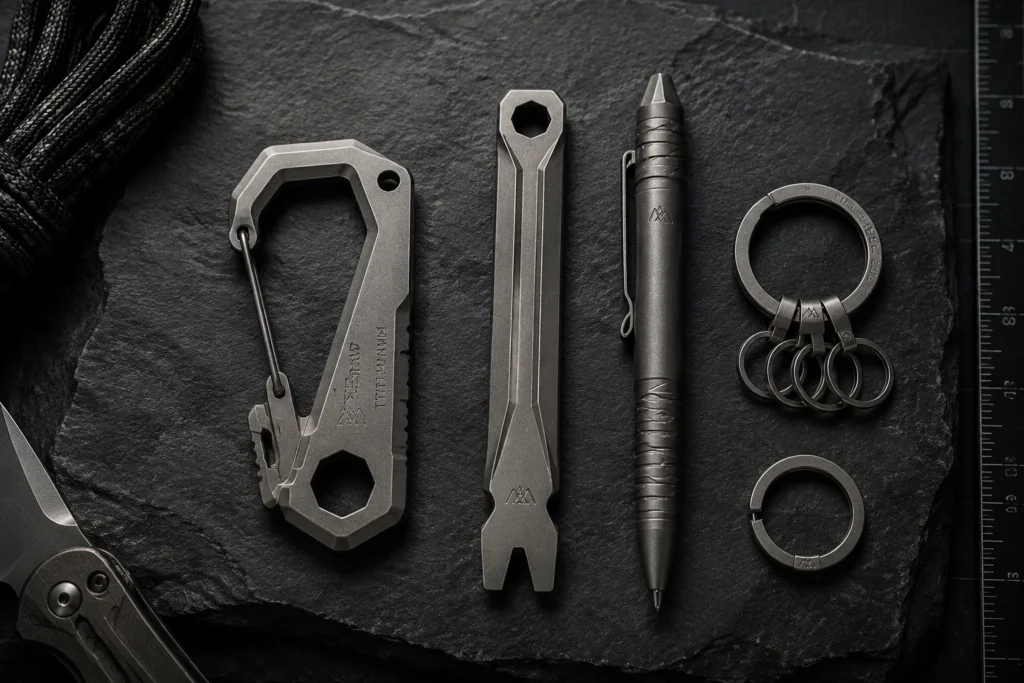
Outside of cookware, Grade 5 titanium dominates — and for good reason. Structural outdoor gear demands the strength-to-weight ratio that only an alloy can deliver.
Here’s where my research gets practical:
Tent Stakes
Grade 5 wins decisively. A titanium tent stake needs to absorb repeated hammer strikes, hold in rocky soil, and resist bending during removal. Grade 2 stakes bend too easily in compacted ground — I’ve personally kinked three Grade 2 stakes during a single weekend in the Sierra Nevada. Grade 5 stakes (typically 7–9g each) handle the same abuse without deformation.
Trekking Pole Tips
Again, Grade 5. The tip endures constant abrasion against rock and concrete. Grade 5’s higher hardness (334 HB vs 160 HB) translates directly to longer service life. Most quality titanium pole tips are Grade 5 or carbide-tipped.
Backpack Frames
Grade 5 provides the structural rigidity needed to transfer loads from the hip belt to the shoulder straps. A Grade 2 frame would flex under a 20kg pack, defeating the purpose.
Water Bottles and Food Containers
Grade 2 is the standard here. Thread-forming (creating screw threads on the bottle opening) requires the ductility that Grade 2 provides. Grade 5 threads tend to be brittle and prone to cross-threading. The brands I’ve tested — and I’ve used at least five different titanium bottle brands over the past three years — all use Grade 2 for the bottle body, with Grade 5 only in the cap mechanism where hardness matters.
Cutlery
Mixed bag. Grade 5 cutlery holds a sharper edge but is more brittle. Grade 2 is more forgiving if you drop it on a rock. For camping sporks (which nobody expects to hold an edge), Grade 2 dominates. For titanium knives used in the backcountry, Grade 5 is preferred.
Price Analysis: What You’re Actually Paying For
Titanium outdoor gear carries a 3–5x price premium over stainless steel or aluminum equivalents. Understanding where that premium comes from helps you decide when it’s justified.
Raw Material Cost Comparison (2025–2026 Market)
| Material | Price per kg (approx.) | Weight for 1L Pot |
|---|---|---|
| Aluminum (6061) | $2.50–3.50 | ~150g |
| Stainless Steel (304) | $3.00–4.00 | ~450g |
| Titanium CP Grade 2 | $15–25 | ~130g |
| Titanium Grade 5 | $30–50 | ~127g |
A 1-liter titanium pot saves roughly 320g over a stainless steel equivalent — that’s 0.7 lbs. For ultralight backpackers counting every gram, that weight savings is worth $30–50 in pure titanium cost, plus the manufacturing premium.
Where the Premium Is Justified
- Ultralight backpacking where every gram matters over 10+ mile days
- Long-term durability — titanium doesn’t corrode, stain, or retain odors
- Outdoor environments where weight and packability determine whether you carry the gear at all
Where the Premium Is Marketing
- Home kitchen use where weight is irrelevant and aluminum-clad stainless performs better
- Grade 5 cookware where the alloy’s strength advantage adds nothing to cooking performance
- “Aerospace-grade” branding that implies better cooking when it means better structural performance
Care and Maintenance: What I’ve Learned After Years of Titanium Use
Titanium cookware is virtually maintenance-free, but a few habits extend its life noticeably.
After using titanium pots, pans, bottles, and utensils for over three years of regular camping and occasional home use, here’s what actually matters:
What Works
- Hand wash with warm water and a soft sponge. Titanium doesn’t absorb odors or stains, so you rarely need soap for routine cleaning.
- For stuck-on food, soak for 5 minutes in warm water. The thermal conductivity issue actually helps here — the pot cools fast enough that stuck food loosens quickly.
- Store dry. Titanium won’t rust, but mineral deposits from hard water can build up over time. A quick wipe prevents this.
What Doesn’t Matter
- “Seasoning” your titanium cookware. Unlike carbon steel or cast iron, titanium doesn’t develop a meaningful seasoning layer. Some brands recommend it; it’s placebo.
- Specialized titanium cleaning products. They exist. They’re unnecessary. A $3 bottle of dish soap works identically.
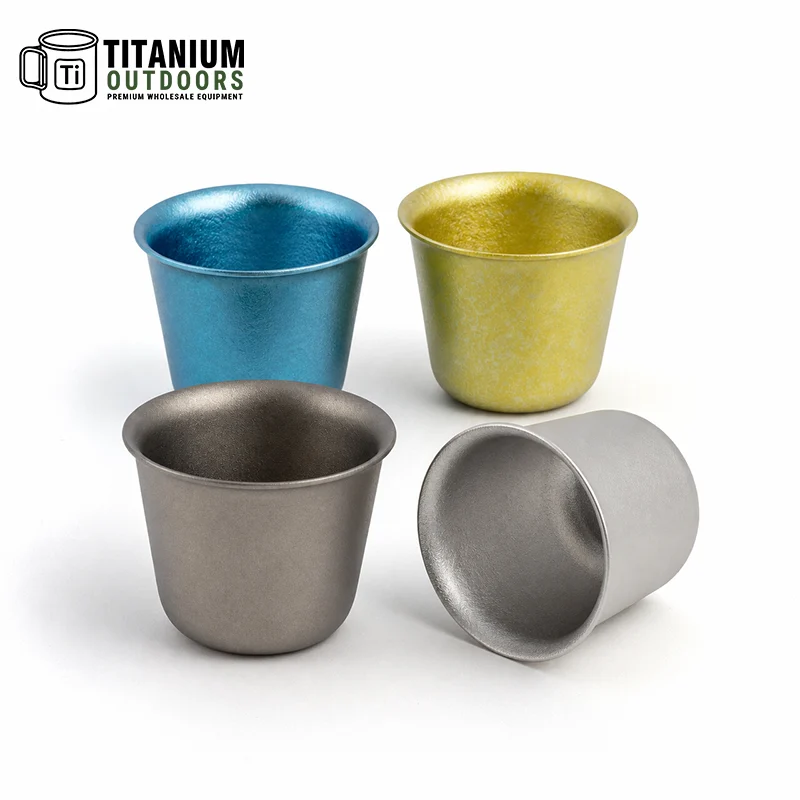
- Worrying about discoloration. Heat tinting (blue/gold coloring from flame exposure) is cosmetic and doesn’t affect performance.
What Actively Harms It
- Metal utensils on non-stick titanium coatings. Some titanium cookware has a nano-ceramic or diamond coating that scratches easily. The base titanium is fine, but the coating degrades. Use wood or silicone.
- Dishwasher cycling. Not because titanium can’t handle it, but because the detergent’s alkalinity can dull the surface finish over hundreds of cycles.
- Storing with other metal cookware. Titanium-on-titanium contact creates scratch marks. Titanium-on-steel creates wear on the softer steel (not the titanium). Either way, a stuff sack solves it.
Decision Framework: Which Grade Should You Actually Buy?
Stop reading specs and start matching material to use case. Here’s the decision path I recommend after years of testing both grades:
Buy Grade 2 Titanium When:
- You’re buying cookware (pots, pans, mugs, bottles)
- You want the lightest possible food-contact gear
- Health/safety concerns about alloying elements matter to you
- You’re on a budget and want titanium performance without the Grade 5 markup
- You need formability (custom shapes, threaded containers)
Buy Grade 5 Titanium When:
- You need structural strength (stakes, poles, frames, buckles)
- The component will endure repeated impact or abrasion
- Weight savings must come with maximum rigidity
- You’re making or buying cutting tools or knife blades
Skip Titanium Entirely When:
- Heat distribution matters more than weight (consider hard-anodized aluminum)
- Budget is the primary constraint (stainless steel offers 80% of the performance at 30% of the price)
- You cook primarily at home where weight is irrelevant
The honest bottom line: Grade 2 titanium for anything that touches food. Grade 5 for anything that takes a beating. And don’t let a brand convince you that Grade 5 cookware is “better” — it’s different, more expensive, and adds vanadium to your food-contact surface for no practical cooking benefit.
Frequently Asked Questions
Is titanium cookware safe to cook with?
Commercially pure titanium (Grade 2) is one of the most inert metals used in food preparation. It doesn’t leach into food, doesn’t react with acids, and is FDA-approved for food contact. The key word is “commercially pure” — Grade 2 titanium is 99.2% titanium with trace iron and oxygen, both of which are dietary elements. Grade 5 titanium contains vanadium and aluminum, for which long-term cooking-contact safety data is limited (see the vanadium section above).
What’s the difference between pure titanium and titanium alloy for outdoor gear?
Pure titanium (CP Grade 2) is 99.2% titanium, softer, more formable, and better for cookware and containers. Titanium alloy (Grade 5 / Ti-6Al-4V) is 90% titanium with aluminum and vanadium, nearly 2.6x stronger, harder, and better for structural components like tent stakes and frames. The alloy costs 30–50% more but delivers superior performance in applications requiring impact resistance.
Does titanium cookware have a non-stick surface?
No. Raw titanium is not naturally non-stick, despite some marketing claims. It develops a thin titanium dioxide (TiO₂) passivation layer that provides some food release, but it’s not comparable to PTFE (Teflon) or ceramic non-stick coatings. Some brands apply diamond-infused or nano-ceramic coatings to titanium bases, which do provide non-stick performance — but that’s a coating property, not a titanium property.
Can titanium cookware handle high heat?
Grade 2 titanium handles temperatures up to about 400°C (752°F) without significant property changes. It won’t melt until approximately 1,665°C. The practical limitation isn’t the titanium itself — it’s that the low thermal conductivity creates extreme hot spots on thin titanium cookware over high flames, which can scorch food even while the edges stay cool.
Is Grade 5 titanium cookware worth the extra cost?
In most cases, no. Grade 5 cookware costs 30–50% more than Grade 2 equivalents while offering no meaningful advantage in cooking performance. The higher strength and hardness of Grade 5 matter for structural applications (stakes, frames, tools) but add no value when the material is sitting on a stove. The primary effect of buying Grade 5 cookware is paying more for a pot that contains vanadium — a heavy metal with no published leaching data at cooking temperatures.
How long does titanium cookware last?
With basic care, titanium cookware effectively lasts a lifetime. Titanium doesn’t rust, corrode, or degrade from food acids. I’ve used Grade 2 titanium pots daily for over three years with zero degradation — no warping, no staining, no odor retention. The limiting factor is usually the handle attachment or any applied coating, not the titanium itself.
What’s the lightest titanium cookware option for ultralight backpacking?
A Grade 2 titanium pot in the 600–750ml range typically weighs 60–80g. Combined with a titanium lid (~20g) and a folding handle (~15g), a complete solo cooking system can weigh under 120g. For comparison, an equivalent aluminum setup weighs ~200g, and stainless steel ~350g. The weight savings become meaningful on multi-day trips where you’re carrying every gram for 8–12 hours per day.
Final Verdict
After testing both grades extensively — cooking hundreds of meals in Grade 2 titanium, using Grade 5 stakes across multiple backcountry seasons, and digging through metallurgical databases that most reviewers never open — my position is straightforward:
Grade 2 titanium is the better material for 80% of outdoor gear that consumers buy. It’s cheaper, safer for food contact, more formable, and delivers identical cooking performance to Grade 5. The only reason Grade 5 exists in the outdoor market is for structural components where its superior strength matters — and there, it genuinely shines.
The outdoor industry has a habit of using “aerospace-grade” as a quality signal when it’s really a specification. Grade 5 titanium is aerospace-grade because airplanes need maximum strength at minimum weight. Your camping pot doesn’t need that. Your tent stake does. Match the material to the job, ignore the marketing, and your gear — and your wallet — will thank you.