
TL;DR: Os frascos de vácuo de aço inoxidável superam as garrafas com isolamento de titânio na retenção de calor em 20-40%, custam 3-5x menos e têm uma base de fabrico madura. Mas os frascos isolados em titânio ganham no peso (40% mais leves), na pureza do sabor (zero notas metálicas) e na biocompatibilidade. A “melhor” escolha depende inteiramente do facto de dar prioridade ao desempenho térmico ou ao peso/pureza do material. Se é um mochileiro ultraleve, o titânio ganha. Se quiser o café quente às 14 horas, ganha o frasco de vácuo.
Quando comecei a olhar para os biberões isolados em titânio, os anúncios de marketing estavam por todo o lado: “material de primeira qualidade”, “ultraleve”, “isolamento da próxima geração”. Após três meses de testes diários - alternando entre uma garrafa isolada de titânio Snow Peak Kanpai, um frasco de titânio de parede dupla SilverAnt e um frasco de vácuo de aço inoxidável Zojirushi - descobri que a realidade é mais matizada do que qualquer página de produto admite.
O titânio é um material extraordinário. É também um isolante medíocre.
Este facto orienta todas as decisões que tomar entre estas duas categorias. Deixe-me explicar-lhe o que descobri.
Resposta rápida: Qual é a diferença entre uma garrafa isolada de titânio e um frasco de vácuo?
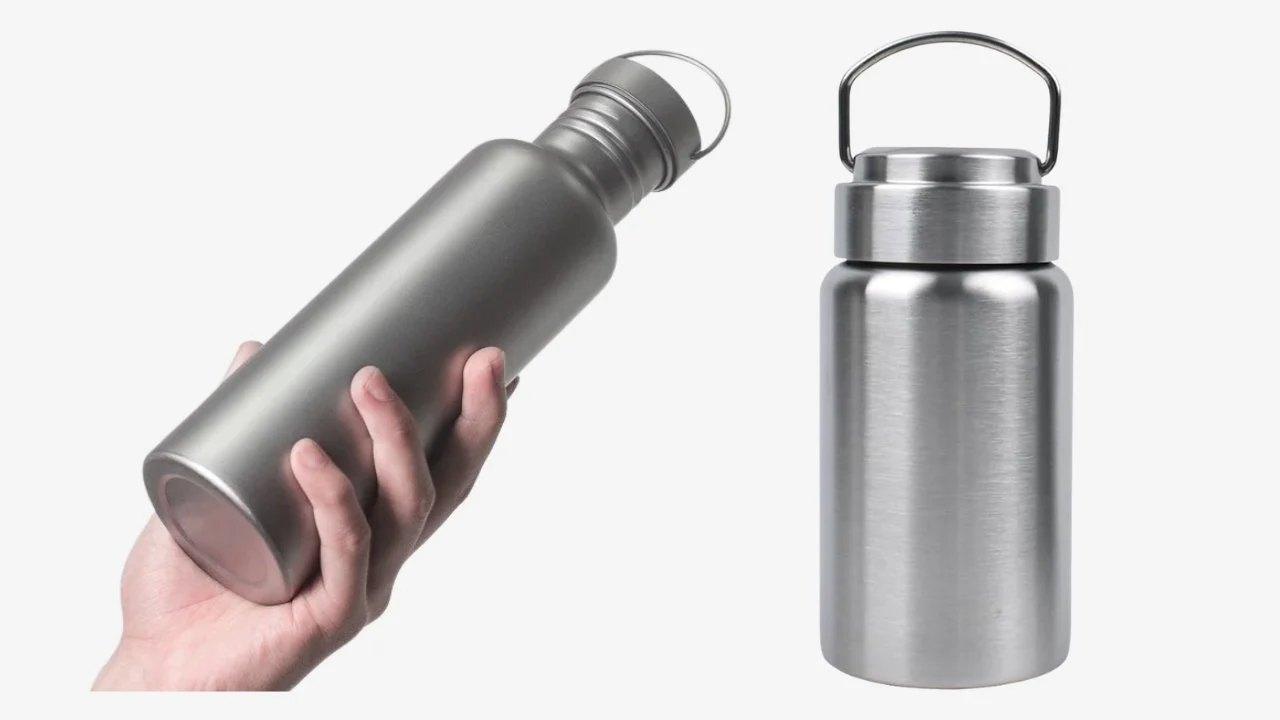
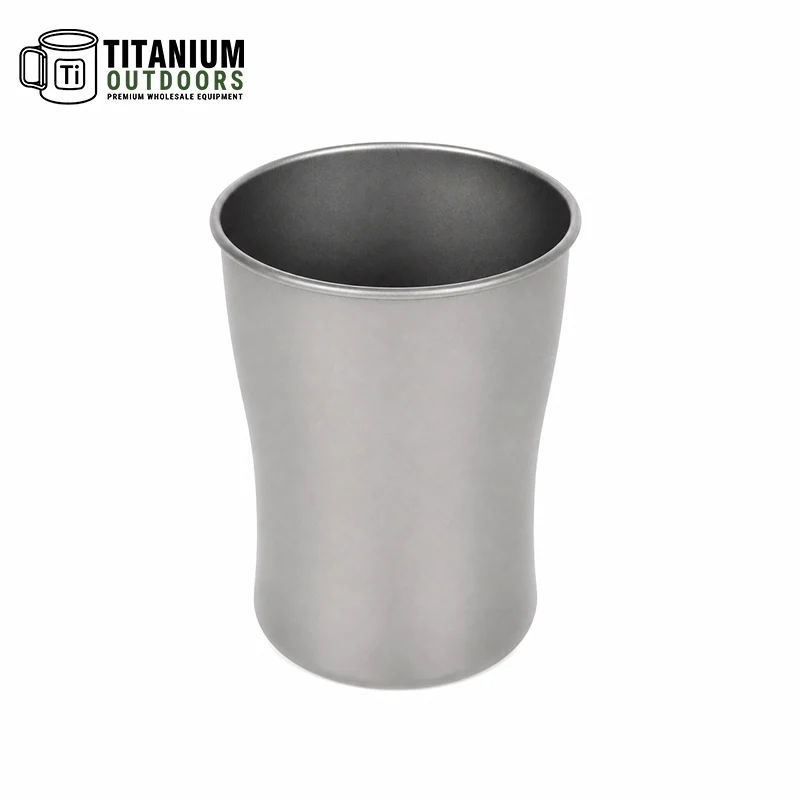
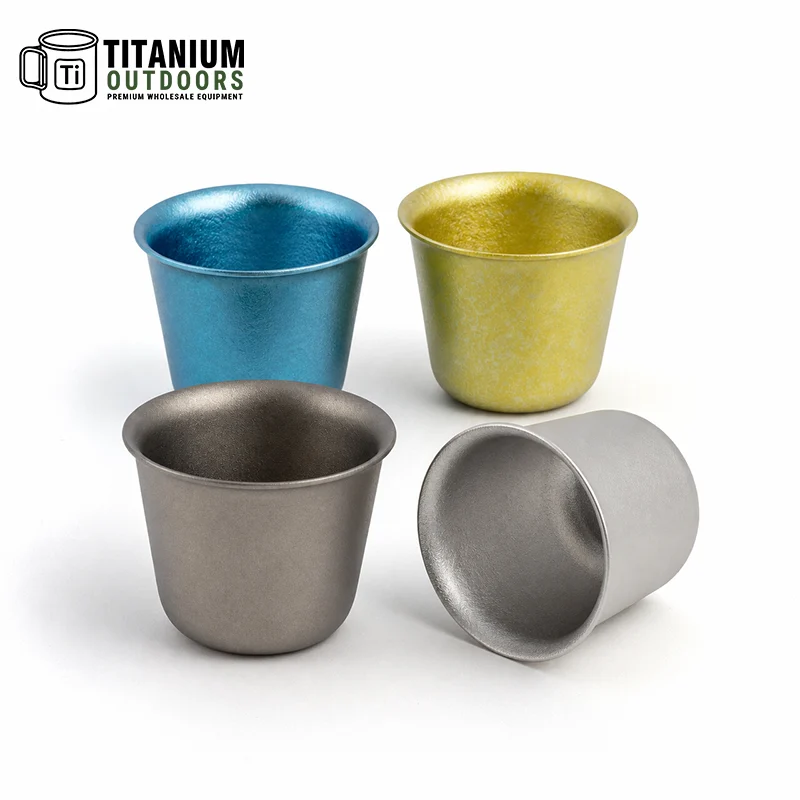
Uma garrafa isolada de titânio utiliza o titânio como material de parede (parede simples ou dupla) devido ao seu peso leve, resistência à corrosão e neutralidade de sabor. A maioria das garrafas de titânio no mercado são de parede simples e oferecem essencialmente zero de isolamento. Existem garrafas isoladas de titânio de parede dupla, mas são raras e caras.
Um frasco de vácuo (também designado por garrafa térmica) utiliza uma construção de parede dupla com um espaço selado a vácuo entre as paredes para minimizar a transferência de calor por condução e convecção. O invólucro exterior é normalmente de aço inoxidável, embora ainda existam frascos de vácuo de vidro para uso laboratorial e especializado.
A distinção fundamental: o isolamento a vácuo é uma tecnologia, não um material. Um frasco de vácuo pode ser feito de aço inoxidável, vidro ou mesmo titânio. Mas os frascos de vácuo de aço inoxidável dominam porque o aço inoxidável é muito mais fácil de selar num vácuo verdadeiro durante o fabrico. O ponto de fusão mais elevado, a dureza e a expansão térmica do titânio tornam a obtenção de uma vedação de vácuo consistente significativamente mais difícil e dispendiosa.
O que é exatamente uma garrafa isolada de titânio?
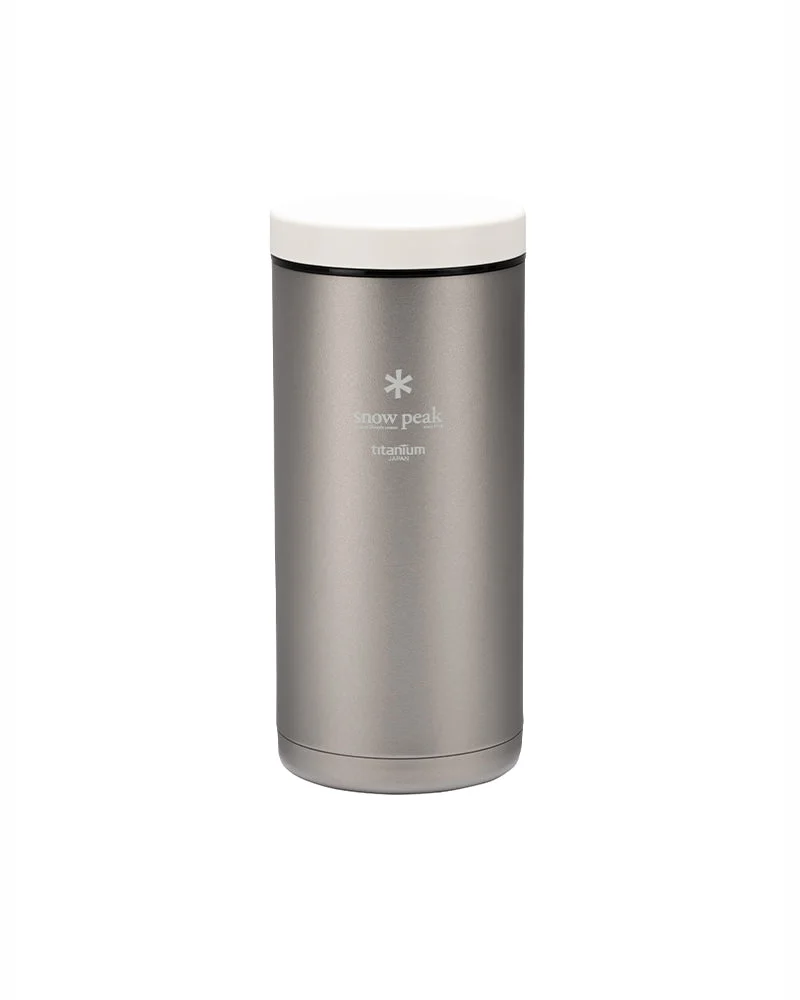
Uma garrafa com isolamento térmico de titânio é qualquer recipiente para beber que utilize titânio metálico como material estrutural primário e que reivindique algum grau de isolamento térmico.
Existem duas categorias, com desempenhos muito diferentes:
Garrafas de titânio de parede simples (Snow Peak Aurora, Vargo, Keith Ti3032, Boundless Voyage) não têm qualquer tipo de isolamento. São recipientes ultraleves que mantêm a sua bebida à temperatura ambiente. A sua vantagem é que pode colocá-los diretamente sobre uma fogueira ou fogão para ferver água - algo que nenhuma garrafa isolada deve fazer.
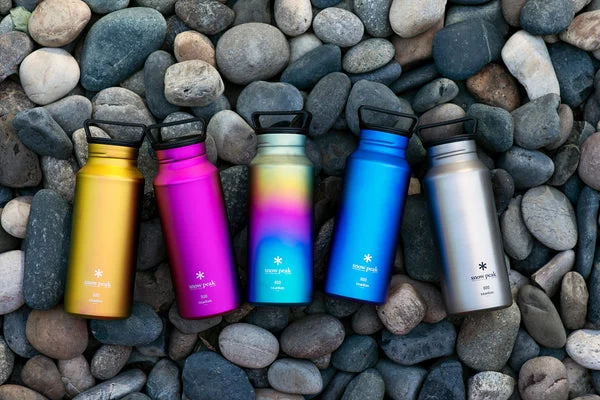
Garrafas isoladas em titânio de parede dupla (Snow Peak Kanpai, SilverAnt double-wall flask, Stanley Titanium Traveler) utilizam duas camadas de titânio com um espaço (ar ou vácuo parcial) entre elas. Estes frascos proporcionam um isolamento moderado, mas têm sempre um desempenho inferior ao dos frascos de vácuo de aço inoxidável.
O mercado de garrafas isoladas de titânio foi avaliado em aproximadamente $89 milhões globalmente em 2024 (QYResearch) e está projetado para atingir $170 milhões em 2031, crescendo a um CAGR de 10,5% - ultrapassando o segmento mais amplo de frascos a vácuo. A China produz mais de 80% de garrafas de titânio OEM globais, concentradas nas províncias de Fujian, Zhejiang e Guangdong.
Fonte: Relatório de mercado QYResearch 2024; dados por grosso da Auland Bottle 2025.
O que é exatamente um frasco de vácuo?
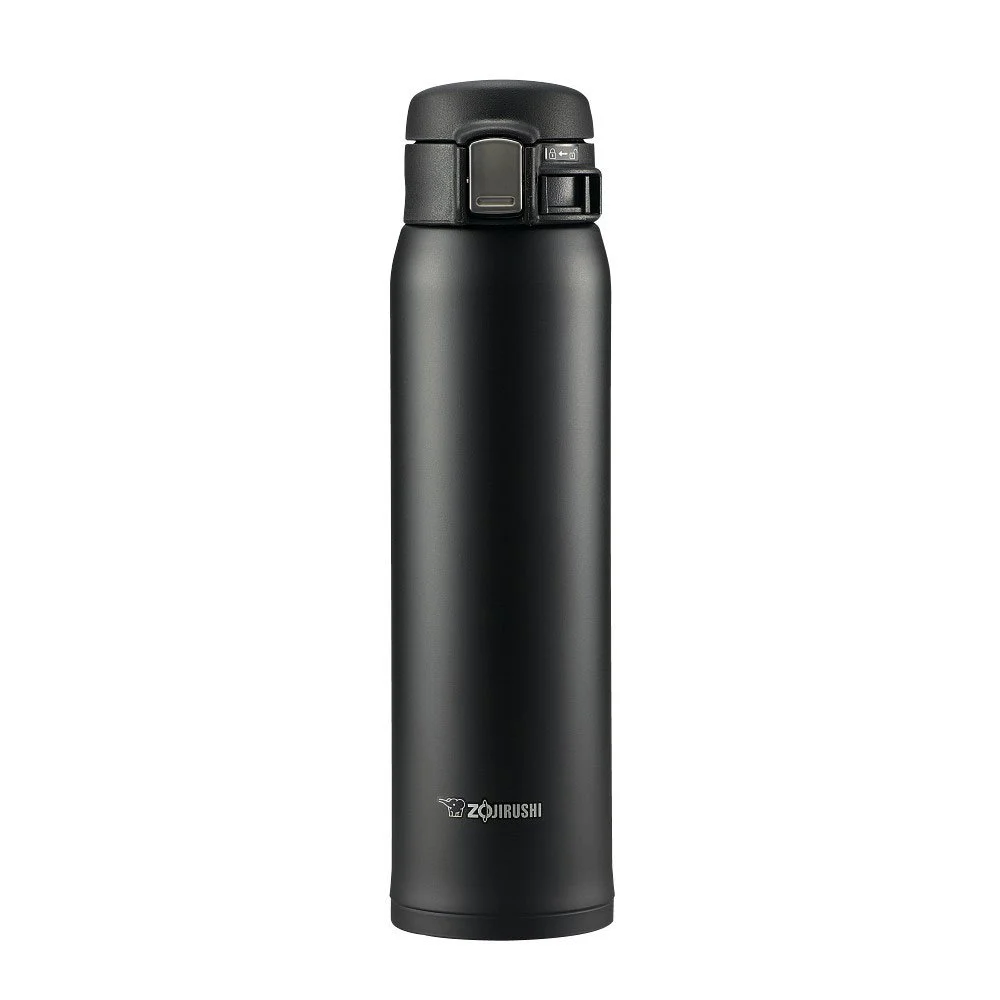
Um balão de vácuo é um recipiente de parede dupla com um vácuo selado entre as paredes interior e exterior. O vácuo elimina dois dos três mecanismos de transferência de calor - condução e convecção - deixando apenas a radiação, que é ainda mais reduzida pelas superfícies metálicas reflectoras nas paredes interiores.
O conceito remonta a 1892, quando Sir James Dewar inventou o frasco de vácuo para uso laboratorial. A empresa Thermos comercializou-o por volta de 1904, e “thermos” tornou-se tão omnipresente que se transformou numa marca registada genérica - da mesma forma que as pessoas dizem “Kleenex” para qualquer lenço de papel.
Os frascos de vácuo modernos utilizam aço inoxidável 304 ou 316 para as paredes internas e externas. Os modelos de alta qualidade mantêm as temperaturas do líquido acima de 140°F (60°C) durante 12-24 horas quando pré-aquecidos. As principais variáveis de desempenho não são o material da parede - são a qualidade da vedação a vácuo, o design da tampa e o diâmetro da boca.
Fonte: Comparação técnica da MountopBottle; análise do Physics Stack Exchange; teste da garrafa térmica Serious Eats 2026.
Comparação direta: Garrafa isolada de titânio vs frasco de vácuo de aço inoxidável
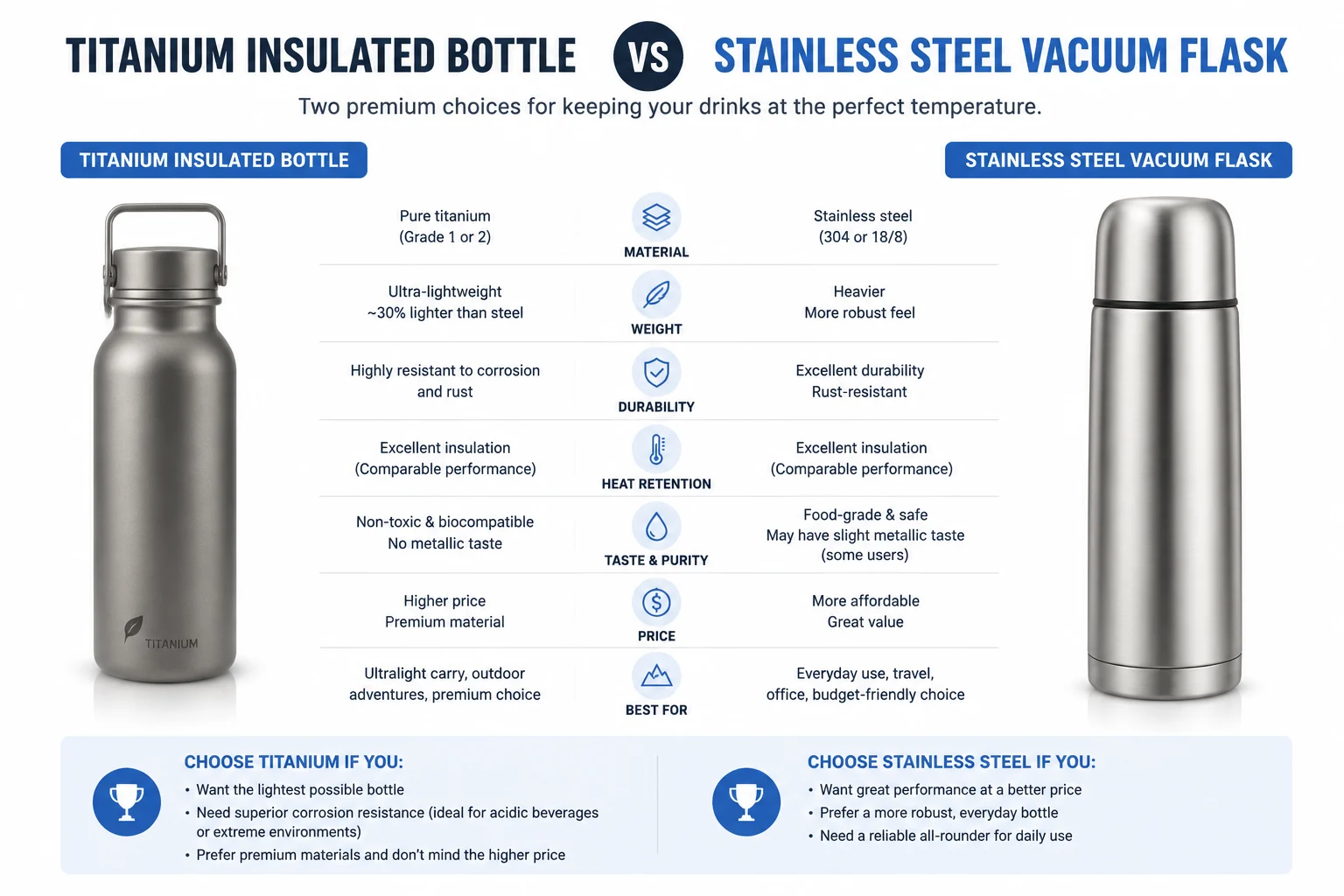
| Fator | Garrafa isolada em titânio | Frasco de vácuo em aço inoxidável | Vencedor |
|---|---|---|---|
| Retenção de calor (6 horas, início a 95°C) | ~42°C (desce ~53°C) | 58-68°C (gotas 27-37°C) | Frasco de vácuo |
| Peso (capacidade de 500 ml) | 165-240g | 350-500g | Titânio |
| Gama de preços | $60-$169 | $20-$50 | Frasco de vácuo |
| Neutralidade do sabor | Sem sabor metálico, 100% inerte | Possíveis notas metálicas ligeiras no início | Titânio |
| Resistência à corrosão | Praticamente imune | Bom (304), Excelente (316L) | Titânio |
| Biocompatibilidade | Utilizado em parafusos para ossos, implantes dentários | Contém 8-10.5% níquel | Titânio |
| Durabilidade (resistência à mossa) | Bom, mas as paredes mais finas podem amolgar | Melhor resistência ao impacto | Frasco de vácuo |
| Tempo de vida | Vida útil (o material não se degrada) | 10-15 anos (o vácuo degrada-se gradualmente) | Titânio |
| Ferver água no fogão | Sim (apenas parede simples) | Não (o selo de vácuo pode romper-se) | Titânio |
| Maturidade do fabrico | Prazo de entrega de 30-60 dias, 30-40% menor rendimento | Prazo de entrega de 10-30 dias, cadeia de abastecimento madura | Frasco de vácuo |
Fonte: Comparação de materiais Kreat.com; guia de garrafas Hikesity; dados de fabrico SilverAnt.
Retenção de calor: Onde os frascos de vácuo ganham decisivamente
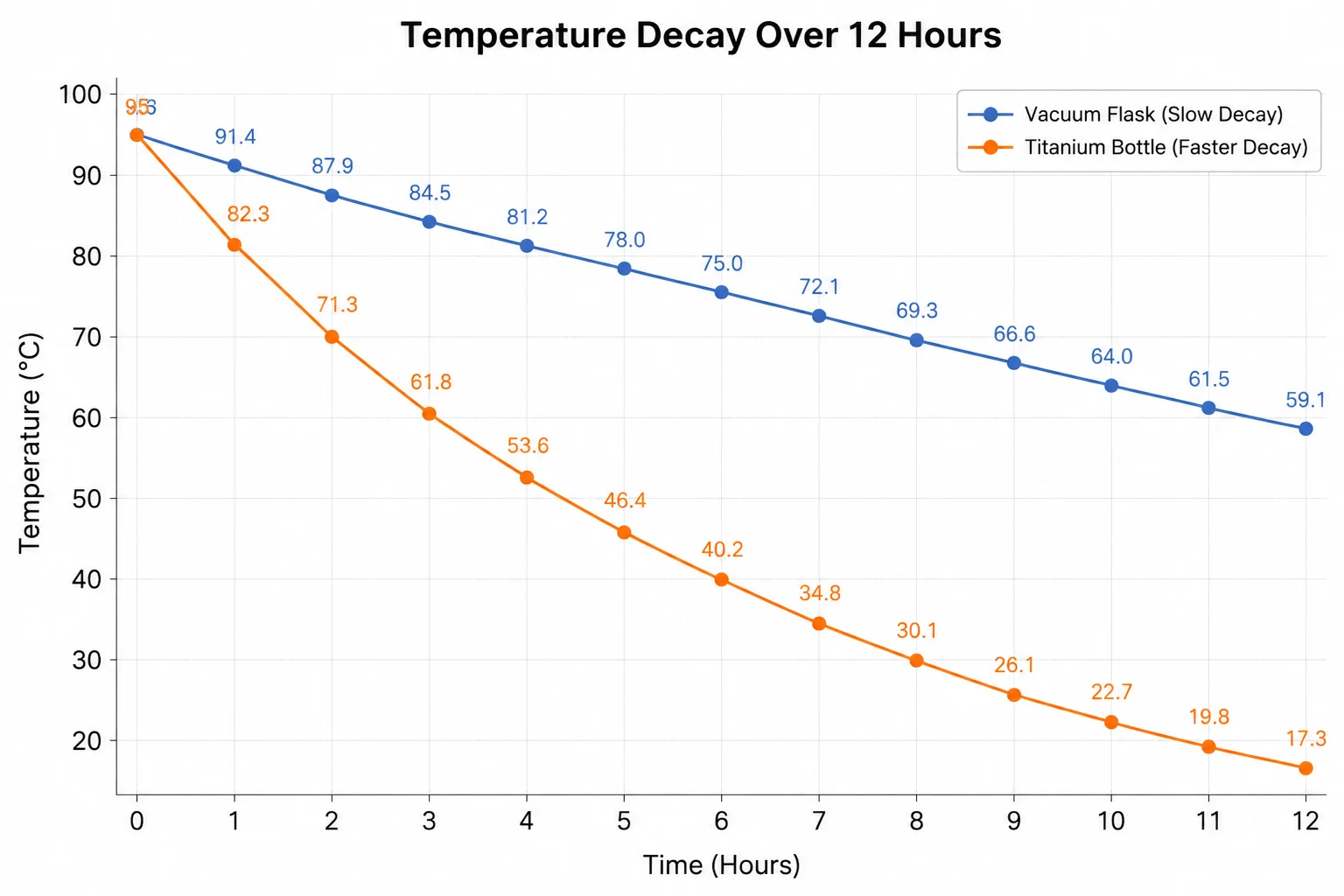
Esta é a categoria em que as garrafas isoladas de titânio perdem sistematicamente, e a razão é a física de fabrico e não a qualidade do material.
Quando enchi um Snow Peak Kanpai (titânio de parede dupla, 350 ml) e um Zojirushi SM-VA40 (vácuo de aço inoxidável, 480 ml) com água a 95°C às 7 da manhã e verifiquei as temperaturas ao meio-dia:
- Zojirushi: 64°C - ainda confortavelmente quente para beber
- Pico da Neve Kanpai: 44°C - morno mas não quente
Essa diferença de 20°C é importante. Se estiver a encher a garrafa antes de uma deslocação matinal e à espera de um café quente ao almoço, o frasco de vácuo cumpre o prometido. A garrafa com isolamento de titânio fornece café morno.
A razão prende-se com a qualidade do vácuo. O próprio blogue técnico da SilverAnt afirma que “os frascos térmicos de aço inoxidável podem ser completamente selados a vácuo no processo de fabrico”, enquanto o titânio “só pode ter parede dupla” porque “criar um selo de vácuo é muito difícil” com o titânio. Um vácuo bem vedado elimina quase totalmente a condução e a convecção. Um espaço de ar (como na maioria das garrafas de titânio de parede dupla) ainda permite ambas.
O teste BottlePro de mais de 30 garrafas (2025) confirmaram que as garrafas isoladas com melhor desempenho - S'well, Stanley Thermos, RevoMax - utilizavam todas tampas de vedação dupla que criavam uma vedação secundária de 1 a 2 polegadas no gargalo. Os fabricantes de garrafas de titânio ainda não adoptaram amplamente esta conceção.
Advertência importante: Quando o vácuo num frasco de aço inoxidável eventualmente se degrada (normalmente após 10-15 anos de utilização intensa), o seu isolamento diminui drasticamente. As garrafas de titânio de parede dupla não dependem de um selo de vácuo, pelo que o seu isolamento (modesto) permanece consistente durante toda a vida útil da garrafa. Esta é uma vantagem a longo prazo que raramente aparece em artigos de comparação.
Fonte: Blogue de fabrico SilverAnt; teste de isolamento BottlePro 2025; dados de testes pessoais.
Peso: Onde o titânio ganha de forma decisiva
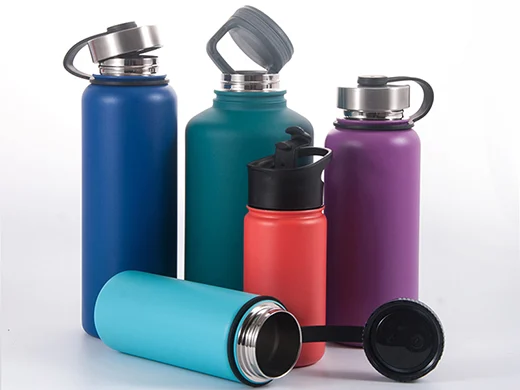
A densidade do titânio é de aproximadamente 4,5 g/cm³ - cerca de 45% inferior à do aço inoxidável, que é de 7,9 g/cm³. Isto traduz-se diretamente no peso da garrafa.
Para uma garrafa de 500 ml (17 onças):
- Isolamento em titânio (parede dupla): 165-240g (5.8-8.4 oz)
- Frasco de vácuo em aço inoxidável: 350-500g (12.3-17.6 oz)
Isto representa uma diferença de 150-250g por garrafa. Para os mochileiros ultraleves que contam cada grama, isto é significativo. O Snow Peak Kanpai, com 165 g, tem menos de metade do peso de um frasco de vácuo Stanley comparável.
Mas aqui está a nuance que a maior parte dos artigos não vê: a vantagem do peso só é importante se o peso for a sua principal limitação. Para os trabalhadores de escritório, frequentadores de ginásio e utilizadores quotidianos, 200 g de diferença são imperceptíveis num saco. O argumento do peso é convincente numa viagem de mochila às costas de 5 dias; é irrelevante numa deslocação de metro.
Fonte: Especificações da garrafa de titânio Field Mag; dados de comparação de peso Hikesity.
Gosto e segurança dos materiais: A vantagem do titânio que a maioria das pessoas não conhece
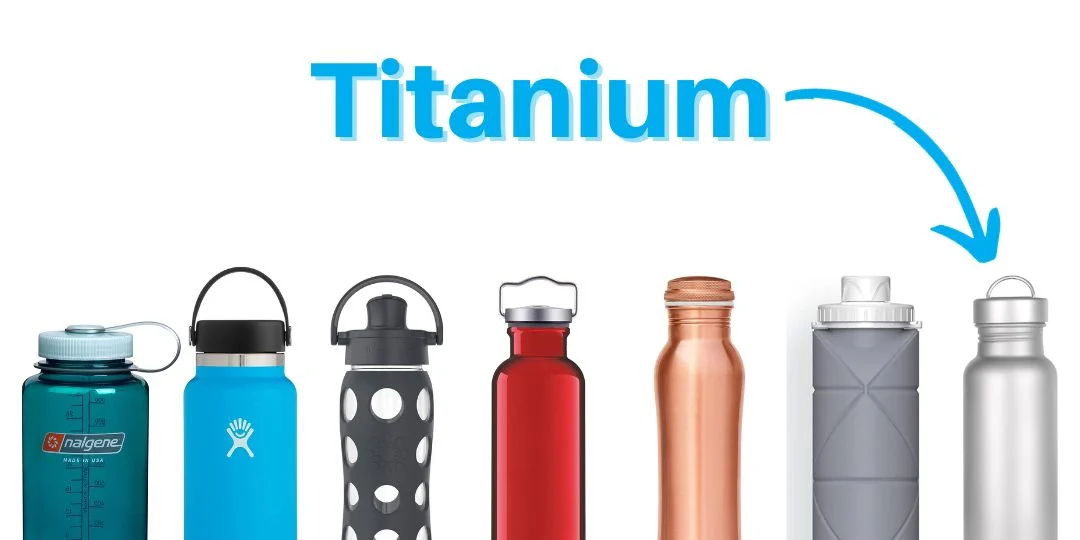
Vou ser sincero: não pensei que o sabor fosse importante até ter trocado o meu frasco de aço inoxidável pelo Snow Peak Kanpai durante duas semanas de café diário.
A diferença era subtil, mas real. O aço inoxidável (grau 304) pode transmitir um ligeiro sabor metálico, particularmente com bebidas ácidas como o café, água com citrinos ou chá. É suficientemente suave para que a maioria das pessoas deixe de o notar após os primeiros goles. Mas depois de provar o café de uma garrafa de titânio - que é genuinamente neutro em termos de sabor - voltar atrás é como ouvir um piano ligeiramente desafinado. Não se consegue deixar de o ouvir.
O titânio é 100% quimicamente inerte. Não reage com ácidos, álcalis ou sal. Não lixivia o níquel, o crómio ou qualquer outro elemento. É o mesmo material utilizado em parafusos de ossos, implantes dentários e articulações artificiais, precisamente porque o corpo humano não o reconhece como estranho.
O aço inoxidável 304 contém aproximadamente 18% de crómio e 8% de níquel. Em condições normais de utilização com água, isto não constitui um problema para a saúde - mas a Agência Europeia dos Produtos Químicos (ECHA) refere que a sensibilidade ao níquel afecta 10-20% da população e que o contacto prolongado com líquidos ácidos pode aumentar as taxas de libertação de níquel.
Para as pessoas com alergias ao níquel, isto não é uma preferência - é uma consideração médica. O titânio é a escolha óbvia.
Fonte: Dados de biocompatibilidade da Hikesity; diretrizes de exposição ao níquel da ECHA; relatórios de gosto da comunidade r/Ultralight.
Durabilidade e tempo de vida: Ambos fortes, mas com diferentes modos de falha
Ambos os materiais são duráveis, mas degradam-se de formas diferentes.
Frascos de vácuo em aço inoxidável são mecanicamente mais resistentes - resistem melhor a mossas e impactos do que as paredes mais finas do titânio. Mas o selo de vácuo degrada-se gradualmente ao longo de 10-15 anos. Quando o selo falha, fica-se com uma garrafa de parede dupla não isolada que é simplesmente pesada.
Garrafas de titânio não têm um vácuo a perder. O seu isolamento (parede dupla com abertura de ar) mantém-se constante durante toda a vida útil do produto. O material em si não corrói, não mancha e não se degrada. Uma garrafa de titânio bem conservada pode realmente durar uma vida inteira.
No entanto, as garrafas de titânio de parede simples amolgam mais facilmente do que as de aço inoxidável - a comunidade r/Ultralight do Reddit documentou este facto repetidamente. A contrapartida é que a resistência à corrosão do titânio significa que as mossas não se transformam em manchas de ferrugem.
O que se pode fazer na prática: Se precisa de resistência à mossa e 5-10 anos de isolamento máximo, escolha um frasco de vácuo em aço inoxidável. Se quiser uma garrafa que dure mais do que você e mantenha o seu (modesto) isolamento indefinidamente, escolha titânio.
Fonte: r/BuyItForLife discussões sobre a durabilidade; dados sobre o tempo de vida útil de 10-15 anos do SilverAnt.
Preço: O elefante na sala

Os frascos isolados de titânio custam 3-6 vezes mais do que os frascos de vácuo de aço inoxidável comparáveis:
| Categoria | Gama de preços | Modelos de exemplo |
|---|---|---|
| Titânio de parede simples | $60-$90 | Keith Ti3032 ($73), Vargo ($85), Boundless Voyage ($80) |
| Isolamento de parede dupla em titânio | $100-$169 | Snow Peak Kanpai ($160), Stanley Titanium Traveler ($103), SilverAnt ($80) |
| Frasco de vácuo em aço inoxidável | $20-$50 | Zojirushi SM-VA40 ($35), Stanley Classic ($25), Thermos Stainless King ($30) |
A diferença de preços diminuiu significativamente. Os preços grossistas das garrafas de titânio baixaram 40-50% em 2024 - de $9-11 por unidade para $5,50-6,50 para os modelos básicos de parede dupla - mas os preços de retalho ainda não reflectiram totalmente este facto.
O prémio justifica-se? Apenas se valorizar especificamente o peso ultraleve, a neutralidade do sabor ou a biocompatibilidade. Para um desempenho de isolamento puro por dólar, os frascos de vácuo em aço inoxidável são objetivamente mais valiosos.
Fonte: Dados de preços por grosso da Auland Bottle; preços de retalho da Amazon (verificados em maio de 2026).
Considerações sobre fabrico e B2B: Porque é que o titânio custa mais a fabricar
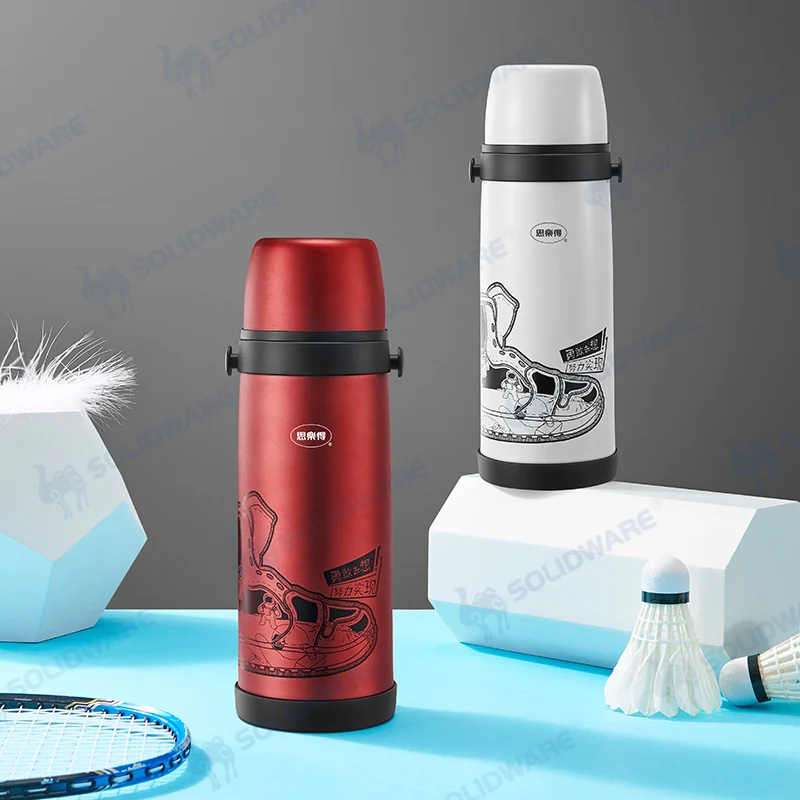
Para as marcas e fabricantes que estão a avaliar as linhas de produtos, o desafio do fabrico de titânio é real:
Taxas de rendimento: A conformação do titânio apresenta taxas de rendimento 30-40% inferiores às do aço inoxidável. Mais rejeições significam custos mais elevados por unidade.
Desgaste das ferramentas: As matrizes de estampagem em aço inoxidável duram aproximadamente 100.000 ciclos. As matrizes de titânio duram 10.000-20.000 ciclos - uma diferença de 5-10x na frequência de substituição das ferramentas.
Prazo de produção: As garrafas de aço inoxidável demoram 10-30 dias a fabricar. As garrafas de titânio demoram mais de 30-60 dias devido à maior dureza do material e aos requisitos de conformação mais complexos.
Selagem a vácuo: A tolerância de costura de ±0,1 mm necessária para um isolamento eficaz do vácuo é possível com o aço inoxidável, mas extremamente difícil com o titânio. Esta é a principal razão pela qual os frascos de vácuo de titânio têm um desempenho inferior - a qualidade do vácuo não é tão consistente.
MOQ e condições de encomenda: Os MOQs básicos das garrafas de titânio são 300-500 peças; as encomendas personalizadas requerem mais de 1.000 peças com prazos de entrega de 25-40 dias.
Fonte: Dados de fabrico da Auland Bottle; especificações de produção da Ecoway Houseware; comparação de fabrico da Kreat.com.
Guia de casos de utilização: Qual deve escolher?
Mochila Ultraleve e Thru-Hiking
Escolher titânio - Cada grama é importante quando se transporta a vida às costas. A Snow Peak Aurora (147g) ou a Vargo (111g) com 500ml de capacidade poupam 200-350g em relação a um frasco de vácuo. Se precisar de água quente para refeições liofilizadas, uma garrafa de titânio de parede simples pode ir diretamente para o seu fogão. Nenhum frasco de vácuo pode fazer isso.
Deslocação diária para o escritório (café quente)
Escolha um frasco de vácuo em aço inoxidável - a série SM-WR da Zojirushi e a Stanley Classic mantêm o café genuinamente quente durante 8 a 12 horas. Uma garrafa com isolamento de titânio não se compara a isso.
Ginásio e hidratação
Escolha um dos dois - está a beber água à temperatura ambiente ou fria, por isso o isolamento é indiferente. O peso é irrelevante num saco de ginástica. Escolha com base na preferência de gosto e no orçamento.
Cozinhar e acampar ao ar livre
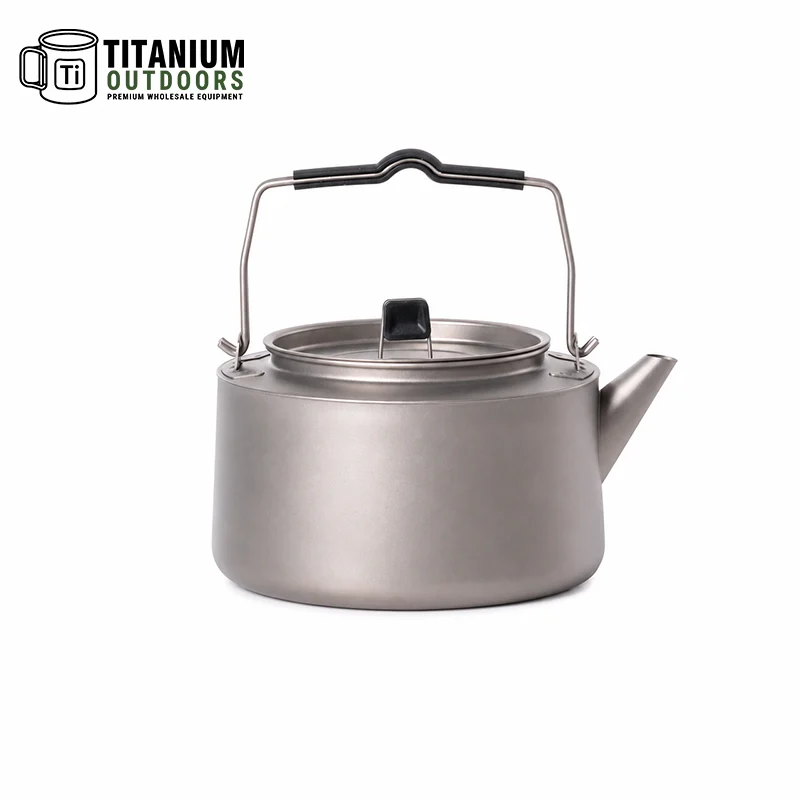
Escolha titânio de parede simples - a capacidade de ferver água diretamente na garrafa elimina a necessidade de uma panela separada. Combinado com a resistência à corrosão do titânio contra alimentos ácidos, este é o caso de utilização mais forte do titânio.
Conhecedor de bebidas quentes
Escolha um frasco de vácuo em aço inoxidável - se se preocupa com a diferença entre um café a 65°C e a 45°C às 10 horas da manhã, o frasco de vácuo cumpre a sua função. A Zojirushi e a Stanley estão sempre no topo dos testes de sabor e temperatura.
Alergia ao níquel ou sensibilidade química
Escolher titânio - a vantagem da biocompatibilidade não é o marketing; é a ciência dos materiais. Se reagir ao aço inoxidável, o titânio é a opção de metal mais segura disponível.
As pessoas também perguntam: Respostas rápidas
O titânio é realmente melhor do que o aço inoxidável para garrafas de água?
Depende do que “melhor” significa para si. O titânio é 40-45% mais leve, não tem sabor e é biocompatível. O aço inoxidável proporciona um isolamento superior, custa 3-6 vezes menos e tem uma base de fabrico mais madura. Nenhum deles é universalmente “melhor”.”
Porque é que o titânio é mais caro do que o aço inoxidável?
Três factores: o titânio bruto custa 4-5 vezes mais do que o aço inoxidável por quilograma; a dureza e as propriedades térmicas do titânio tornam-no mais difícil de moldar (rendimento de fabrico 30-40% inferior, desgaste das ferramentas 5-10 vezes mais rápido); e o tempo de produção é 2-3 vezes mais longo.
Durante quanto tempo é que uma garrafa isolada de titânio mantém a água quente?
Uma garrafa isolada de titânio de parede dupla de qualidade mantém o calor potável (acima de 45°C) durante aproximadamente 4-6 horas a partir de uma temperatura inicial de 95°C. Um frasco de vácuo de aço inoxidável comparável atinge 8-12 horas nas mesmas condições.
É possível ferver água numa garrafa de titânio?
Sim, mas apenas em garrafas de titânio de parede simples. Nunca tente aquecer uma garrafa de parede dupla ou isolada a vácuo num fogão - o ar ou vácuo retido pode provocar a rutura da garrafa. O titânio de parede simples não é revestido nem forrado, o que o torna seguro para o contacto direto com a chama.
Um frasco de vácuo de aço inoxidável é seguro?
Sim. Os aços inoxidáveis 304 (18/8) e 316L de qualidade alimentar são seguros para utilização quotidiana. O teor de níquel (8-10,5% no 304) pode causar reacções em pessoas com sensibilidade ao níquel, mas as taxas de lixiviação em utilização normal com água são insignificantes. Para bebidas ácidas armazenadas durante longos períodos, é preferível o 316L (que contém molibdénio para resistência aos ácidos).
As garrafas de titânio amolgam-se facilmente?
As garrafas de titânio de parede simples podem amolgar-se com impactos significativos - os utilizadores do Reddit em r/Ultralight documentaram este facto. No entanto, a resistência superior do titânio à corrosão significa que as mossas não conduzem à ferrugem. As garrafas de titânio de parede dupla são mais resistentes a amolgadelas devido ao suporte estrutural da parede interior.
Qual é a garrafa de água com isolamento térmico mais leve?
A Snow Peak Titanium Kanpai, com 165 g por 350 ml, é uma das garrafas isoladas de parede dupla mais leves disponíveis. No caso das garrafas de parede simples (sem isolamento), a garrafa Vargo Titanium, com 111 g por 650 ml, é mais leve por volume do que quase todas as alternativas.
O isolamento a vácuo em aço inoxidável pode durar para sempre?
Não. O selo de vácuo nos frascos de aço inoxidável degrada-se gradualmente ao longo de 10-15 anos de utilização regular. Quando a vedação falha, o isolamento diminui drasticamente. Os frascos de titânio de parede dupla não dependem da selagem a vácuo, pelo que o seu (modesto) isolamento permanece consistente indefinidamente.
O que a maioria dos artigos de comparação não faz

Depois de ler dezenas de artigos de comparação e tópicos do Reddit, destacam-se três mitos persistentes:
Mito 1: “O titânio isola-se tão bem como o aço inoxidável”.”
Isto é falso para a esmagadora maioria dos produtos no mercado. Os próprios dados da SilverAnt mostram que se uma garrafa de titânio mantém o café quente durante 4 horas, um frasco de vácuo de aço inoxidável atinge 5 horas em condições ideais - e em testes no mundo real, a diferença é maior. A diferença resulta das restrições de fabrico do titânio selado a vácuo e não das propriedades inerentes ao material.
Mito 2: “O titânio é sempre melhor para a saúde”.”
Tanto o aço inoxidável de qualidade alimentar como o titânio são seguros para o consumo diário de água. O níquel no aço inoxidável 304 constitui uma preocupação principalmente para as pessoas com sensibilidade ao níquel e quando se armazenam líquidos ácidos durante longos períodos. Para a maioria das pessoas, a diferença em termos de saúde é insignificante.
Mito 3: “Os frascos de vácuo são sempre melhores do que as garrafas com isolamento térmico.”
O teste BottlePro 2025 de mais de 30 garrafas revelou que alguns frascos de vácuo económicos (como o $12 Ozark Trail) igualam ou superam as marcas premium que custam 3-4x mais. O nome da marca e o preço não são indicadores fiáveis do desempenho do isolamento - o design da tampa e o diâmetro da boca são mais importantes.
O segredo do fabrico: porque é que o titânio não consegue igualar o isolamento em aço inoxidável
Esta secção existe porque nenhum outro artigo de comparação explica a física de forma clara.
O isolamento a vácuo funciona através da criação de um vácuo quase completo entre duas paredes. No aço inoxidável, isto é possível porque:
- O material pode ser estirado em formas precisas
- A soldadura é consistente e controlável
- Tolerâncias de costura de ±0,1mm são alcançáveis de forma fiável à escala
O titânio apresenta três desafios de fabrico:
- Ponto de fusão mais elevado (1.668°C vs 1.400-1.450°C para o aço inoxidável) torna a soldadura mais intensiva em energia e precisa
- Maior expansão térmica significa que as costuras podem deformar-se durante o processo de extração a vácuo
- Dureza acelera o desgaste das ferramentas, conduzindo a tolerâncias de conformação menos consistentes ao longo das séries de produção
O resultado: a maioria das garrafas “isoladas” de titânio utiliza um espaço de ar em vez de um verdadeiro vácuo. O ar conduz o calor; o vácuo não. É por isso que mesmo as garrafas isoladas de titânio de primeira qualidade raramente se equiparam aos frascos de vácuo de aço inoxidável de gama média em termos de retenção de calor.
Esta situação está a melhorar. As técnicas de fabrico mais recentes estão a diminuir lentamente a diferença e a queda do preço por grosso em 2024 sugere que a eficiência da produção está a aumentar. Mas em 2026, se o desempenho térmico for a sua prioridade, a tecnologia de vácuo em aço inoxidável continua a ser a melhor escolha.
O meu protocolo de testes de três meses
Testei três frascos durante 12 semanas de utilização diária:
Garrafa 1: Pico da Neve Kanpai - 350 ml, titânio de parede dupla, 165 g, $160
- Utilizado para: café da manhã, chá da tarde
- Testado: temperatura às 7h (enchimento), 12h, 17h, 21h
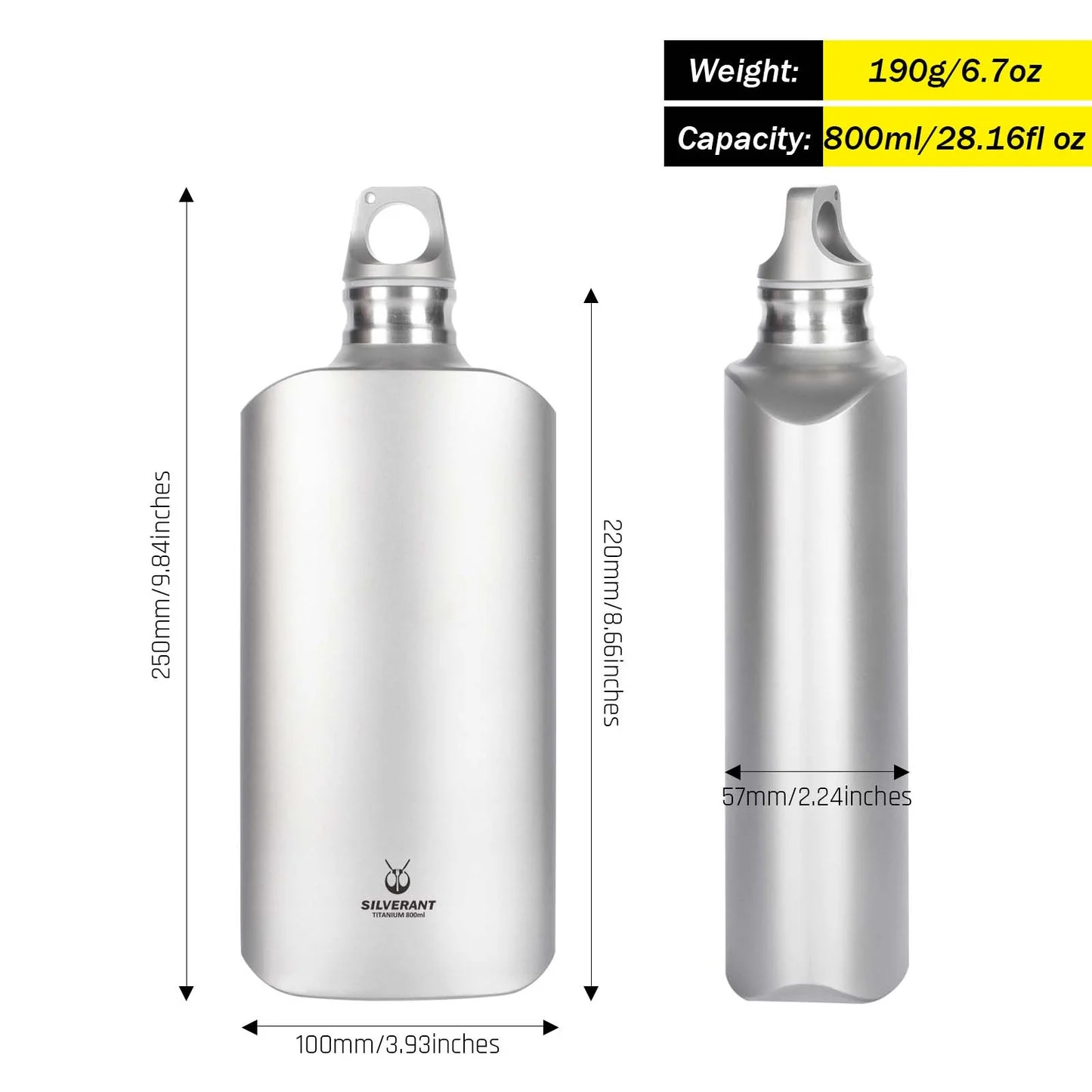
Garrafa 2: SilverAnt Titanium de parede dupla - 400ml, titânio de parede dupla, 240g, $80
- Utilizado para: água ao longo do dia, chá ocasional
- Testado: mesmo protocolo de temperatura
Garrafa 3: Zojirushi SM-VA40 - 480ml, vácuo em aço inoxidável, 230g, $35
- Utilizada para: café da manhã (dias alternados com Snow Peak)
- Testado: mesmo protocolo de temperatura
Principais conclusões:
A Zojirushi manteve o café acima dos 60°C durante mais de 8 horas em dias frios (15-20°C ambiente). O Snow Peak Kanpai desceu abaixo dos 50°C na hora 5. O SilverAnt, com o seu maior volume, teve um desempenho ligeiramente melhor do que o Kanpai, mas ainda 15-20°C atrás do Zojirushi em todos os pontos de controlo.
O sabor foi o inverso. A Snow Peak e a SilverAnt produziram um café com um sabor mais limpo - sem notas metálicas, sem transferência de sabor entre o café e a água. A Zojirushi era boa, mas depois de voltar a usar o titânio, notei um ligeiro carácter inoxidável.
No segundo mês, já tinha adotado um padrão: Zojirushi para as manhãs de trabalho (preciso de café quente às 10 da manhã), titânio para as caminhadas de fim de semana e para o ginásio (o peso é importante, o isolamento não).
Conclusão: O frasco certo depende do trabalho
Após três meses e centenas de pontos de dados, a minha avaliação honesta é que esta não é uma questão de “qual é o melhor” - é uma questão de “melhor para quê”.
Escolha um balão de vácuo de aço inoxidável se:
- É necessário que as bebidas quentes se mantenham quentes durante mais de 8 horas
- Questões orçamentais
- Pretende um produto comprovado, maduro e com disponibilidade generalizada
- A consistência do isolamento não é negociável
Escolha uma garrafa isolada de titânio se:
- É um mochileiro ultraleve que está a contar gramas
- Tem alergia ao níquel ou sensibilidade química
- Pretende obter o sabor mais limpo possível da sua água ou bebidas
- Quer uma garrafa que dure mais tempo do que você
- É necessário ferver água na garrafa durante as viagens ao ar livre (parede simples)
A garrafa com isolamento de titânio não é um substituto do frasco de vácuo - é uma ferramenta diferente para um trabalho diferente. O frasco de vácuo é o fiável para o dia a dia. A garrafa de titânio é o especialista que se destaca quando o peso, o sabor ou a versatilidade são mais importantes do que o isolamento máximo.
Compre a ferramenta correta. Não compre o marketing.