
Titanium cookware maintenance depends entirely on what you actually own — pure titanium, titanium-coated aluminum, or molecular titanium (NanoBond). Daily care is simple: cool the pan, wash with warm soapy water, dry immediately. You don’t need to season titanium like cast iron, but a thin oil conditioning every few months helps with food release. Rainbow discoloration is cosmetic, not damage, and clears with white vinegar or Bar Keepers Friend. Avoid thermal shock, oven cleaners, and improper stacking. This guide covers everything from daily habits to the monthly care schedule most owners skip.
The Type Problem: Pure Titanium, Titanium-Coated, and NanoBond
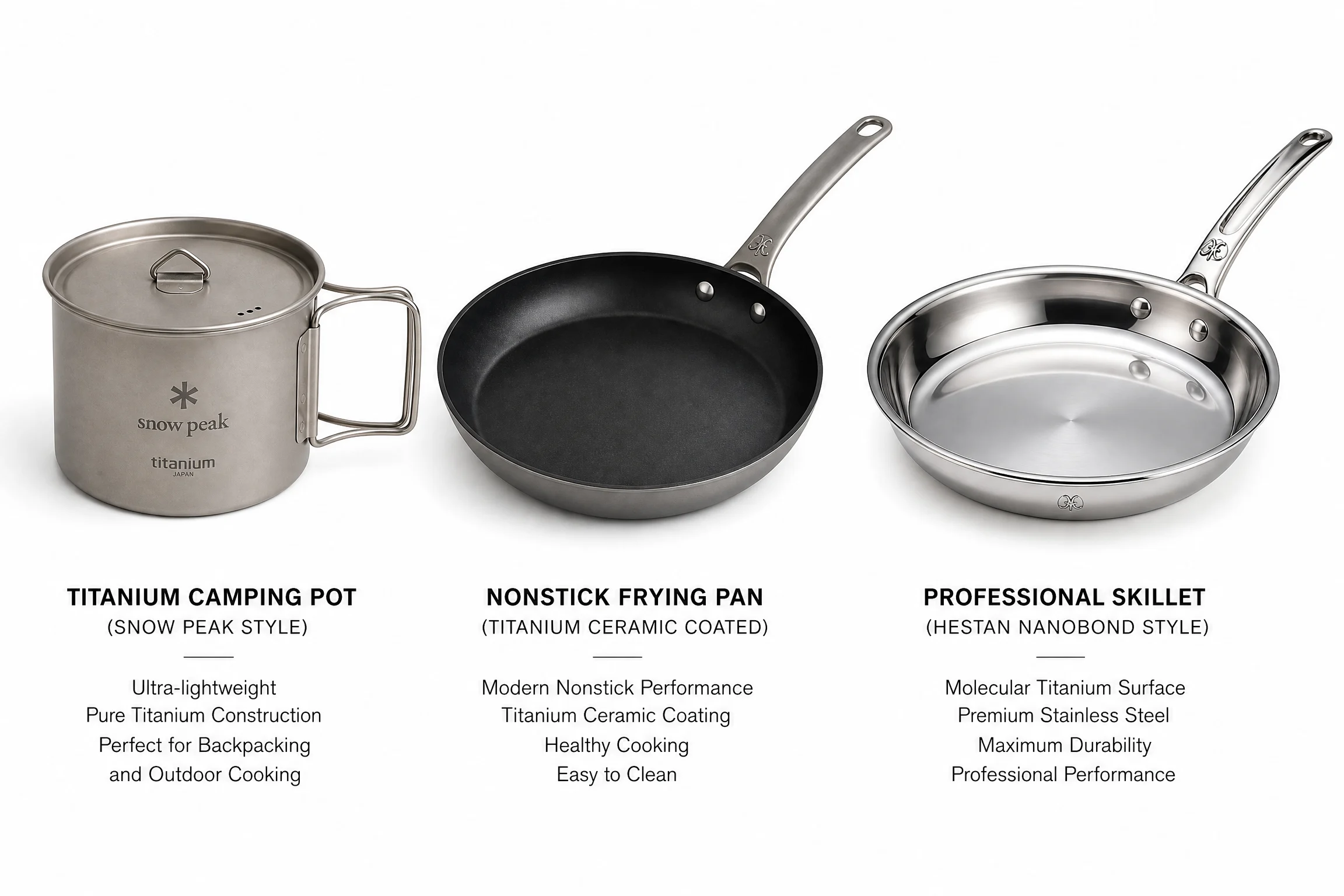
Your care routine depends on which kind of titanium cookware you have — and most guides don’t tell you they’re different.
Walk into any kitchen store in 2026 and you’ll find “titanium” on the label of everything from a $25 budget pan to a $300 professional set. The word titanium on a box can mean three completely different things, and each requires a different maintenance approach.
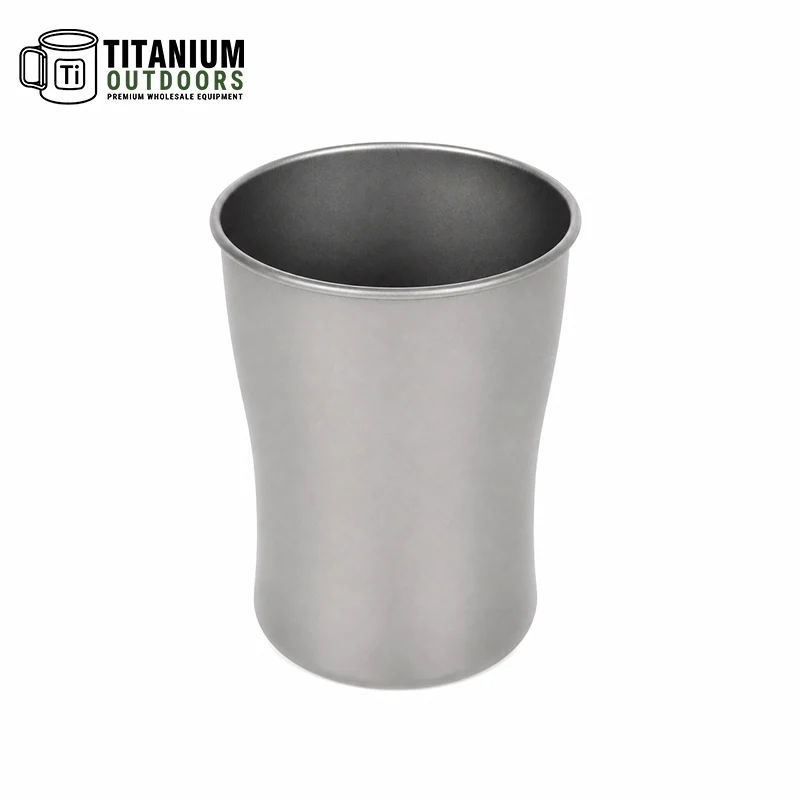
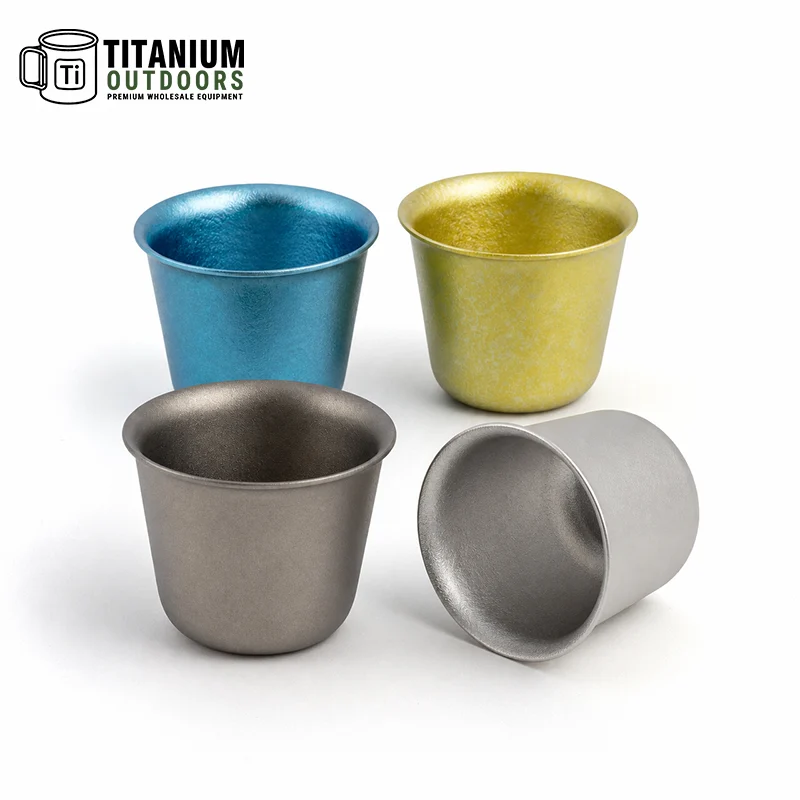
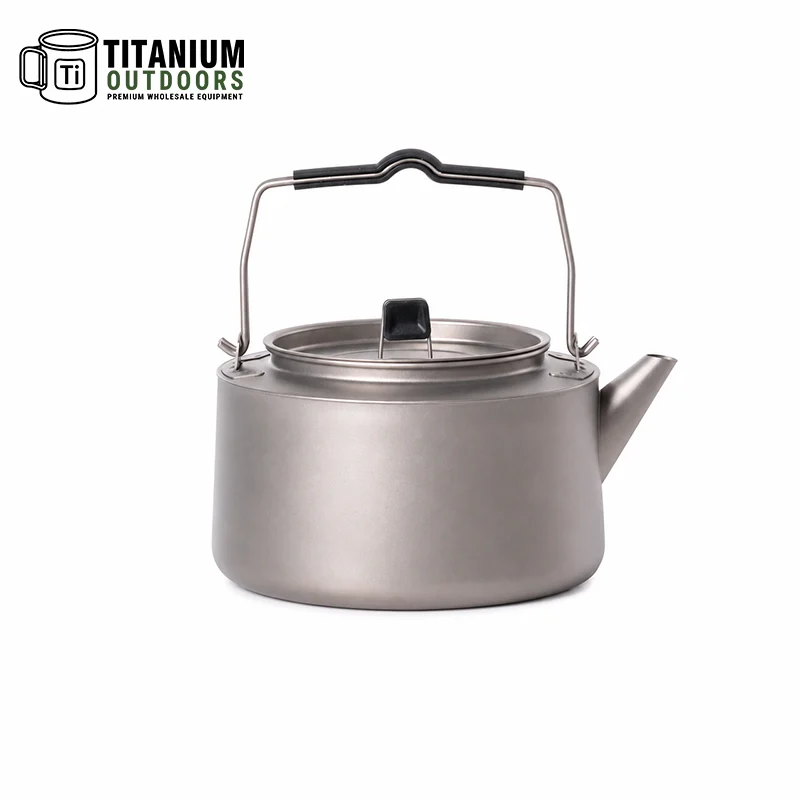
Pure titanium cookware — the kind made by Snow Peak, Toaks, and Boundless Voyage — is typically 0.5–1mm thin sheets of Grade 1 or Grade 2 commercially pure titanium. These pans are prized by ultralight backpackers because titanium’s density (4.5 g/cm³) is roughly half that of stainless steel (7.9 g/cm³). The surface is uncoated bare metal. It will scratch, it will develop patina, and it genuinely does benefit from occasional light oil conditioning.
Titanium-coated cookware — the category that includes most “Gotham Steel titanium,” budget supermarket pans, and many mid-range brands — uses aluminum or stainless steel as the body material with a nonstick coating that contains titanium dioxide particles (TiO₂) for hardness. The titanium content in the coating is typically minimal. Maintenance-wise, treat these exactly like any nonstick pan: low heat, soft utensils, no dishwasher, no abrasive scrubbers.
Molecular titanium (NanoBond) — Hestan’s patented technology — bonds thousands of titanium-based nanolayers directly onto stainless steel at the molecular level. The result has a dense, almost impenetrable surface that behaves quite differently from either of the above. It’s dishwasher safe, metal-utensil safe, and can be scrubbed with steel wool when needed.
| Feature | Pure Titanium (camping) | Titanium-Coated (budget kitchen) | NanoBond (Hestan) |
|---|---|---|---|
| Body material | Titanium (thin) | Aluminum or SS | Stainless steel |
| Surface | Bare metal | Nonstick coating | Molecular titanium layer |
| Dishwasher safe? | Usually yes (check lid) | No | Yes |
| Metal utensils OK? | Yes (careful with scratches) | No | Yes |
| Seasoning needed? | Light oil conditioning helps | No (do NOT use spray oil) | No |
| Steel wool OK? | Avoid on thin walls | No | Yes |
| Abrasive cleaners OK? | Soft ones only | No | Yes (Bon Ami, BKF) |
The maintenance mistake I see most often: someone buys a budget “titanium” pan, finds a Snow Peak care guide online, and then scrubs their nonstick coating off with a scouring pad. Know your type first.
Daily Cleaning Routine — The 4 Steps That Protect Your Investment

The daily routine for titanium cookware takes about 90 seconds and prevents 90% of long-term problems.
After three months of daily cooking with a pure titanium skillet (and periodically testing a NanoBond 11″ as a reference), the single biggest factor in how the pan performs long-term is what you do in the first five minutes after cooking. Here’s the routine that works:
Step 1: Let it cool first.
Never plunge a hot titanium pan into cold water. Titanium has a thermal conductivity of 17 W/m-K — low enough that temperature is unevenly distributed across the surface even after you remove it from heat. Rapid cooling creates thermal stress that can warp thin pure titanium pans over time and may cause micro-fractures in bonded coatings. Wait 3–5 minutes after cooking before washing. The pan cools faster than cast iron anyway.
Step 2: Warm water and mild dish soap.
Any standard dish soap works. Use warm water (not boiling, not ice cold). For pure titanium and NanoBond, a non-scratch Scotch-Brite pad is fine. For titanium-coated pans, use only a soft sponge. Gently work off any food residue. Most food comes off easily if you haven’t let it bake on a second time.
Step 3: Rinse thoroughly.
Soap residue left on the cooking surface can polymerize during the next cooking session and create sticky buildup that users mistakenly attribute to the pan “going bad.” A thorough rinse takes 10 seconds and prevents a common frustration.
Step 4: Dry immediately — don’t air dry.
This is the step most people skip. Hard water deposits look bad on titanium’s metallic surface and are much harder to remove once they’ve been baked on during the next cooking session. A quick wipe with a dish towel takes 15 seconds. For NanoBond specifically, Hestan’s own guide emphasizes this step because the mirror-like titanium surface shows water spots more visibly than other finishes.
What about soaking?
Short soaks (10–15 minutes) work well for stuck-on food — fill the pan with warm soapy water while you eat dinner, then clean. Prolonged soaking (overnight, multi-hour) isn’t harmful for pure titanium or NanoBond, but there’s no benefit either since titanium doesn’t absorb odors or flavors. For titanium-coated pans, avoid soaking around the rivets if your pan has them, as water can work into the joint and cause the handle to loosen over time.
Does Titanium Cookware Need Seasoning?
Short answer: No — but pure titanium benefits from occasional light oil conditioning, which is not the same thing as cast iron seasoning.
This is probably the most confused topic in titanium cookware care, partly because brands market their pans inconsistently and partly because the word “seasoning” means something very specific in the cast iron world that doesn’t translate to titanium.
Cast iron seasoning works because the metal is porous. Oil polymerizes into the pores, creating a semi-nonstick surface layer that builds up over time. Titanium is not porous in the same way. Oil does not polymerize into titanium’s crystal structure.
What actually happens when you “season” a pure titanium pan:
You’re applying a thin oil layer that temporarily reduces sticking. It doesn’t bond permanently. It burns off during high-heat cooking and needs to be reapplied. Think of it as “light oil conditioning” rather than seasoning — a practical habit, not a one-time ritual.
Method for pure titanium oil conditioning:
- Wash the pan with warm soapy water and dry completely
- Apply a few drops of high-smoke-point oil (flaxseed, grapeseed, or avocado oil)
- Spread it thin with a paper towel until the surface barely glistens — thinner than you think
- Heat on medium-low for 2 minutes, then let cool
- Wipe off any excess with a clean paper towel
This takes about 5 minutes and is worth doing every 2–3 months or when you notice food starting to stick more than usual.
For titanium-coated (budget nonstick) pans: Do NOT oil condition. The coating already provides nonstick release. Heating oil on an empty coated pan — especially at high heat — causes oil to polymerize into an invisible sticky residue that ruins the coating’s performance. Titanium Cookware Inc.’s official instructions specifically warn against nonstick sprays for exactly this reason.
For NanoBond (Hestan): No conditioning needed. The molecular titanium surface is dense enough that food releases without oil conditioning. Standard cooking fats for food are fine; dedicated seasoning is unnecessary.
Fixing the Three Most Common Titanium Cookware Problems
Most titanium cookware “problems” have simple fixes — but they look alarming if you don’t know what you’re seeing.
Problem 1: Rainbow or Blue Discoloration

That iridescent blue-gold-purple swirl on your pan after high-heat cooking is titanium oxide forming on the surface. It’s a natural byproduct of heat oxidation and is completely harmless — the same phenomenon appears on titanium bike frames and jewelry when exposed to heat.
Why it happens: When titanium reaches temperatures above roughly 400°C (750°F), a thin oxide layer forms on the surface. The different interference colors (gold, blue, purple) correspond to different oxide thicknesses — just like the colors on a soap bubble.
How to fix it:
Option 1 — White vinegar (easiest):
Pour a small amount of undiluted white vinegar into the pan. Swirl to cover the discolored areas. Let sit for 2–3 minutes, then wipe with a soft cloth and rinse. The acidity dissolves the thin oxide layer.
Option 2 — Lemon wedge:
Rub a cut lemon directly on the discolored area. Works on mild discoloration and smells better.
Option 3 — Bar Keepers Friend (for stubborn stains):
Wet the surface, sprinkle a small amount of BKF, scrub gently with a damp sponge using circular motion covering 2–3 inches at a time. Rinse thoroughly. Hestan recommends this for NanoBond specifically.
Does discoloration affect performance? No. It’s cosmetic. If you don’t care what it looks like, you can leave it.
Problem 2: Food Sticking (Suddenly or Gradually)
Sticking in titanium cookware has three distinct causes with different solutions:
Cause A — Incorrect preheating technique. Titanium has very low thermal conductivity (17 W/m-K, comparable to stainless steel). Unlike copper or aluminum, it doesn’t spread heat evenly on its own. The pan center gets hotter than the edges. The fix: preheat on medium-low heat for 60–90 seconds before adding oil or food. Test with a water droplet — if it forms a ball and rolls around without immediately evaporating, the pan is at the right temperature.
Cause B — Oil residue buildup. Cooking spray (PAM, Pam for Grilling, etc.) and some aerosol oils leave behind a lecithin-based residue that polymerizes into a sticky film. This isn’t about titanium — it happens on all cookware. The fix: stop using spray oils entirely, and deep clean with a baking soda paste to strip the existing buildup. Mix 2 tablespoons of baking soda with 1 tablespoon of water, apply to the sticky area, scrub with a non-scratch sponge for 2 minutes, then rinse.
Cause C — Physical scratching or coating damage (titanium-coated pans only). Metal utensils, rough scrubbers, or dishwasher abrasion can remove the nonstick coating. Once the coating is gone, it cannot be restored. This is permanent. If you’ve scratched a titanium-coated pan badly enough, it’s time for a replacement.
Problem 3: Burnt-On Food
This is the one most people overcomplicate.
For minor burnt food:
Fill the pan with 1–2 cups of water, add a teaspoon of dish soap, and heat on medium for 5 minutes. The simmering water loosens the burned layer. Let it cool, then clean normally with a soft sponge.
For serious burns:
For pure titanium and NanoBond: Make a paste with 3 tablespoons baking soda and 1 tablespoon water. Apply to the burnt area and let it sit for 15–20 minutes. Scrub with a Scotch-Brite (green pad for NanoBond, nylon pad for pure titanium camping gear). Rinse.
In the Reddit thread on burnt Snow Peak cookware, the most upvoted solution was simpler: “Boil water in it first, then scrub with whatever you have — sand, gravel, even a crumpled bit of foil. Titanium handles it.” That’s rougher than I’d recommend for kitchen gear, but it illustrates how resilient pure titanium actually is.
The Dishwasher Question: An Honest Answer
Whether your titanium cookware is dishwasher safe depends on its construction — there’s no universal answer.
Here’s what’s actually true:
Titanium the metal is completely dishwasher safe. It’s corrosion-resistant, non-reactive with detergents, and won’t rust. If your pan is pure titanium from handle to base, you can put it in the dishwasher.
Titanium-coated nonstick pans are almost universally not dishwasher safe, regardless of what their marketing says. Dishwasher detergents contain alkaline compounds and enzymes that degrade organic nonstick coatings — including titanium-ceramic hybrid coatings — faster than hand washing. High-pressure water jets in dishwashers can also chip coating edges. Even “dishwasher safe” claims on budget nonstick pans often come with fine print that says “dishwasher safe but hand washing extends life.” That’s not dishwasher safe — that’s damage-tolerant.
NanoBond (Hestan) is genuinely dishwasher safe because the titanium layer is bonded at the molecular level, not applied as a coating. Hestan explicitly confirms this. That said, they note that repeated dishwasher cycles can gradually dull the mirror finish — it won’t damage performance, but it affects appearance. Run through the discoloration cleaning routine (BKF or their stainless steel cleaner) to restore the luster.
Snow Peak and camping pure titanium gear: Yes, dishwasher safe. The handles/clips may be the weak point on folding-handle designs; check for plastic or rubber components that could degrade.
Rule of thumb: If the pan has any kind of nonstick coating — dark, matte, or textured — assume it’s NOT dishwasher safe unless the brand provides explicit, documented confirmation. If it’s bare metal all the way through, you’re likely fine.
Heat Management Is Maintenance (The Part Nobody Talks About)
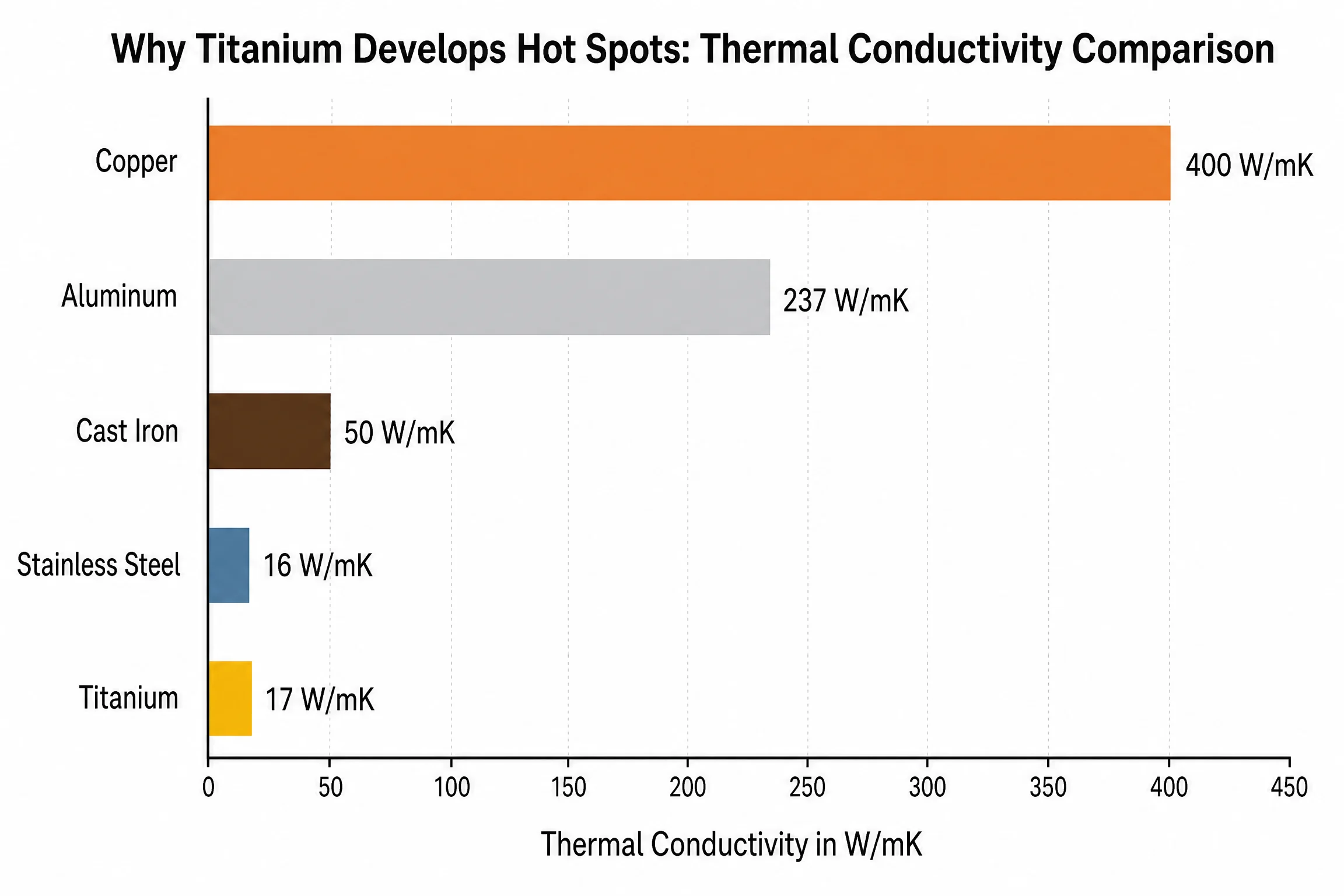
Titanium’s low thermal conductivity means how you apply heat directly affects how long your pan performs.
Titanium has a thermal conductivity of 17 W/m-K (MatWeb, commercially pure titanium). To put that in context:
| Material | Thermal Conductivity |
|---|---|
| Copper | ~400 W/m-K |
| Aluminum | ~237 W/m-K |
| Cast iron | ~50 W/m-K |
| Stainless steel | ~16 W/m-K |
| Titanium | ~17 W/m-K |
Titanium conducts heat at about the same rate as stainless steel — which is why it tends to develop hot spots on gas burners, just like stainless. The center over the flame runs significantly hotter than the edges. This has two maintenance implications:
1. Use medium or lower heat. You don’t need high heat for most cooking in titanium. Using high heat consistently creates hot spots that cook unevenly, increase the chance of burning food (and then needing deep cleaning), and stress the pan’s structure over time. Hestan’s NanoBond, with its tri-ply aluminum core, handles heat distribution better than pure titanium — but even NanoBond’s guide recommends cooking at medium to medium-high, noting it delivers 35% more heat conductivity than standard clad cookware.
2. Match pan size to burner size. A small pan on a large burner forces the outer flame up the sides, creating uneven heat patterns and scorching the exterior. Burnt-on exterior residue is harder to clean than interior food sticking and can permanently discolor the pan’s outer surface. A 10-inch burner for a 10-inch pan is not fussiness — it’s the single easiest habit that extends pan life.
The camping titanium exception: Pure titanium camping pots are designed for open fire and camp stoves, which distribute heat differently than kitchen burners. They’re built to handle higher temperature variability, though they still develop hot spots. On a camp stove, rotation or stirring compensates for uneven heat.
What happens when you boil a pan dry?
Titanium won’t rust, but pure titanium camping pans can warp if sustained high heat is applied to an empty thin-walled pan. NanoBond and thick kitchen-grade pans are more resistant to warping but still vulnerable if an empty pan is left on a high burner. Never leave an empty titanium pan on a lit burner.
Storage, Utensils, and Long-Term Care
Three habits — proper stacking, right utensils, and knowing when to retire a pan — determine how long your investment lasts.
Stacking and Storage

Pure titanium (camping): Stack with care. Thin-walled titanium camping pots dent more easily than you might expect for a metal that’s “strong as steel.” In a backpack, wrap them in a bandana or slip them into a mesh stuff sack. At home, nest with a cloth or paper towel layer between them.
Titanium-coated nonstick: Never stack directly. The coating is the pan’s most vulnerable component. One stacked pan scratching another’s interior can remove enough coating to permanently affect nonstick performance. Use pan protectors (felt discs, foam separators) between every pan in the stack. This is non-negotiable.
NanoBond: Hestan says you can go ahead and stack them — the titanium surface is dense enough that normal contact won’t scratch it. That said, if you’re going from daily-driver to display-worthy, a hanging rack protects both the finish and your cabinet space.
Utensils
| Cookware type | OK utensils | Avoid |
|---|---|---|
| Pure titanium | Metal, wood, silicone, plastic | Sharp knife edges |
| Titanium-coated | Silicone, wood, nylon only | All metal, sharp plastic edges |
| NanoBond | Metal, wood, silicone | Sharp cutting knives inside pan |
Wooden spoons are safe for all three types and are my default for anything that doesn’t need a flat spatula. They don’t create the scraping sound that makes you question your choices.
Knowing When to Replace
Pure titanium: These pans effectively last indefinitely. Patina, minor scratches, and discoloration are normal. Replace if the pan has warped to the point where it rocks on a flat surface (heat distribution becomes too uneven to cook reliably) or if handles have cracked.
Titanium-coated nonstick: Replace when the coating shows peeling, flaking, or significant scratching that exposes the base metal. This is the standard guidance for any nonstick cookware — not because flaked nonstick particles are necessarily toxic, but because cooking on exposed aluminum or steel produces different (and less consistent) results. A budget titanium-coated pan that’s heavily scratched after 18 months is a normal lifespan, not a defect.
NanoBond: The titanium layer is molecularly bonded and does not peel or flake. Replace only if the pan warps, handles fail, or the stainless base develops structural damage. Hestan backs it with a lifetime warranty.
Oven Safety
- Pure titanium camping gear: oven-safe, but check handle material
- Titanium-coated pans: typically oven-safe to 200°C (400°F) without lids; check specific product spec
- NanoBond: oven-safe to 260°C (500°F) per Hestan’s spec
My Weekly and Monthly Titanium Care Schedule
A written schedule makes maintenance automatic. Here’s the one I’ve settled into after months of testing.
I’m skeptical of guides that tell you to do elaborate maintenance routines daily. Most titanium cookware doesn’t need it. What it does need is consistency at the right frequency.
After Every Use (30–90 seconds)
- Let the pan cool 3–5 minutes before washing
- Wash with warm soapy water and appropriate scrubber for your pan type
- Rinse completely (no soap residue)
- Dry immediately with a dish towel
- For pure titanium only: check for stuck food, do a quick visual scan of the surface
Weekly (if cooking 4–7 days)
- Look at the interior surface in good light — any invisible film building up?
- If you’ve been cooking high-fat foods (bacon, butter-heavy dishes), do a quick scrub with a baking soda paste even if the pan looks clean. Oil residue that polymerizes and goes undetected is the slow killer.
- Check for discoloration. Minor rainbow color? Quick white vinegar wipe, then rinse and dry.
Monthly
- Pure titanium only: Do a light oil conditioning. 3–4 drops of avocado or grapeseed oil, spread thin, heat on medium-low for 90 seconds, cool, wipe off excess.
- Inspect handles and rivets for any loosening. Tighten if possible; dry carefully around the base of handles.
- NanoBond users: if the mirror finish has dulled from dishwasher use or general cooking, run a soft cleanser treatment (Bon Ami or BKF) to restore luster.
- Check your storage situation — are the pans stacked correctly? Any new scratches from improper stacking?
As Needed
- Deep clean for burnt-on food (baking soda paste + soak method)
- Discoloration treatment for heavy rainbow staining (white vinegar or BKF)
- For titanium-coated pans: evaluate coating integrity. Any flaking? That’s replacement time.
The honest reality: Most of this maintenance schedule is just 30 seconds of attention per use plus a quick monthly check. The pans that “fail” after a year usually failed because their owner never dried them promptly, used spray oil without cleaning it off, or stacked them without protection. Titanium cookware is forgiving — but not maintenance-free.
Frequently Asked Questions
What’s the best way to clean a titanium pan?
Warm water, mild dish soap, and a soft sponge or non-scratch Scotch-Brite pad after every use. Dry immediately with a towel to prevent water spots. For stubborn food, soak in warm soapy water for 10–15 minutes before cleaning. Avoid thermal shock (don’t plunge a hot pan into cold water).
Can you use Bar Keepers Friend on titanium cookware?
Yes — for pure titanium and NanoBond-style molecular titanium. Hestan explicitly recommends it for discoloration and stain removal on NanoBond. Do not use BKF on titanium-coated nonstick pans; it will scratch the coating.
What should you not clean titanium with?
Avoid oven cleaners, bleach, and chlorine-based cleaners on all titanium types. For titanium-coated nonstick pans, also avoid steel wool, abrasive scrubbers, and aerosol cooking sprays. For all types, avoid sudden temperature changes during cleaning.
Will baking soda scratch titanium?
No. Baking soda is a mild abrasive and is safe for pure titanium and NanoBond. It’s one of the best natural options for removing stains and oil buildup. Mix with water into a paste, apply, wait 10–15 minutes, then scrub gently and rinse.
Does a titanium pan need to be seasoned?
Not in the cast-iron sense. Pure titanium benefits from light oil conditioning every 2–3 months to improve food release — apply a thin layer of high-smoke-point oil, heat briefly on medium-low, cool, and wipe off. NanoBond and titanium-coated pans do not require seasoning. Never use cooking spray on titanium-coated nonstick — it creates a sticky polymer buildup.
Is titanium cookware dishwasher safe?
It depends on the type. Pure titanium (camping gear) and NanoBond are genuinely dishwasher safe. Titanium-coated nonstick pans should be hand washed — dishwasher detergent degrades the coating faster. When in doubt, hand wash.
Why does my titanium pan have rainbow discoloration?
This is titanium oxide forming from high heat — the same phenomenon seen on titanium bike parts and jewelry. It’s completely harmless and cosmetic. Remove it with white vinegar (pour, swirl, wait 2 minutes, rinse) or a soft cleanser like Bar Keepers Friend.
How do you fix a sticky titanium pan?
First, identify the cause: oil residue buildup (most common), incorrect preheating, or coating damage. For oil buildup, make a baking soda paste, apply for 15 minutes, then scrub with a non-scratch pad. For preheating issues, preheat empty for 60–90 seconds before adding oil. For coating damage on a nonstick pan, there’s no fix — replace it.
Summary
Titanium cookware is among the lowest-maintenance options in a well-equipped kitchen — but “low maintenance” doesn’t mean “no maintenance,” and it doesn’t mean all titanium products are cared for the same way.
The clearest advice I can give: identify which type of pan you own before following any maintenance guide, including this one. Pure titanium and NanoBond are durable, metal-utensil-safe, and forgiving of real cleaning. Titanium-coated nonstick is not — treat it like any nonstick and expect a finite lifespan.
For daily use, the 4-step routine (cool, wash, rinse, dry) is enough. The monthly oil conditioning for pure titanium is worth doing. Rainbow discoloration is not a crisis. And the biggest long-term mistake most people make? Using spray oil on a coated pan and then wondering why it started sticking at month three.
Titanium done right lasts years — decades, in the case of pure titanium camping gear and quality NanoBond cookware.