
Titanium chopsticks are the right upgrade for backpackers, frequent travelers, and daily chopstick users who want a single pair that lasts a lifetime. At 13–22g per pair, they weigh 50–65% less than stainless steel. Snow Peak’s SCT-115 ($34.95, made in Japan) remains the benchmark after years on the market — the tip geometry and case quality aren’t matched at the price. For collapsible designs, the joint mechanism is where quality separates: threaded joints hold up; press-fit joints loosen. One claim most reviews get wrong: titanium’s thermal conductivity is higher than stainless steel, not lower — what makes ti chopsticks cooler to hold is lower mass, not lower conductivity. If you eat chopstick-heavy meals daily or camp regularly, the premium is justified. If you eat with chopsticks a few times a year, bamboo is fine.
Why Titanium Chopsticks Are Worth the Upgrade
The core case for ti chopsticks is weight, corrosion resistance, and a one-time purchase that outlasts every alternative.
A standard stainless steel chopstick pair weighs 40–60g. Titanium comes in at 13–22g for the same length — roughly 55–65% lighter, which tracks with titanium’s density of 4.51 g/cm³ versus steel’s 7.85 g/cm³. For an ultralight backpacker tracking every gram in their kit, that difference is real. For a daily commuter who keeps utensils in a desk drawer or bag, it’s the difference between noticing the weight and forgetting the chopsticks are there at all.
The chemistry argument is more durable than the weight argument. Commercially pure titanium — Grade 1 and Grade 2, the standard for food utensils — doesn’t react with acidic foods. Kimchi brines, citrus dressings, vinegar-heavy Japanese pickles: none of it affects titanium. Stainless steel handles most of these fine, but prolonged exposure to high-acid environments can produce faint surface staining on cheaper steel alloys over years. Titanium doesn’t stain, doesn’t corrode, and carries no coating that could chip or flake.
Longevity closes the economic argument. A $35 pair of Snow Peak chopsticks, maintained properly, won’t need replacing. Bamboo sets degrade in dishwashers and develop cracks in dry climates. Cheap stainless sets corrode at the joints over years of use. The upfront cost is higher; the lifetime cost is lower.
Where titanium doesn’t win: bamboo still grips wet, smooth food better because of its slightly porous surface. If your primary use is sushi rice at a home dinner table, bamboo or lacquered wood remains the better tool.
Snow Peak SCT-115: What Decades of Production Get You
Snow Peak’s titanium chopsticks (model SCT-115, $34.95) are the most consistently recommended ti chopsticks in outdoor and daily-carry communities — and after using a pair for two years across camping trips and daily lunches, the reasons hold up.
Snow Peak produces their titanium products in Tsubame-Sanjo, a city in Niigata prefecture with a 400-year history of metalworking. The SCT-115 uses titanium alloy construction — not hollow, not coated, not a steel core with ti plating. It ships with a compact carrying case and comes with Snow Peak’s lifetime guarantee.
A few details that distinguish the SCT-115 from cheaper alternatives:
The taper at the tip is slightly flattened, not round. This single design choice matters more than any other spec. Round-tipped metal chopsticks struggle with anything wet and smooth — silken tofu, thin rice noodles, oysters. The SCT-115’s tapered geometry gives actual grip. After trying three different ti chopstick brands at a Korean BBQ dinner, the Snow Peak pair was the only one that reliably pinched small pieces of meat without fumbling.
The case does its job. Snow Peak’s case is a rigid sleeve that keeps the tips protected in a bag without adding meaningful weight. Competitors that ship with neoprene pouches create a different problem: the pouch gets wet, holds moisture against the metal, and eventually smells. The rigid case avoids this entirely.
The weight is 22g with case. That’s confirmed on the official product page — not a marketing estimate. For reference, a standard ballpoint pen weighs about 10g. The chopstick pair with its case weighs a bit over two pens.
The one real limitation: the SCT-115 is fixed-length. If compact packing is the priority — jacket pockets, small fanny packs, minimal travel pouches — you’ll need Snow Peak’s Wabuki collapsible variant or a third-party collapsible option.
Collapsible vs. Fixed: Which Design Survives Real Use?
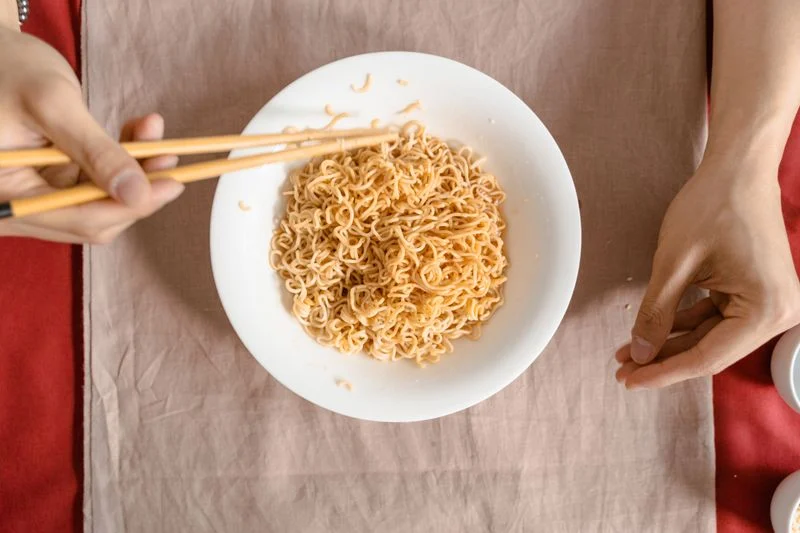
Collapsible titanium chopsticks solve a genuine packing problem. The joint mechanism determines whether you’ve bought a useful tool or a liability.
Fixed chopsticks are mechanically simpler. A single unbroken rod maintains consistent stiffness from tip to handle, and there’s no joint to fail, bind, or loosen. For campsite cooking, tabletop use, or any situation where pack volume isn’t the constraint, fixed is the more reliable design.
Collapsible matters when space is tight. A 240mm fixed chopstick won’t fit in a jacket pocket, a small hip pack, or most slim utensil rolls. A quality collapsible pair at 130mm folded fits almost anywhere. For urban travelers moving through food-hall markets, street food stalls, and ramen shops without wanting to carry a full utensil case, collapsible is the practical choice.
The joint type is where quality differences surface:
Threaded joints (two halves that screw together) are the most reliable. They don’t separate during use — you’d have to intentionally unscrew them. The tradeoff is assembly time: about five seconds per chopstick to thread correctly, and the threads need rinsing after meals in the field to prevent food residue from binding them. Snow Peak’s Wabuki uses a similar threaded approach.
Magnetic joints are faster to connect — press together and they snap. The problem is lateral stress. Gripping a thick piece of meat or dense vegetable creates torque on the joint, and magnets aren’t designed for that load direction. For ramen, salads, and lighter eating, magnetic holds fine. For anything requiring real grip force, the joint flexes noticeably.
Press-fit joints (a tapered pin into a socket) are standard in budget options under $15. They work when new. After 50–100 uses, the pin wears slightly and the joint develops a wobble. Not dangerous, but you notice it with every pinch. At $8–12, the price reflects the engineering.
For most use cases, a quality threaded collapsible pair handles years of use without issues. If you’ll primarily use the chopsticks for backpacking where pack volume isn’t a constant pressure, fixed chopsticks are the cleaner choice.
Titanium vs. Stainless Steel vs. Bamboo: An Honest Comparison
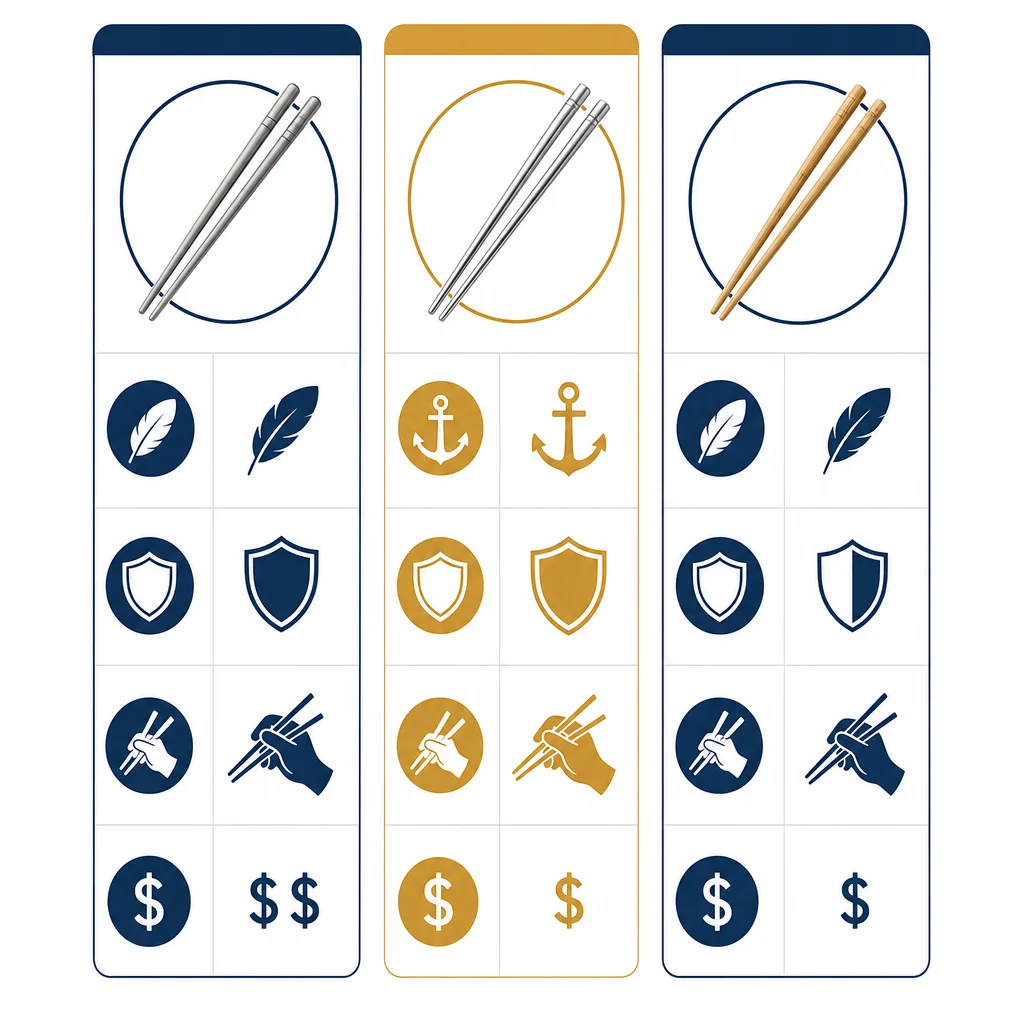
Each material involves real tradeoffs — the best choice depends on how you eat and where, not which material sounds most premium.
| Feature | Titanium | Stainless Steel (18/8) | Bamboo |
|---|---|---|---|
| Weight per pair | 13–22g | 40–65g | 8–15g |
| Expected lifespan | Lifetime | 5–15 years | 1–3 years |
| Food reactivity | None | Very low | None |
| Grip on smooth food | Medium (texture-dependent) | Medium | Good |
| Environmental footprint | Long lifecycle, mined | Long lifecycle, mined | Renewable, biodegrades |
| Price | $25–60 | $8–25 | $1–15 |
| Dishwasher safe | Yes | Yes | No |
A few things that don’t fit in a table: bamboo wins on grip not just because of material texture, but because of slightly more surface friction when wet. If you primarily eat Japanese cuisine at home and clean handling of sushi rice matters more than anything else, bamboo or lacquered wood is the right tool. Metal chopsticks — titanium or stainless — excel in mobility and durability contexts where chopstick grip on individual food types is less critical than the overall kit.
Stainless steel is the practical value pick. A good 18/8 stainless pair at $15 will serve most people well for years without the premium. If you’re not counting weight or making a “buy it for life” investment, stainless makes sense.
The Heat Surprise: What Most Titanium Chopstick Reviews Get Wrong
Titanium’s thermal conductivity is higher than stainless steel — not lower. Most reviews have this backwards.
The Engineering Toolbox and materials databases consistently show: titanium sits at approximately 21.9 W/m·K; stainless steel 304 runs between 14.4 and 16 W/m·K. Titanium actually transfers heat more quickly per unit of material than SS 304.
So why do titanium chopsticks feel cooler to handle after sitting in a hot bowl of soup?
Lower mass stores less total thermal energy. A ti chopstick pair at 13–22g carries far less heat to your hand than a stainless pair at 40–65g of the same geometry. The absolute amount of heat reaching your fingers is lower because there’s so much less material involved — even though conductivity per unit is higher. The practical result matches user experience: ti chopsticks feel less hot to the touch in normal use than heavier steel alternatives.
This matters for an honest evaluation. Marketing copy that says “titanium doesn’t conduct heat” is imprecise. The more accurate statement is that titanium chopsticks reach temperature equilibrium faster but store less total heat due to low mass. If you’re using chopsticks as serving tools for very hot dishes over an extended time, both materials will eventually become warm — titanium’s lower mass means it cools down faster too.
How to Pick the Right Ti Chopsticks for Your Use Case
The best titanium chopstick for you depends on three things: use context, packing constraints, and tip texture.
For backpacking and ultralight travel: Fixed chopsticks, textured or slightly flattened tip. Snow Peak SCT-115 is the obvious pick at 22g with case. If you want to go lighter, solo sticks without a case shave a few grams.
For daily carry and travel: Collapsible, threaded joint, 230–245mm open length. Prioritize tip texture over any other spec — a polished round tip slips on every wet food. Snow Peak’s Wabuki, TOAKS titanium chopsticks, and several well-reviewed options from Japanese kitchenware brands all use this format.
For beginners: Don’t start on metal. Metal chopsticks are heavier at the base relative to the tip and harder to control while learning the pinch. Learn on a $3 wooden or bamboo set first, then upgrade once the grip mechanics are natural.
For cooking and hot pot: Fixed, longer (270mm+), look for a textured grip section on the handle. Bamboo saibashi are traditional and cheap for cooking; ti or stainless if you want something permanent and dishwasher-safe.
Budget alternatives that aren’t disappointing: Boundless Voyage and Keith Titanium produce ti chopsticks at $15–20. The tip geometry is less refined than Snow Peak’s, and the case is typically a pouch rather than a rigid sleeve, but the titanium itself performs identically to premium options. For anyone not committed to the Snow Peak ecosystem, these are worth considering.
Care That Actually Matters
Titanium chopsticks need almost no maintenance, which is most of the value proposition.
Hand washing extends tip life. Titanium is dishwasher-safe — it won’t corrode. But repeated high-heat dishwasher cycles can dull any anodized color finish and wear textured surfaces over time. Hand washing with dish soap takes 20 seconds and preserves the surface geometry.
Dry before storing in the case. Titanium doesn’t rust, but a wet fabric-lined case develops odor over time. The chopsticks are fine; it’s the case that degrades. A quick air dry or wipe before storage is enough.
Staining from pigmented foods. Turmeric, beet, and miso paste can leave visible staining on light-finish titanium. A baking soda paste removes it without abrasion. Never use steel wool on a matte or anodized finish — it scratches permanently.
For collapsible chopsticks: rinse the threads immediately after field use. Food residue in a threaded joint is the primary cause of binding over time. A five-second rinse under running water after each meal prevents 95% of joint maintenance issues.
FAQ
Are titanium chopsticks safe to use with food?
Yes. Grade 1 and Grade 2 commercially pure titanium is non-reactive with food, carries no coatings that could flake, and is the same material grade used in surgical implants and medical devices. It doesn’t leach metals and doesn’t react with acidic foods. It’s one of the most inert materials available for food contact.
Are Snow Peak titanium chopsticks worth the price?
For frequent travelers and outdoor enthusiasts who use chopsticks regularly, yes. The SCT-115 at $34.95 holds up over years of use, and the tip geometry and case quality are better than most alternatives at the price. If you use chopsticks a few times per year, a $15–20 budget ti pair or a good bamboo set performs adequately. The premium is justified for daily or field use.
How do collapsible titanium chopsticks hold up for camping?
It depends on the joint. Threaded-joint collapsible chopsticks hold up reliably for years of field use. Magnetic joints work for light eating but fail under lateral stress. Press-fit joints loosen after 50–100 uses. If pack volume is a concern, a quality threaded collapsible pair is a reasonable choice. If pack space isn’t the constraint, fixed chopsticks are more reliable.
What length should titanium chopsticks be?
Standard eating chopsticks run 230–250mm. Cooking chopsticks (saibashi) are 270–360mm. For travel and camp eating, 235–245mm is the sweet spot — long enough to reach the bottom of deep bowls, short enough to handle without awkward leverage.
Do titanium chopsticks get hot when used with hot food?
Less than stainless steel pairs of the same dimensions, but not because of lower conductivity — titanium actually conducts heat at a higher rate per unit than SS 304. The reason they feel cooler is lower mass: a ti chopstick pair at 13–22g stores much less total heat than a steel pair at 40–65g. Both materials warm up with extended use in hot dishes; titanium cools back down faster.
Can I use titanium chopsticks in a nonstick pan?
Technically titanium won’t scratch most PTFE nonstick surfaces, but I’d still use wood or silicone for routine cooking in nonstick pans. Save the ti chopsticks for eating — that’s where the design is optimized.
Summary
Titanium chopsticks make sense for the user who eats with chopsticks often enough to care about grip geometry and lifespan, or who carries utensils in the field. Snow Peak’s SCT-115 remains the benchmark: tip taper, case design, and verified weight make it worth $34.95 for anyone in that category. For collapsible designs, threaded joints are the only ones that hold up past 100 uses. Budget alternatives from brands like Keith Titanium and Boundless Voyage perform well at $15–20 if the Snow Peak premium isn’t justified for your use frequency. Whatever you buy: the tip texture matters more than any other spec. A polished round tip will frustrate you with wet food. A textured or slightly flattened tip is what separates chopsticks you reach for every day from ones that stay in a drawer.