
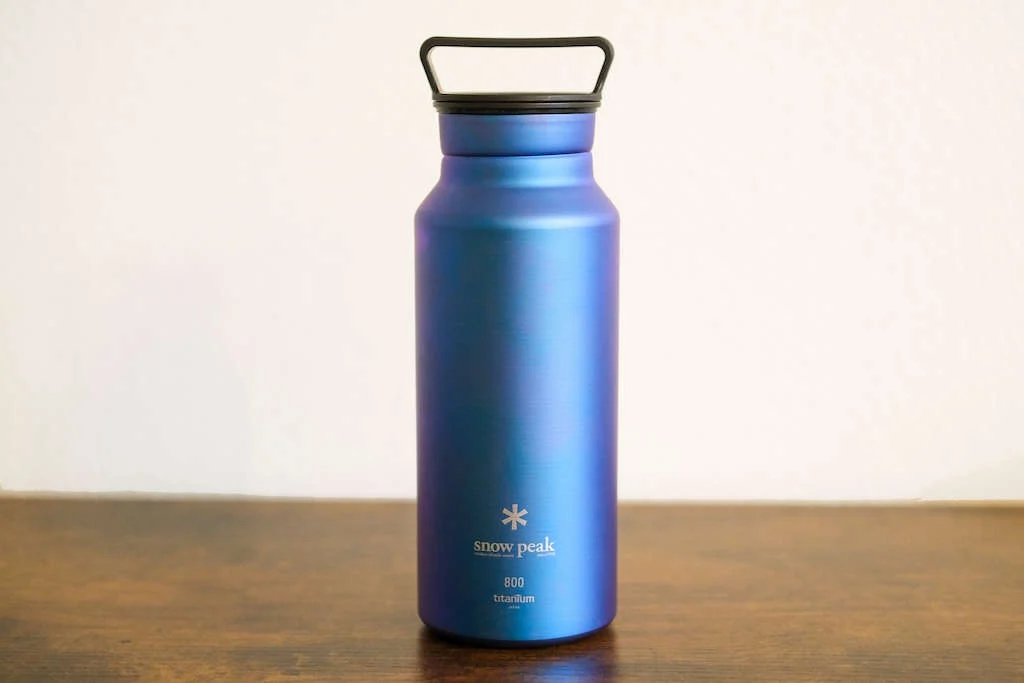
A titanium water bottle is a drinking vessel made from commercially pure titanium (Grade 1 or Grade 2), weighing 43% less than equivalent stainless steel with a density of 4.51 g/cc vs 7.93 g/cc for 304 steel. It is 100% non-reactive, BPA-free, and biocompatible — meaning it will never leach metals or chemicals into your drink. Single-wall Ti bottles start around 85–111 g for 22 oz and cost $50–$200. They are the top choice for ultralight backpackers and health-conscious buyers willing to pay a premium for a lifetime material. The main trade-offs: no thermal insulation in single-wall versions, higher price than stainless, and susceptibility to visible dents.
Why Titanium? The Material Case in Plain Numbers
Most buying guides skip the reason titanium commands such loyalty — and such a price. Here it is, stripped of marketing language.
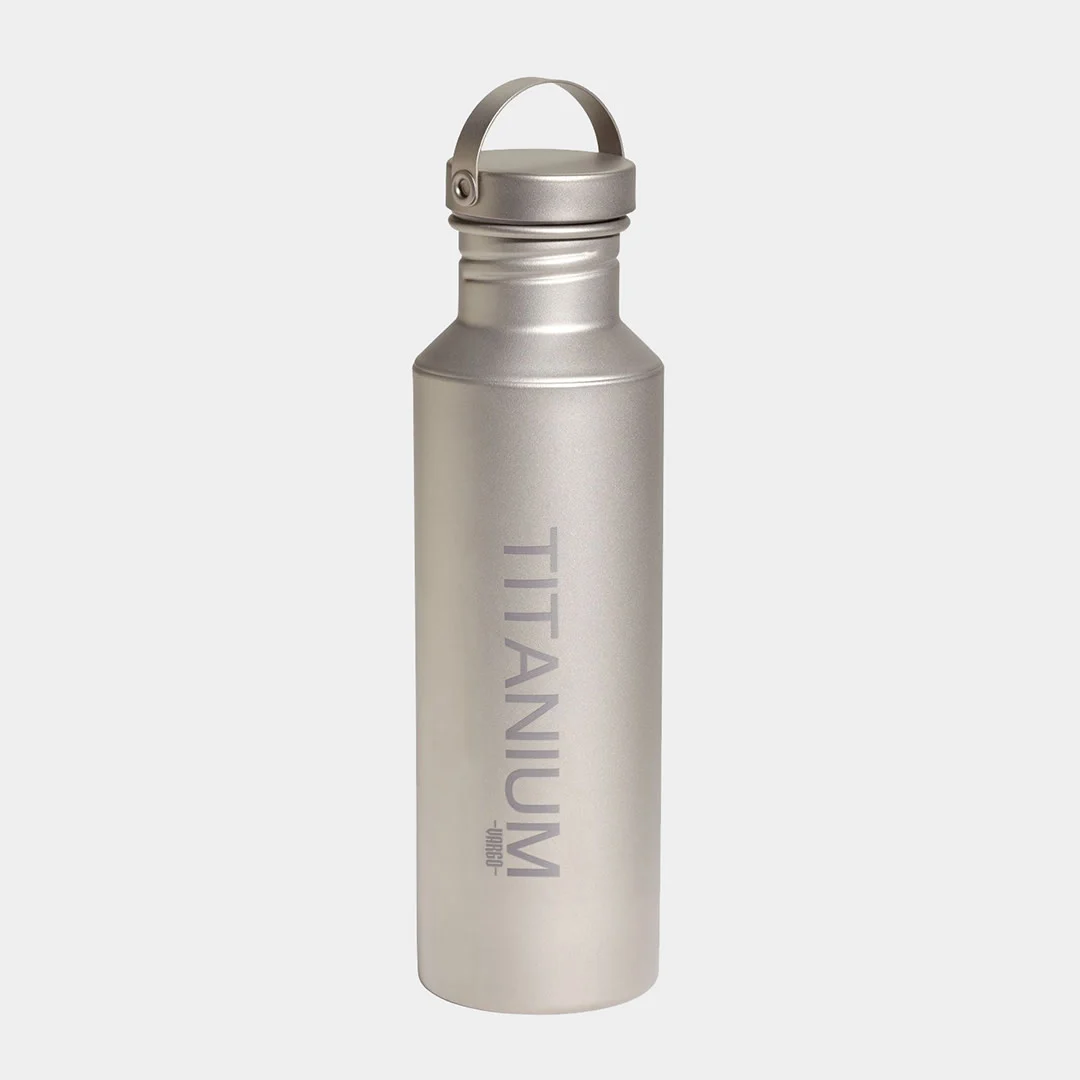
Titanium Grade 2 (the grade used in nearly all food-safe bottles) has a density of 4.51 g/cc. Common 304 stainless steel sits at 7.93 g/cc. That means for the same wall thickness and volume, titanium is roughly 43% lighter. In practice, a 22 oz single-wall titanium bottle from Vargo weighs 111 g. A comparable 21 oz stainless steel Hydro Flask wide-mouth weighs around 315 g — nearly three times as much.
That difference adds up on a 10-day thru-hike.
Beyond weight, titanium is genuinely inert. It doesn’t rust, corrode, or react with acidic drinks. There’s no chromium or nickel to leach into your coffee, which is a real concern with lower-grade stainless alloys. Grade 1 and Grade 2 commercially pure titanium are both approved for direct food and beverage contact — the same biocompatibility that makes them the material of choice for surgical implants and dental hardware.
Key specs at a glance:
| Material | Density | 22 oz bottle weight (typical) | Leaching risk | Price tier |
|---|---|---|---|---|
| Titanium (Grade 2) | 4.51 g/cc | 110–130 g | None | $50–$200 |
| Stainless steel (304) | 7.93 g/cc | 280–350 g | Low (Ni, Cr possible in cheap alloys) | $25–$60 |
| Aluminum (6061) | 2.70 g/cc | 130–180 g | Moderate (requires plastic liner) | $15–$40 |
Aluminum is lighter by density — but food-grade aluminum bottles require an interior epoxy or resin liner to prevent metal taste and leaching. That liner is usually plastic, which defeats the purpose for buyers worried about chemical exposure. Titanium needs no liner whatsoever.
Single-Wall vs Double-Wall: The Trade-Off Nobody Explains Clearly
This is where most buyers get surprised after purchase, so let’s be direct.
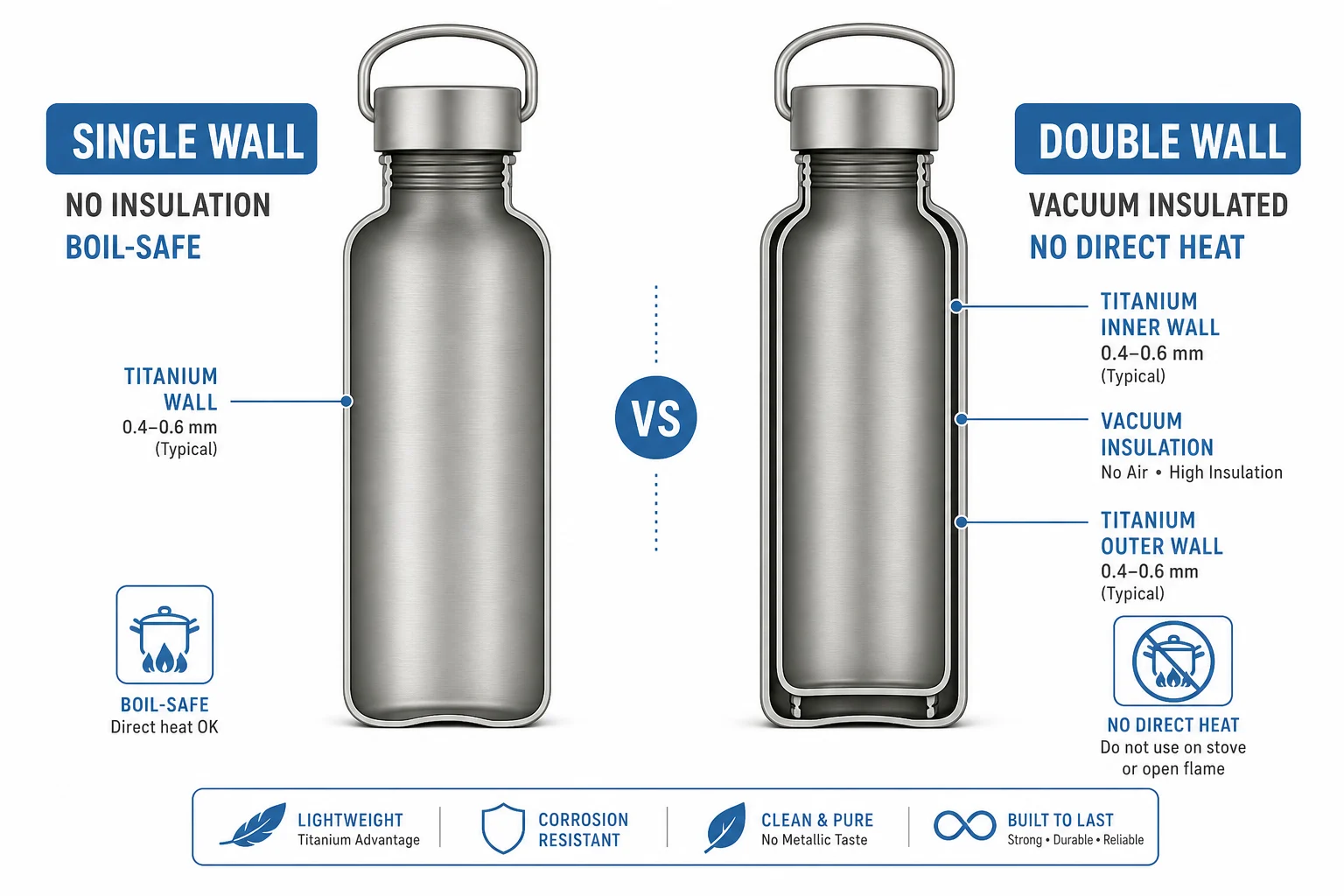
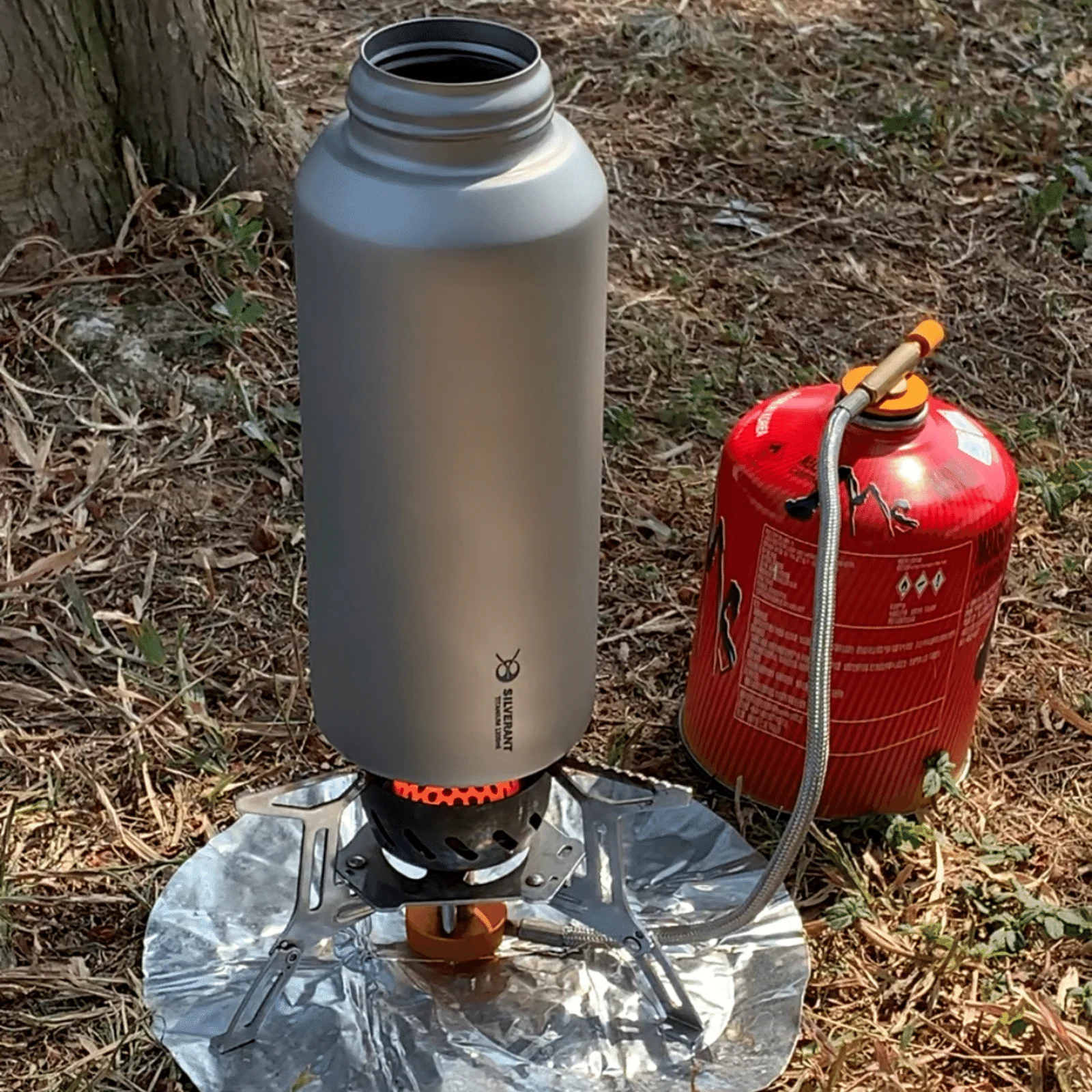
Single-wall titanium bottles — the vast majority of what’s sold at $50–$100 — offer zero thermal insulation. Hot drinks cool down fast. Cold drinks warm up fast. The bottle simply acts as a lightweight, inert container. Where single-wall wins is dual-purpose use: you can set the bottle directly on a camp stove or over a flame to boil water. That’s a feature no double-wall vacuum bottle offers (the vacuum layer would collapse under direct heat).
Double-wall vacuum-insulated titanium bottles — like the Snow Peak Kanpai 350ml or the SOTO 200ml — do keep drinks temperature-stable for hours. But they’re heavier, more expensive, and cannot be used for boiling. They’re excellent for daily commuter use or car camping where weight isn’t a hard constraint.
The confusion is common on forums. A user on r/Ultralight summed it up well: “Single wall is for ultralight and for boiling water from streams. Double wall is for keeping your coffee hot at basecamp. Buying single wall and expecting Hydro Flask insulation is setting yourself up for disappointment.”
Which to choose:
- Ultralight backpacking or multi-day hiking: single-wall
- Daily commute / keeping coffee hot: double-wall
- Boiling stream water / alpine camping: single-wall only
The Grade Problem: Grade 1 vs Grade 2 (and What Amazon Gets Wrong)
Not all titanium is equal, and the bottle market has a fake-labeling problem worth knowing about.
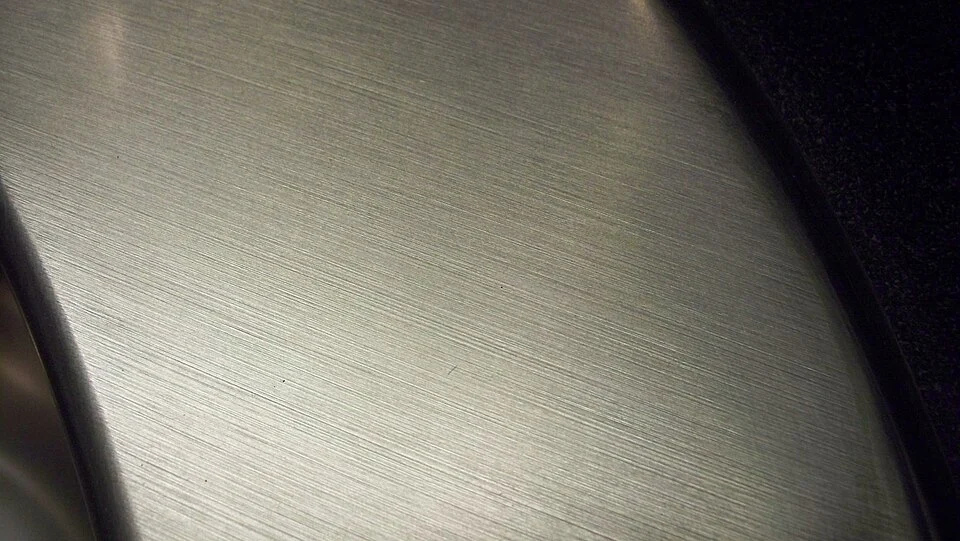
Grade 1 commercially pure titanium (CP Ti): Highest purity (~99.5% Ti), softest, most ductile. Excellent corrosion resistance. Slightly lower tensile strength. Used in premium cookware and bottles where forming complex shapes matters.
Grade 2 commercially pure titanium: Similar purity (~99.2% Ti), slightly stronger than Grade 1, marginally higher oxygen content. Most common in outdoor gear bottles. Density: 4.51 g/cc, melting point: ~1660°C (per AZoM material datasheet). This is the industry standard for titanium drinkware.
Both grades are completely food-safe. The distinction matters more for manufacturing than for the end user — Grade 2 is slightly more rigid, which is why it dominates single-wall bottles.
The fake titanium problem: Search Amazon for “titanium water bottle” and you’ll find dozens of products listed as titanium that are actually titanium-coated stainless steel — a thin PVD coating over a 304 SS base. These weigh 300+ g, cost $20–$35, and share none of Ti’s inertness or weight benefits. The giveaway is weight: if a “titanium bottle” weighs over 200 g for a 22 oz size, it almost certainly isn’t pure titanium.
How to spot real Ti: weight under 150 g for a 22–28 oz single-wall bottle; price over $50; brand transparency about “commercially pure Grade 1 or Grade 2 titanium”; no interior coating or liner.
Real-World Performance: What Two Years of Trail Use Actually Looks Like
After carrying a single-wall titanium bottle for two full seasons of backpacking — from the Cascades in August to winter approaches in the Rockies — here’s what actually holds up against the marketing claims.
What’s genuinely true:
- Zero taste transfer. Titanium is tasteless even with acidic beverages like electrolyte mixes or lemon water. Stainless can impart a faint metallic note with acidic drinks after months of use.
- The weight difference is real and meaningful. At 111 g vs 315 g for a comparable stainless bottle, that’s 204 g — nearly half a pound — saved on one item. On a 7-day trip that matters.
- Durable, not indestructible. Titanium dents. A dropped titanium bottle on rock will show impact marks. The dents don’t weaken the structure but they’re permanent. Stainless actually resists visible denting slightly better because of its higher ductility at thick-wall gauges.
- Direct flame use works. I’ve boiled stream water in a 750 ml single-wall Ti bottle dozens of times. The bottle discolors slightly around the flame zone (iridescent rainbow coloring — common with titanium heat treatment) but shows no structural issues.
Where it falls short:
- Cold drinks in single-wall Ti warm up faster than most buyers expect. In direct sunlight, a bottle full of cold water goes tepid in 30–45 minutes.
- The lid mechanisms on budget Ti bottles (under $50) often feel cheap. The iBasingo, for example, has a grating metal-on-metal screech when threading the cap.
Top Titanium Water Bottles Worth Buying in 2026
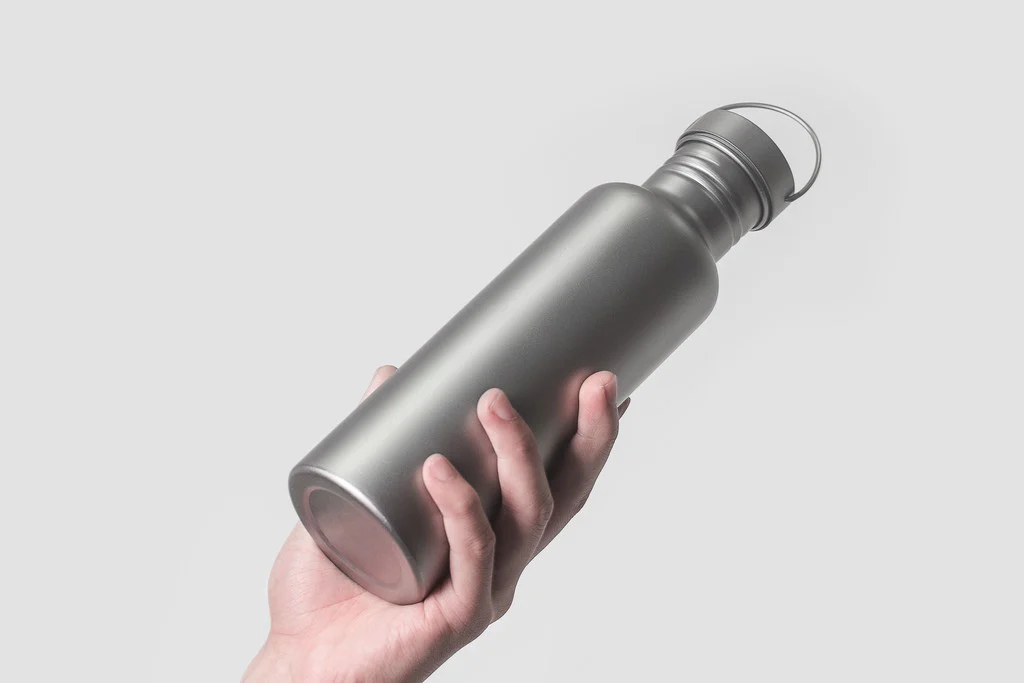
These are the brands with verified real titanium construction, confirmed gram weights, and genuine user track records on forums and verified purchase reviews.
Snow Peak Aurora 800ml — 147 g, 27 oz, $99.95 (titanium finish) / $139.95 (anodized Rainbow). The benchmark for premium Ti bottles. Japanese engineering, available in anodized colorways, wide mouth. The only pure titanium bottle with genuine design aesthetics. Long-term users report zero degradation after 5+ years.
Vargo T-438 22oz — 111 g, 22 oz (650ml), $84.95. Lightest major-brand option on the market. All-titanium construction including the lid (no plastic). Pure ultralight play. The narrow mouth is the main limitation for wide-opening use.
Keith Titanium Ti3032 — 110 g, 23.6 oz (700ml), ~$30–$55. Nearly identical specs to the Vargo at a lower price point. Includes a neoprene sleeve. Solid build, D-ring lid. Best value-per-gram in the category.
SilverAnt Ultralight 800ml — 166 g, 28 oz, ~$75. Silicone-sealed leakproof lid is a differentiator — most Ti bottles aren’t fully leakproof. Good choice for EDC use where spillage is a real concern.
Boundless Voyage 35.5oz — 237 g, 35.5 oz (1050ml), ~$72–$80. Best for high-volume needs. Heaviest on the list but the 1L+ capacity justifies it for longer water-carries between sources.
Snow Peak Kanpai 350ml (double-wall) — 165 g (bottle), 13 oz, $149.95 (Snow Peak direct) / up to $185 at some retailers. The premium double-wall option for hot/cold retention. Three lids included. For camp coffee or a double-wall everyday carry — not a hiking bottle.
When NOT to Buy a Titanium Water Bottle
This is the section most brands won’t write. Titanium is genuinely excellent — but it’s not the right answer for everyone.
Stay with stainless steel if:
- Budget is under $40. Real titanium under $40 doesn’t exist. You’ll get coated stainless instead.
- You want genuine insulation without paying $160+. A $35 insulated stainless bottle outperforms a single-wall titanium bottle for temperature retention.
- You’re rough on gear and hate visible dents. Thick-wall stainless resists cosmetic dents better.
Stick with a quality plastic (Nalgene/Tritan) if:
- You need a soft, packable bottle or collapsible option.
- Weight is relevant but price is very constrained.
- You’re filter-compatible system where the bottle threading matters (Nalgene-standard threads are universal).
Titanium wins clearly when:
- Every gram in your pack is accounted for
- You want direct boil-in-bottle capability
- You care about long-term chemical purity with no interior coatings
- You want a bottle that genuinely lasts 10–20 years
FAQ
Are titanium water bottles safe to drink from?
Yes. Commercially pure titanium (Grade 1 and Grade 2) is 100% biocompatible and food-safe. It won’t leach metals, contains no BPA, phthalates, nickel, or chromium. The same material is used for surgical implants and dental hardware. There is no safer metal for direct food and beverage contact.
Is titanium better than stainless steel for a water bottle?
For ultralight use: yes, clearly. Titanium is 43% less dense than stainless steel (4.51 vs 7.93 g/cc), meaning significantly lower bottle weight for the same volume. It’s also more chemically inert. The trade-offs are higher price and slightly easier to dent cosmetically. For insulated everyday use, a quality vacuum stainless is often a more practical choice unless budget allows for a double-wall titanium option.
Can you boil water in a titanium water bottle?
Single-wall titanium bottles can be placed directly over a flame or stove to boil water — a major advantage for backcountry use. Double-wall vacuum bottles cannot and should never be heated. The titanium may show iridescent heat-coloring (blue/gold/rainbow) near the flame zone; this is normal and doesn’t affect safety or function.
Why is my titanium bottle changing color?
Heat treatment, flame contact, or even UV exposure can cause titanium to develop iridescent colors (anodization effect). This is a physical property of the metal’s oxide layer, not a sign of damage or contamination. It’s permanent but purely cosmetic.
What’s the difference between Grade 1 and Grade 2 titanium in water bottles?
Both are commercially pure titanium and equally food-safe. Grade 1 (~99.5% pure) is softer and slightly more ductile. Grade 2 (~99.2% pure) is marginally stronger and is the industry standard for outdoor gear. For end users, there is no meaningful difference in safety, taste, or performance.
How do I clean a titanium water bottle?
Mild soap and warm water for daily cleaning. Avoid bleach or harsh oxidizing agents — not because titanium will corrode, but because residue inside the bottle is hard to rinse out. Titanium is dishwasher safe. For mineral deposits, a dilute white vinegar rinse works well. The bottle won’t rust, pit, or stain.
Summary
A titanium water bottle is the right choice when weight and chemical purity are priorities and budget allows. The 43% weight advantage over stainless steel is real — backed by material density figures, not marketing copy — and the complete absence of leaching makes it the most inert drinkware material available for trail or daily use.
The most common buyer mistake is purchasing a cheap “titanium” bottle that’s actually coated stainless. Verify: real Ti bottles weigh under 150 g for a 22–28 oz size and cost $50 minimum from a reputable brand.
If I were building a new ultralight kit today, the Keith Titanium Ti3032 or Vargo T-438 would be the starting point — best gram-per-dollar in the category. For everyday carry with leakproof priority, the SilverAnt 800ml is the call. For the best overall if budget isn’t a constraint: the Snow Peak Aurora remains the benchmark.