
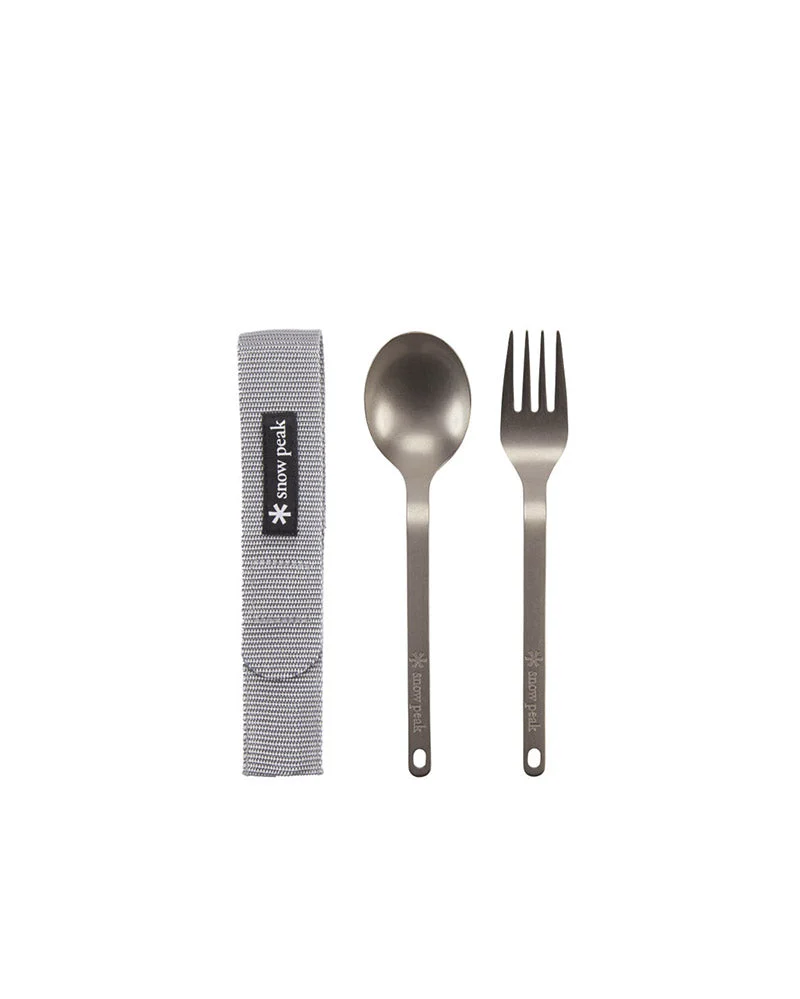
Titanium camping utensils are the lightest, most durable, and safest eating tools for backcountry use. Grade 2 titanium — the standard for quality outdoor cutlery — is around 43% lighter than stainless steel by volume, completely non-reactive with food, and built to outlast any stainless or aluminum alternative. A well-made titanium fork spoon set weighs 35–50g for both pieces combined. The main trade-offs are price ($15–40 for a quality set) and uneven heat distribution when using pieces directly in pots. For backpackers, thru-hikers, and anyone counting grams, titanium camp cutlery is the clear long-term investment. For casual car campers who never weigh their kit, stainless steel delivers comparable durability at lower cost.
Why Titanium Has Become the Standard for Serious Camp Cutlery
Titanium didn’t reach its current status in outdoor gear by accident. The material earned it through a combination of properties that nothing else matches at camp scale: high strength-to-weight ratio, complete chemical inertness, and corrosion resistance that genuinely lasts decades.
A titanium spork weighs between 14g and 18g depending on handle length. The stainless steel equivalent sits at 28–35g. That 15g gap sounds trivial at home, but on a two-week thru-hike where every 10g matters, it adds up — and unlike shaving grams from your shelter or sleep system, switching to titanium camp cutlery costs nothing in comfort or function.
The inertness argument matters more than weight for some buyers. Grade 2 commercially pure titanium has zero reactivity with food at any temperature or acidity level. It carries no metallic taste — something stainless steel and aluminum can develop over time, especially with acidic camp meals. Titanium is so biologically inert that it’s used in surgical implants and bone screws without protective coatings.
I’ve used the same titanium long spoon through four consecutive spring backpacking trips. It looks exactly as it did out of the box. No discoloration, no surface degradation, no tang. That’s not a marketing claim — it’s a straightforward outcome of what titanium is chemically.
Titanium vs. Stainless Steel vs. Aluminum: The Numbers That Actually Matter
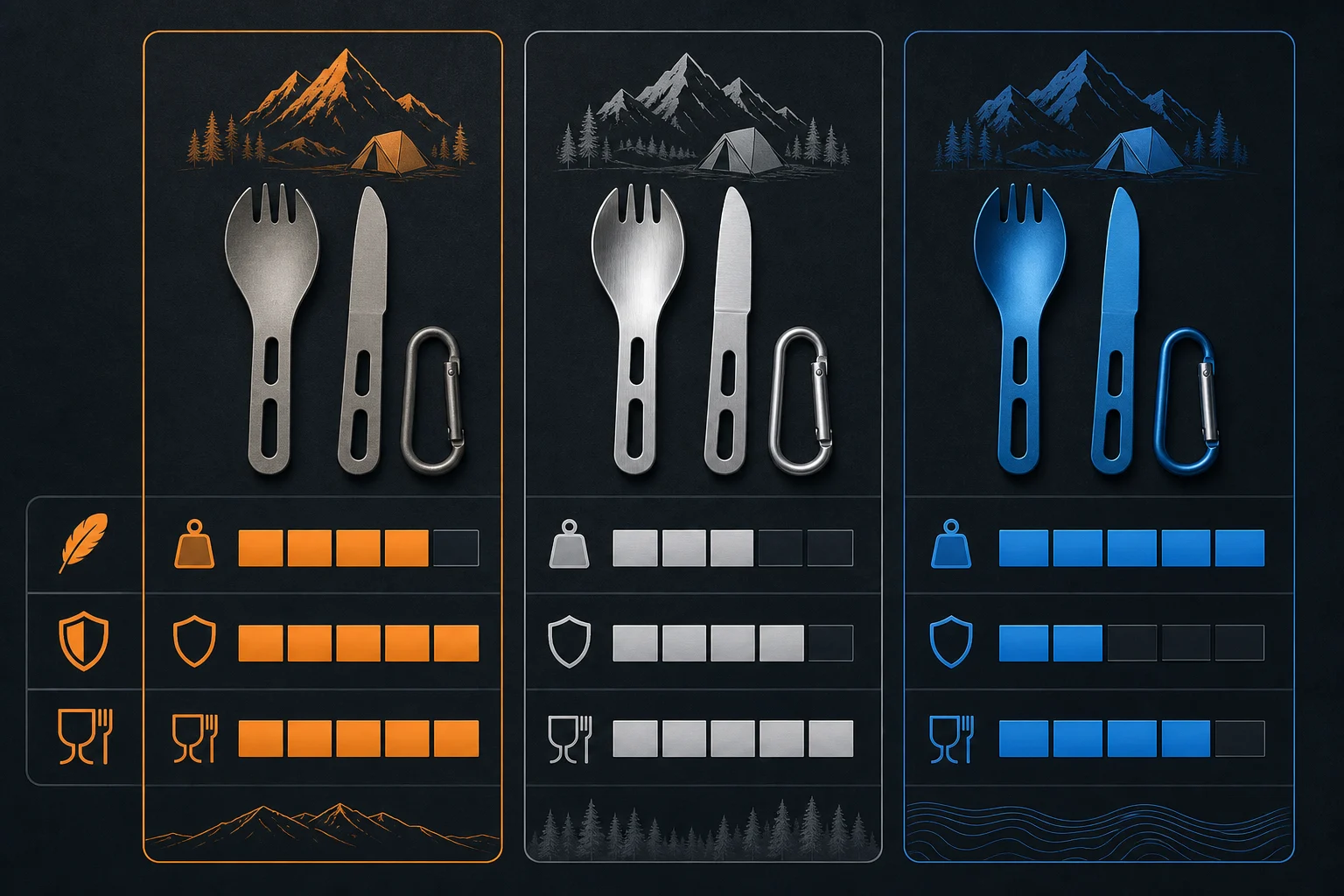
Before buying a titanium utensil set, it helps to see all three common materials side by side. The marketing language across product listings conflates a lot of things that are actually distinct.
| Property | Titanium (Grade 2) | Stainless Steel (304) | Aluminum (6061) |
|---|---|---|---|
| Density | 4.51 g/cm³ | 7.93 g/cm³ | 2.70 g/cm³ |
| Relative weight vs. Ti | baseline | ~76% heavier | ~40% lighter |
| Typical spork weight | 14–18g | 28–35g | 10–14g |
| Food reactivity | None | Trace Ni/Cr leaching | Reacts with acidic foods |
| Contains nickel | No | Yes (8–10.5% in SUS304) | No |
| Corrosion resistance | Excellent — lifetime | Good — 10–15 year practical life | Moderate — surface degrades |
| Dishwasher safe | Yes | Yes | No |
| Approximate set price | $15–40 | $8–20 | $6–15 |
| Practical lifespan | Lifetime | 10–15 years | 5–10 years |
A few points this table makes concrete:
Aluminum is actually lighter than titanium, not heavier — but that advantage disappears in practice. Aluminum utensils need thicker walls to achieve the same rigidity, which closes the gap. More importantly, aluminum reacts with acidic foods like tomato sauce, citrus, and vinegar-based meals. On trail, where you’re often rehydrating acidic freeze-dried meals, this is a real concern.
Stainless steel’s nickel content is a legitimate consideration, not marketing scare tactics. SUS304, the most common food-grade stainless alloy, contains 8–10.5% nickel by composition. The National Library of Medicine links chronic nickel exposure to cardiovascular, kidney, and immune effects. The concentrations leaching from one spoon into one meal are not clinically dangerous for most people — but for buyers who are nickel-sensitive or simply want zero contact with metal additives over years of daily use, titanium’s complete inertness is a real differentiator.
The cost-per-year calculation favors titanium. A $25 titanium set used for 20 years costs $1.25/year. A $12 stainless steel set replaced every 12 years costs $1/year. The math is close — but that ignores the practical reality that stainless utensils often get lost, bent, or replaced before reaching their theoretical end of life.
The Grade Nobody Mentions: Why Titanium Grade Matters for Camp Cutlery
If you look at 20 titanium camp utensil listings on Amazon, maybe three of them disclose the titanium grade. This is a real quality signal that most buyers don’t know to ask about.
Grade 1 is commercially pure titanium at its softest. Excellent corrosion resistance but not ideal for thin-wall utensils that need to hold shape under fork-load stress. Rare in outdoor gear.
Grade 2 is the industry standard for titanium camping utensils. It’s 99.3%+ pure titanium, with a balance of strength, formability, and corrosion resistance that makes it right for machined spoons, forks, and sporks. Snow Peak, TOAKS, and MSR all use Grade 2 Ti for their utensil lines. If a product claims titanium without disclosing grade, Grade 2 is the most common reality — but it’s worth confirming.
Grade 5 (Ti-6Al-4V) is the highest-strength titanium alloy, used in aerospace components and orthopedic implants. It contains 6% aluminum and 4% vanadium as structural additives. Grade 5 is significantly stronger than Grade 2 — but for utensils, that extra strength is unnecessary. More practically: Grade 5 is not the preferred choice for repeated food contact. Commercially pure grades (1, 2, or 4) are specified in food-contact standards because the aluminum and vanadium additives in Grade 5 can leach under acidic conditions. Grade 5 in orthopedic use is safe because the implant is sealed in bone tissue, not regularly submerged in citric acid. For a titanium fork you’re dipping into hot lemon rice soup, Grade 2 is the correct choice.
When sourcing titanium utensils — whether for personal use or as an OEM buyer — ask for the grade certificate. Any reputable manufacturer can provide this. If they can’t, that’s informative.
Polished vs. Matte Finish: The Buying Decision Most Guides Skip
This is the part of titanium camp cutlery that gets the least coverage, and it has the most practical impact on daily trail use.
Polished titanium has a mirror-like surface. Cold water and a finger wipe will clean it after most trail meals. I tested this on oatmeal, ramen broth, and peanut butter residue — the polished surface releases all three with 10–15 seconds of cold water contact. No soap required in most cases.
Matte or sandblasted titanium has a textured micro-surface that’s visually striking but functionally compromises field cleaning. The same oatmeal that wipes off polished titanium in 15 seconds required a scrub sponge on a matte surface. In bear country or Leave No Trace contexts where food residue on gear matters, this is a non-trivial difference.
The practical recommendation: For primary camp eating utensils, polished finish is the right call. Matte finish is better suited for multi-tools or accessories where the grip texture has mechanical value. Most major brands (Snow Peak, TOAKS) offer polished finishes as default on their spoons and fork spoon sets. The matte finish is more common on budget listings — which also correlates with less disclosed grade information.
One edge case: matte handles on long-spoons provide better grip when your hands are wet or you’re stirring a hot pot. If you routinely cook with your spoon handle submerged, a matte handle with a polished bowl is the ideal combination — and some TOAKS long spoons are designed exactly that way.
The Best Titanium Utensil Sets and Fork Spoon Sets (2026 Picks)
These aren’t sponsored picks. They’re the products that consistently appear across multiple independent reviewer datasets and have the most long-term use documentation:
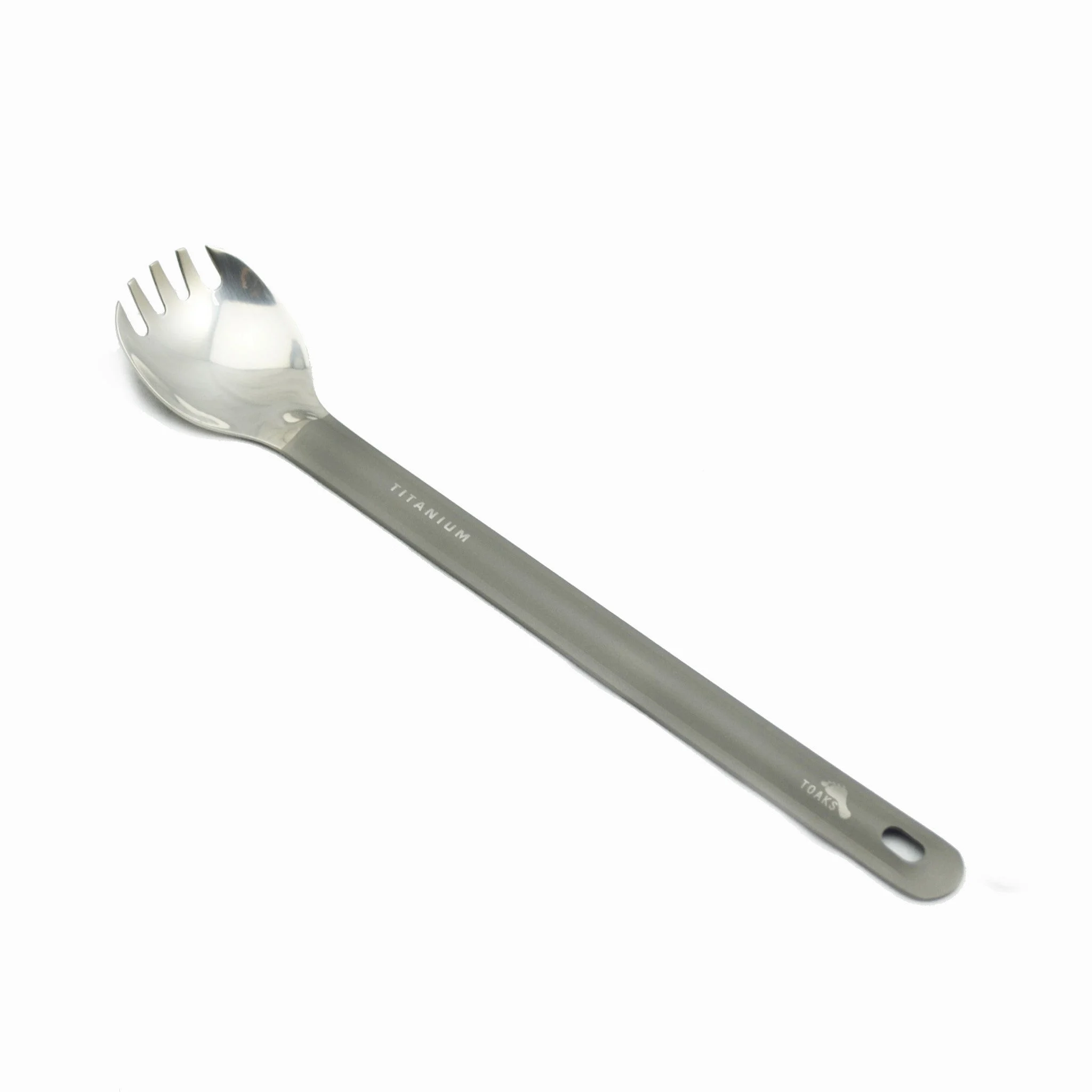
Snow Peak Titanium Fork & Spoon Set (SCT-002)
- Combined weight: ~32g (verified via Snow Peak official site; includes fork, spoon, and case)
- Material: Grade 2 titanium, polished finish
- Made in Japan
- Best for: Anyone who wants a premium, long-handle set with a proven multi-decade track record
- Price range: $25–35
TOAKS Titanium Long Handle Spork (SLV-14)
- Weight: ~19g (0.65 oz per TOAKS official specs)
- Material: Grade 2 titanium, polished bowl / slightly matte handle texture
- Best for: Backpackers eating from pouches who need reach; the most commonly recommended single spoon in ultralight forums
- Price range: $12–18
MSR Titan Long Spoon
- Weight: ~19g (0.7 oz per REI/MSR official specs; real-world weigh-ins confirm ~19–20g)
- Material: Grade 2 titanium, matte finish
- Best for: Gram-counters who don’t mind the extra cleaning effort from the matte surface
- Price range: $15–20
Budget note: Unbranded titanium spork sets at $8–12 on Amazon often omit grade disclosure. For occasional use, Grade 2 budget sporks work fine. For regular thru-hiking where you’re eating three meals a day from them, the quality control variance in unbranded products is worth avoiding — the $10 savings doesn’t compound the way the durability difference does.
A quick word on sporks vs. separate fork and spoon: sporks are lighter and more minimal, but the fork tines are shallow and the spoon bowl is smaller than either pure version. If you’re eating a varied trail diet that includes foods requiring actual fork piercing (rehydrated pasta, vegetables), a titanium fork spoon set gives you better function at a modest weight penalty (~10–15g total for carrying both vs. one spork).
How to Care for Your Titanium Camp Cutlery
Titanium is one of the lowest-maintenance metals you can own, but a few practices extend the finish life:
Cleaning in the field: Polished titanium rinses clean with cold water after most meals. For sticky foods (peanut butter, miso paste, cheese), a quick soak of 60 seconds followed by a wipe with a bandana is enough. No soap required in clean-water environments.
At home: Titanium is dishwasher safe. High-temperature cycles won’t damage the material or finish. Unlike stainless steel, titanium won’t develop water spots from mineral deposits in the same way.
What to avoid: Chlorine bleach and abrasive scouring pads will scratch polished titanium surfaces. Neither will damage the structural integrity of the metal, but they’ll leave visible scratches. Avoid steel wool.
Discoloration: If you use titanium directly over flame (campfire cooking with the spoon in a pot over open fire), you may see rainbow heat coloring (blue/purple/gold iridescence) develop on the metal surface. This is a natural oxide layer forming and has no effect on food safety or function. Some users find it attractive. It can be minimized by avoiding direct flame contact.
Who Should Buy Titanium Camping Utensils — and Who Shouldn’t
Titanium is the right call if:
- You’re backpacking regularly and counting base weight grams
- You want to buy once and never think about utensils again
- You have nickel sensitivity or prefer zero food-contact additives
- You’re building a minimal kit for thru-hiking, bikepacking, or ultralight travel
Stainless steel is the better choice if:
- You’re car camping where weight is irrelevant and you want to spend less
- You need utensils for a group of 4–6 people (cost scales fast with titanium)
- You’re buying for kids who lose gear regularly — the cost asymmetry makes sense
Aluminum is rarely the right choice for utensils (as opposed to cookware). The weight advantage over titanium is marginal at utensil scale, the food reactivity concern is real, and the surface degrades faster. The only scenario where aluminum utensils make sense is an extremely tight budget with light use.
The sustainability argument: One titanium fork and spoon set used for 20+ years generates a fraction of the environmental footprint of three rounds of stainless steel replacements or five rounds of plastic disposable sets. Titanium production is energy-intensive upfront, but the lifetime ownership model substantially reduces per-year material consumption for any buyer who stays consistent.
Frequently Asked Questions
Is titanium camping cutlery worth the price premium?
For regular backpackers and thru-hikers, yes — definitively. A $25 titanium fork spoon set used for 15–20 years averages roughly $1.25/year. The weight savings (roughly 20–30g vs. stainless steel), complete food safety, and zero maintenance overhead justify the initial cost difference over any moderate usage period.
Which is better for camping utensils: titanium or stainless steel?
For weight-conscious outdoor use, titanium wins on every key metric: lighter, equally durable, more food-safe (no nickel), and easier to clean. Stainless steel is the better value for car camping or group use where weight doesn’t matter and cost scales across multiple sets.
What grade titanium should I look for in camping utensils?
Grade 2 (commercially pure titanium, ASTM B265 Gr.2) is the correct specification for camp utensils. It balances strength, formability, and food safety. Avoid Grade 5 (Ti-6Al-4V) for food contact applications — its aluminum and vanadium content makes it non-ideal for repeated exposure to acidic foods, despite being used safely in medical implants under different contact conditions.
Do titanium utensils have a metallic taste?
No. Grade 2 titanium is completely chemically inert and imparts zero flavor to food or drink. This is one of its primary advantages over stainless steel (which can develop a mild metallic taste over time, particularly with acidic foods) and over aluminum (which can taste distinctly metallic with acidic meals).
Can titanium camping utensils go in the dishwasher?
Yes. Titanium is dishwasher safe at all temperature settings. The surface will not corrode, discolor, or degrade from detergent or high heat. This makes titanium uniquely easy to maintain relative to aluminum (which is not dishwasher safe) and on par with stainless steel.
What’s the difference between a polished and matte titanium utensil?
The finish affects practical cleaning behavior more than aesthetics. Polished titanium rinses clean with cold water and a finger wipe after most trail meals. Matte (sandblasted) titanium has a microscopic surface texture that traps food particles and typically requires a sponge to clean properly. For primary camp eating utensils, polished is the more practical choice. Matte finish can be useful on handles where grip texture has functional value.
Conclusion
Titanium camp cutlery earned its reputation the hard way: by genuinely outperforming alternatives in the conditions that matter for backcountry use. The weight advantage is real, the food safety profile is genuinely superior to stainless steel, and the lifetime durability claim is not marketing copy — it’s a straightforward consequence of what titanium is.
The one decision that makes the most practical difference isn’t brand or price point — it’s grade and finish. Buy Grade 2 titanium with a polished finish, and you’re getting a utensil set that will clean easily, perform safely, and not need to be replaced. Whether that’s a simple spork or a full titanium fork spoon set comes down to the type of cooking you actually do on trail.
For buyers sourcing titanium utensils at manufacturer scale: Grade 2 commercially pure titanium with certified material documentation is the specification that supports premium positioning and genuine lifetime durability claims. It’s the difference between a product that gets reviewed as “lasted 8 years without a scratch” and one that gets listed as returned within a season.