
China produces the majority of the world’s commercial titanium cookware, with manufacturing clusters centered in Baoji (Shaanxi Province) and Zhejiang. For global brands and importers, finding the right titanium cookware manufacturer means first understanding which of four distinct product types you need — pure titanium, titanium-coated, tri-ply composite, or hard-anodized with titanium finish — because each type has a different factory profile, material spec, and compliance requirement. This guide covers how to identify, evaluate, and qualify Chinese titanium cookware factories for OEM and ODM programs, including the red flags that cost buyers money, the certifications that matter by market, and how Titanium Outdoor supports outdoor brands from sample to scale.
The Four Types of Titanium Cookware — and Why Getting This Wrong Is Expensive
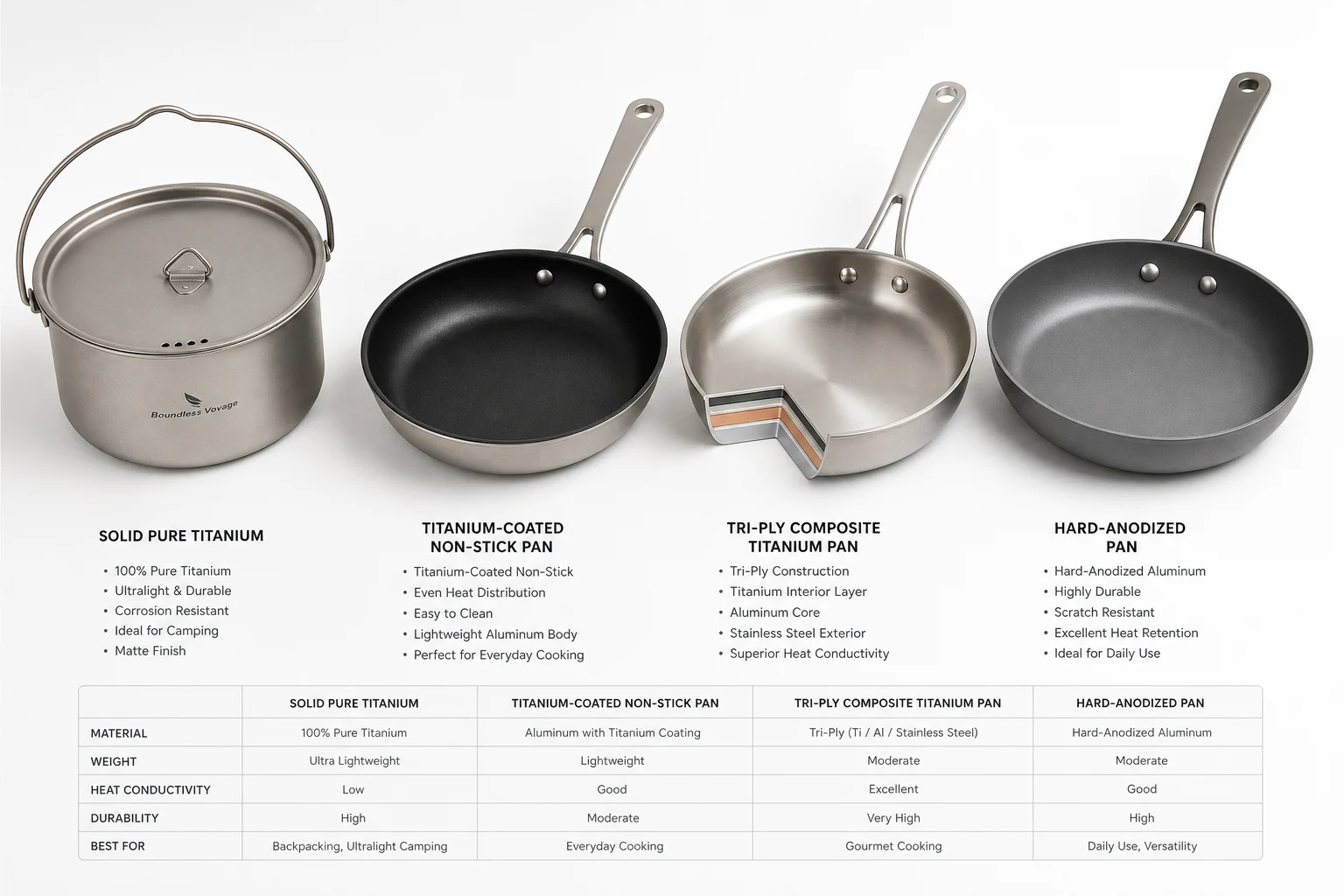
Every B2B sourcing failure I have seen in this category starts in the same place: the buyer does not clearly specify which type of titanium cookware they want, and the factory does not volunteer the distinction.
“Titanium cookware” is not a single product. It describes at least four fundamentally different constructions, each with different raw materials, different factory requirements, and different price points. Confusing them is not just a technical error — it is a procurement risk that can result in receiving products that cannot be sold, fail compliance testing, or generate consumer complaints at scale.
Type 1 — Pure/Solid Titanium Cookware
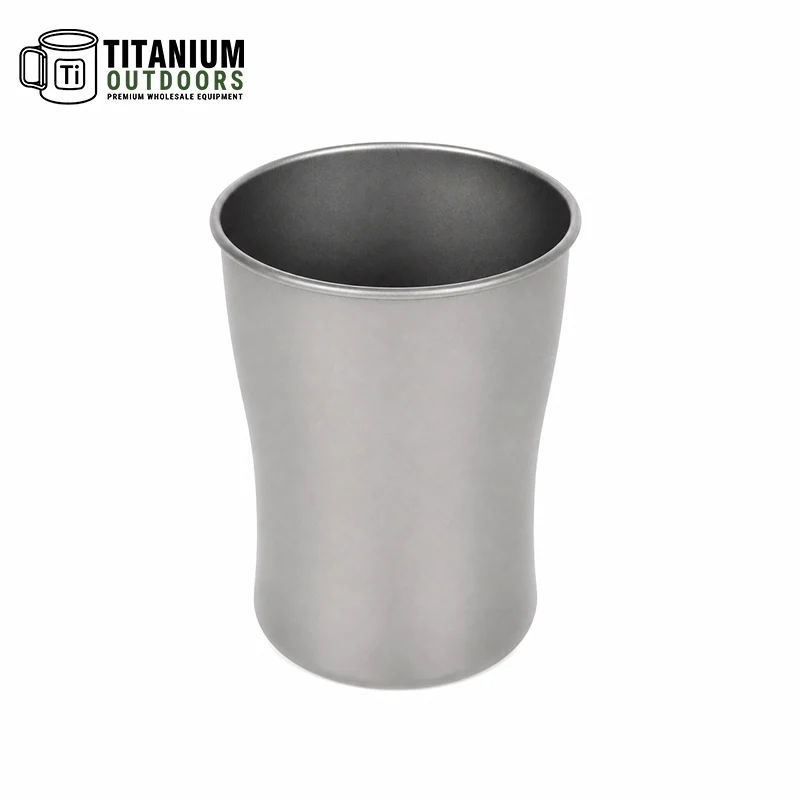
The entire vessel body is formed from titanium sheet — GR1 (Grade 1, commercially pure) or GR2 titanium per ASTM B265. No coatings, no aluminum backing, no stainless steel exterior. The product is the titanium.
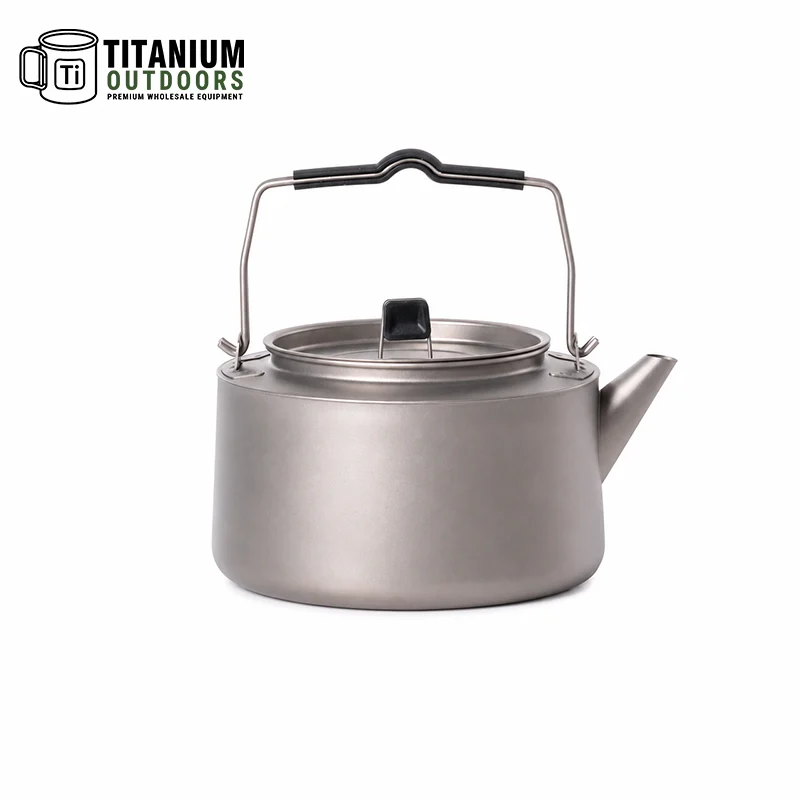
This is the category outdoor brands, ultralight backpackers, and health-focused DTC brands want. A 400 ml pure titanium pot weighs around 100–130 grams. It has no coating to chip or degrade. It can go from campfire to dishwasher. The tradeoff is heat distribution: pure titanium has a thermal conductivity of approximately 16–22 W/m·K — far lower than aluminum (1050 alloy: ~222–230 W/m·K) — which means food can hot-spot if heat isn’t managed carefully. For outdoor use (small burners, simmering water, one-pot meals), this tradeoff is acceptable. For home kitchen use, it is a dealbreaker for most consumers.
Type 2 — Titanium-Coated Cookware
An aluminum or stainless steel pan body with a thin titanium layer applied via physical vapor deposition (PVD), plasma spray, or a titanium-reinforced non-stick matrix. The titanium content is superficial. These products are often marketed as “titanium cookware” but the food-contact surface is primarily PTFE or ceramic with titanium particles embedded, or a very thin metallic titanium layer over a non-titanium base.
This is not inherently deceptive if disclosed correctly. Many well-regarded non-stick pans use this approach. The problem arises when suppliers describe these products as “pure titanium” — which is both inaccurate and a compliance risk in markets that require honest labeling.
Type 3 — Tri-Ply Titanium Composite
A bonded three-layer structure: GR1 pure titanium inner layer (food contact surface) + 1050 food-grade aluminum core (heat conduction) + 430 stainless steel exterior (induction compatibility, durability). The titanium inner layer thickness in quality products runs 0.4 mm or above.
This construction solves the heat distribution problem of pure titanium while maintaining a genuine titanium food-contact surface. It is the right product for home kitchen brands targeting the premium health-conscious segment. Factory capability requirements are significantly higher — the bonding process involves controlled rolling (typically 12 or more passes to achieve consistent layer adhesion and reduce delamination risk) and must produce consistent layer bonding strength of 120 MPa or above in quality-spec programs.
Type 4 — Hard-Anodized Aluminum with “Titanium” Finish
The fourth category is marketing language without material substance. These are anodized aluminum pans where “titanium” refers to the appearance (gray, metallic look) or to titanium particles in a surface coating — not to any structural titanium content. No legitimate B2B buyer should accept this as titanium cookware in any sourcing program.
Why this taxonomy matters: when you contact a factory in China and ask for “titanium cookware,” you will receive quotes for all four types from different suppliers — at prices ranging from $8 FOB to $60 FOB — with no clear signal that the products are fundamentally different. Specifying the grade, the layer structure, the inner-wall thickness, and the material grade (GR1 or GR2) in your initial RFQ eliminates this confusion.
Why China — and Specifically Baoji — Dominates Titanium Cookware Manufacturing

China accounts for an estimated 60–70% of global refined titanium production, and Baoji in Shaanxi Province is where most of it gets processed into the sheet and strip that cookware factories use. The raw material starts here:
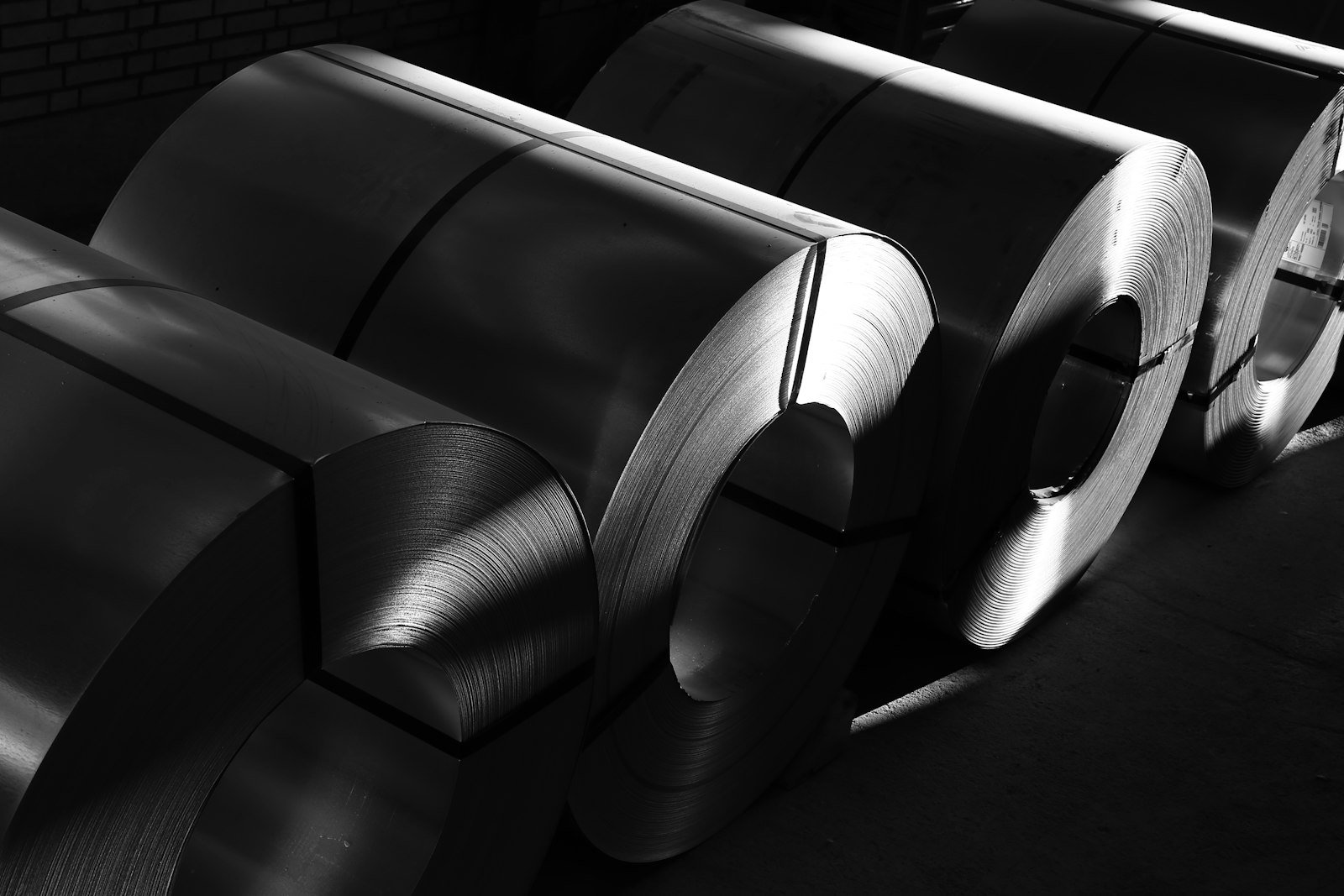 Baoji is known domestically as the “Titanium Capital of China” — it hosts major titanium processing mills including Baoji Titanium Industry and BAOTI Group, which supply commercially pure titanium coil in GR1 and GR2 grades to downstream manufacturers.
The geographic concentration matters for B2B sourcing because:
- Supply chain integration: Factories based in or near Baoji source titanium directly from mills, reducing intermediaries and improving material traceability
- Technical workforce: Titanium metalworking requires specialized skills. The Baoji ecosystem has built up trained workers, toolmakers, and QC staff with titanium-specific experience over decades
- Cost: China’s vertically integrated titanium supply chain produces GR1 sheets at a fraction of the cost of Japanese or US alternatives
Factories in Zhejiang (particularly Yongkang and Ningbo) are predominantly aluminum and stainless steel cookware manufacturers that have added titanium lines. These can be viable for titanium-coated or tri-ply composite products, but for programs requiring pure titanium material integrity, Baoji-based or Baoji-sourced factories typically have an advantage.
Titanium Outdoor is built on this supply chain foundation — sourcing GR1 and GR2 titanium directly from qualified mills in Shaanxi, with full material certification traceable from raw coil to finished product.
Evaluating a Titanium Cookware Manufacturer: The Verification Framework
Every factory in this category will describe itself as “professional,” “experienced,” and “quality-focused.” That language is table stakes. What distinguishes a factory that can actually deliver from one that will disappoint is verifiable evidence, not marketing claims.
When we audit a prospective titanium cookware supplier — whether for new client programs or for our own product development — these are the verification points that separate real capability from a polished presentation.
1. Request the Material Certificate, Not a Photo
Ask for the material mill certificate (also called a material test report or MTR) for the titanium used in production. A legitimate factory should be able to provide:
- The titanium grade (GR1, GR2, ASTM B265)
- Chemical composition (titanium %, impurity levels)
- The issuing mill name
- Batch number traceable to the production run
If a factory cannot provide this, or provides a certificate with a different company’s name and unclear chain of custody, that is a red flag.
2. Ask for the Tri-Ply Bonding Strength Specification (For Composite Products)
For tri-ply titanium products, bonding strength between layers is the critical quality parameter. A well-specified product should define minimum bonding strength (120 MPa is a reasonable floor) and the testing method. Ask the factory how they test layer adhesion and what their acceptance criteria are. Factories without a specific answer are producing composite cookware without controlled bonding quality.
3. Verify the Certification Documents Directly
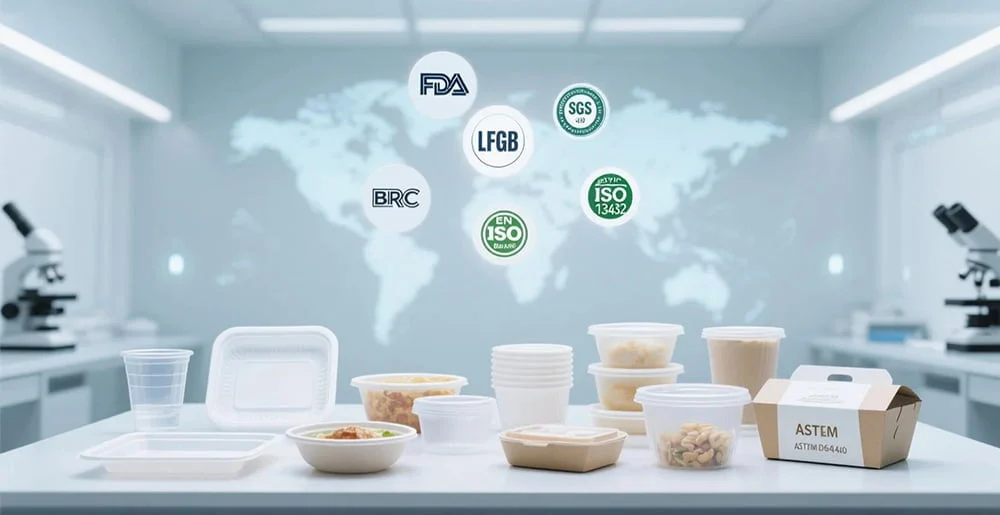
The relevant certifications are:
- FDA 21 CFR 175.300 — US food contact. Ask for the actual test report, not just the certification number.
- LFGB §30/31 — German/EU food safety testing, stricter than FDA. If you are selling in Germany or the EU, this is essential. The test report should be issued by an accredited lab (SGS, TÜV, Intertek, Bureau Veritas).
- ISO 9001:2015 — Quality management system certification. Verify the scope covers cookware manufacturing and confirm it has not expired.
- BSCI or Sedex — Social compliance audit. Required by many European retailers.
Do not accept certificates as images in a WeChat message. Request the full test report PDF. Authentic reports include the test item details, the sample description, the testing methodology, pass/fail values, and the lab accreditation number.
4. Order a Pre-Production Sample Before Confirming MOQ
The single most important step before committing to any order is a pre-production sample (PP sample) — not a showroom sample or a factory display unit, but a sample produced using the same materials, tooling, and process that will be used for mass production. The PP sample is the baseline for all subsequent quality inspection. Without a confirmed PP sample, you have no reference point for inspecting bulk goods.
5. Define First-Article Confirmation in Your PO
For new product programs, include a first-article inspection (FAI) clause. Before mass production begins, the factory produces 3–5 units from the production tooling and process. Your QC team (or a third-party inspector) approves or rejects these units. Only after FAI approval does full production begin. This single step eliminates the majority of bulk/sample inconsistency problems.
Seven Red Flags That Should Stop a Sourcing Conversation
These are patterns that signal a factory does not have genuine titanium manufacturing capability — or is not being transparent about its product structure.
- Uses “titanium cookware” and “titanium-coated cookware” interchangeably in their product catalog or sales pitch. Genuine titanium manufacturers are precise about material type.
- Cannot name the titanium grade (GR1, GR2) or provides a vague answer like “high-grade titanium” without ASTM designation.
- Price is significantly below market for the claimed construction. In 2026, FOB price for a quality pure GR1 titanium camping pot (400 ml) runs approximately $12–22 depending on finish and volume. FOB for a quality tri-ply titanium frying pan (28 cm) runs $25–45. If a factory quotes $6 FOB for “pure titanium” cookware, the product is not what it claims.
- No material certificates available — or certificates are for a different company without clear chain of custody.
- Minimum order quantity pressure on initial contact, before technical discussion. Reputable OEM factories want to understand your product requirements before discussing MOQ. Factories that lead with MOQ pressure are typically trading companies or brokers, not manufacturers.
- Cannot provide a factory visit invitation (even if you cannot visit). Legitimate factories will readily invite buyers for on-site visits and third-party factory audits.
- Certifications are “in progress” but cannot share any completed test reports. This typically means the factory does not hold the certifications it claims.
OEM vs ODM: Which Model Fits Your Brand Program?
| Factor | OEM | ODM |
|---|---|---|
| Who owns the design | You | Factory |
| Customization level | Full — you specify every parameter | Partial — you select/modify existing designs |
| Lead time for first sample | 5–14 days (new tooling if required) | 3–7 days (using existing molds) |
| MOQ | Often higher (amortize tooling cost) | Often lower |
| IP protection | Higher (your specs, your design) | Lower (factory owns the base design) |
| Best for | Brands with defined product identity | Brands entering market for first time |
Practical guidance for new brands: Start with ODM to validate market demand with lower capital commitment, then transition to OEM for SKUs with proven velocity. This approach lets you test product positioning and customer feedback before investing in proprietary tooling.
For outdoor brands specifically: Most premium outdoor cookware brands (your competitors on trail and in retail) use OEM. The product differentiation in the outdoor segment comes from material purity, weight, finish, and brand storytelling — all of which require OEM control. A serious outdoor brand should not be selling factory-ODM products at premium retail prices.
Titanium Outdoor: A Factory Built for Outdoor Brands
Titanium Outdoor exists because the outdoor cookware market has a specific problem that generic cookware factories do not solve: outdoor brands need pure titanium expertise, not a factory that treats titanium as an add-on to an aluminum or stainless steel line.
The outdoor use case creates product requirements that differ fundamentally from home kitchen cookware:
- Weight is the primary spec — grams matter, and pure GR1/GR2 titanium is approximately 40–43% lighter than stainless steel at comparable wall thickness
- Durability without coating — outdoor products must survive pack-and-go abuse, campfire smoke, cold drops; coated surfaces degrade; solid titanium does not
- No induction requirement — outdoor cookware uses gas, alcohol, wood, or esbit fuel; induction compatibility is irrelevant, which removes the need for the stainless steel exterior layer used in tri-ply
- Compact and nesting designs — outdoor cooking systems require tight dimensional tolerances for nesting and minimal pack volume
Titanium Outdoor’s manufacturing focus is precisely this product profile: pure GR1 and GR2 titanium cookware and drinkware for outdoor brands, with:
- GR1 and GR2 titanium sourced from Baoji-certified mills, with material certificates issued per batch
- Full OEM and ODM programs for branded outdoor cookware sets, individual pots, pans, cups, and accessories
- LFGB and FDA food-contact compliance documentation available for European and North American market requirements
- Flexible MOQ — starting from 300 pieces per style for standard outdoor items, with customized programs discussed based on tooling and packaging requirements
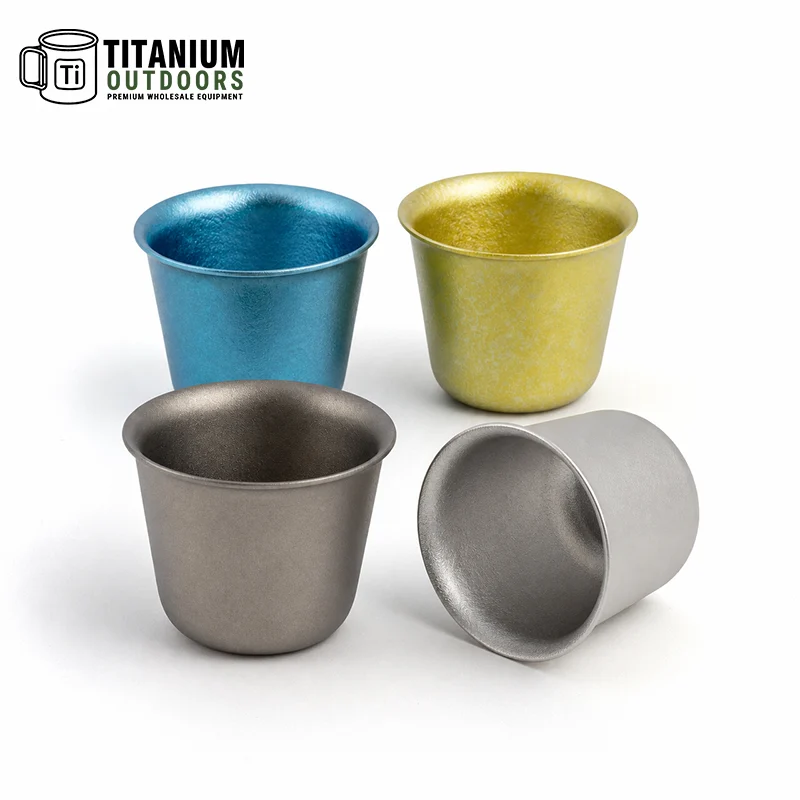
- Custom marking options: laser engraving, sandblasting, anodizing (black, green, blue titanium finishes), and print-on-packaging
For brands that also sell home kitchen products or want to expand into the tri-ply composite segment for retail channels, Titanium Outdoor can support sourcing coordination with partner factories for tri-ply construction — ensuring the same QC rigor applied to outdoor products carries through to the home kitchen line.
The Manufacturing Process: From Titanium Coil to Finished Cookware
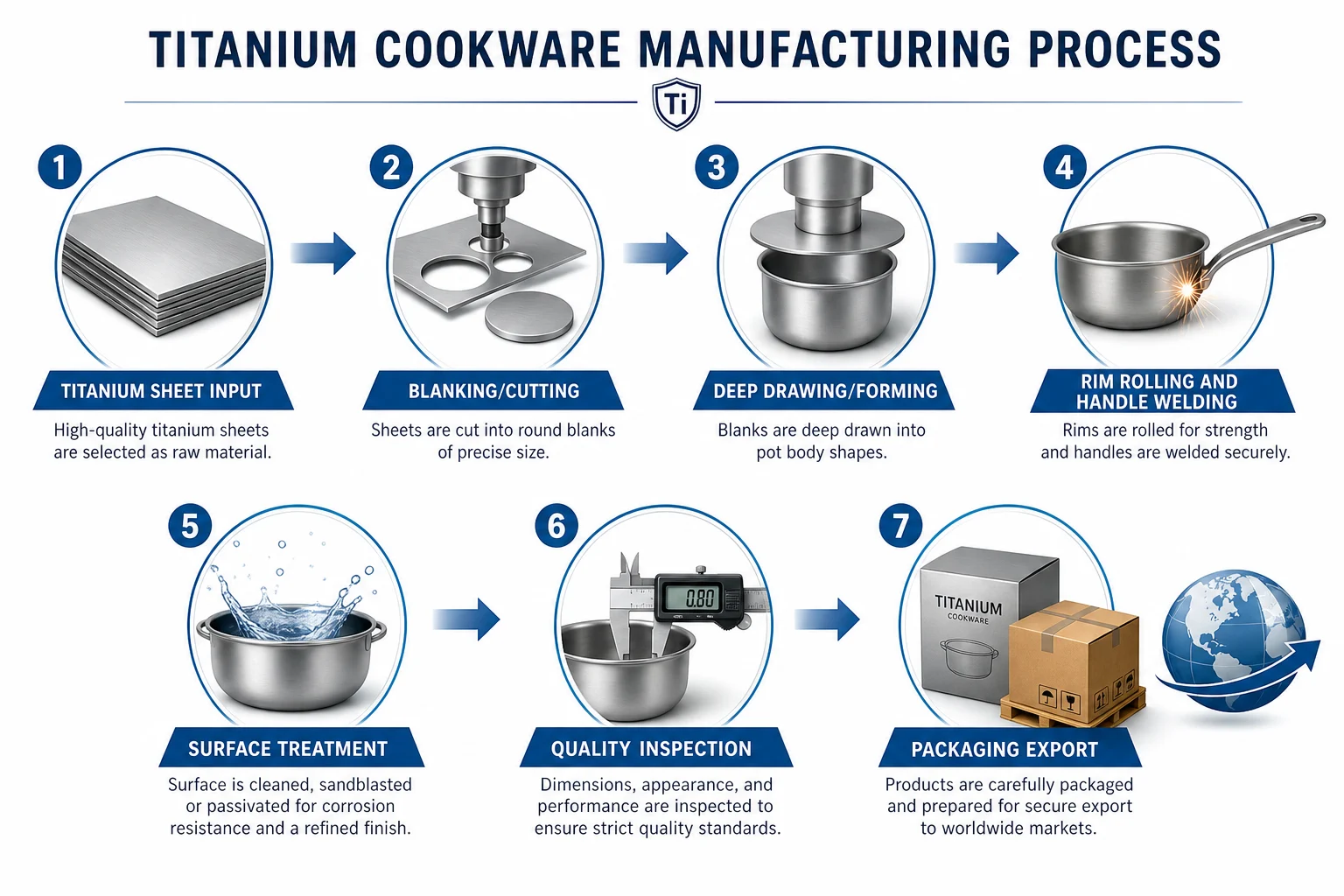
Understanding how titanium cookware is made helps buyers ask better questions and evaluate factory responses more accurately.
Step 1 — Material Sourcing and Incoming Inspection
GR1 or GR2 titanium arrives at the factory as coil or sheet, typically 0.5–1.2 mm thick for outdoor cookware (thicker for home kitchen pieces). Incoming inspection checks material grade certificate, thickness tolerance, surface condition, and hardness. A serious factory retains incoming material inspection records by batch.
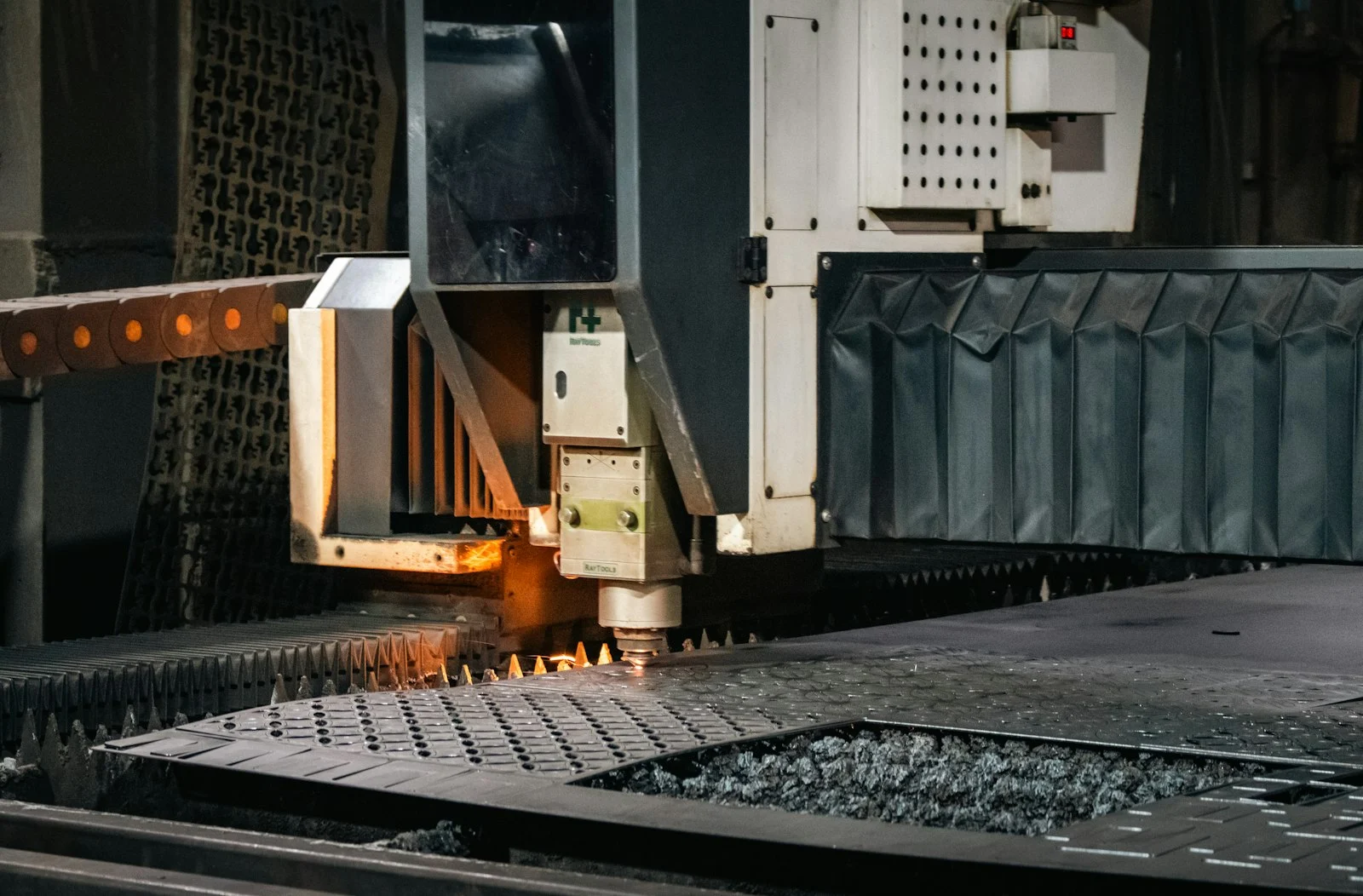
Step 2 — Blanking
The titanium sheet is cut into circular or near-net-shape blanks using stamping or laser cutting. Blank size is determined by the final product dimensions and the draw ratio (how deep the forming operation will be).
Step 3 — Deep Drawing / Forming
The blank is formed into the vessel shape using progressive stamping dies. Titanium’s high strength-to-weight ratio makes it harder to deep-draw than aluminum — it requires more stamping force, more precise die clearances, and typically more drawing stages than softer metals. Wall thickness uniformity across the drawn body is a key quality indicator; non-uniform walls indicate inconsistent material or inadequate tooling.
Step 4 — Rim Rolling and Handle Attachment
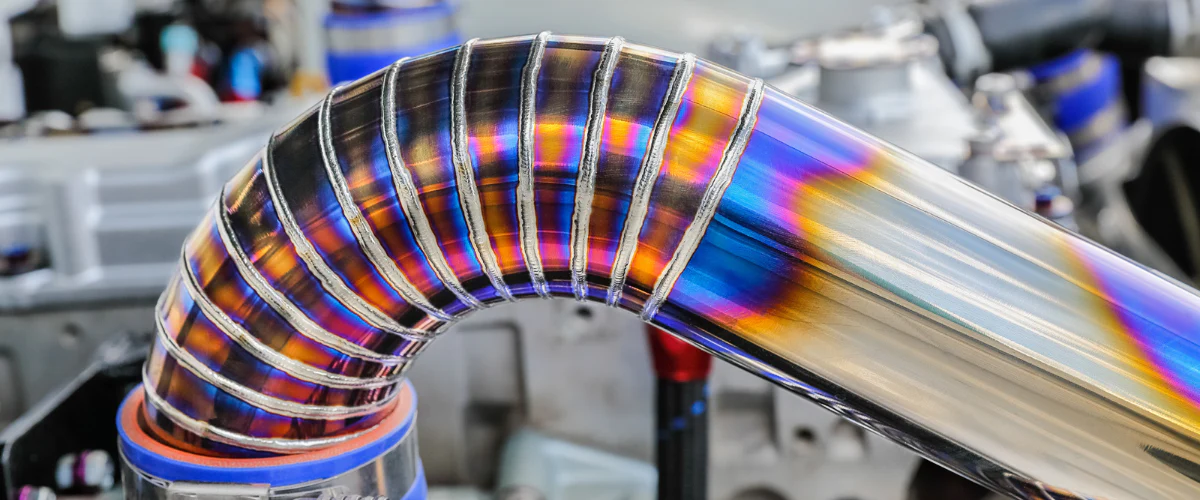
The rim is rolled or hemmed for strength and safety. Handles are attached by welding (for fixed handles) or by riveted/threaded attachment (for folding handles). Titanium welding requires inert gas shielding (TIG welding with argon) to prevent oxidation. Weld quality — consistent bead width, no porosity, full penetration without burn-through — is a direct indicator of workforce skill and equipment capability.
Step 5 — Surface Treatment
Options include: media blasting (matte finish), electropolishing (bright finish), anodizing (colored titanium oxide layer — iridescent, black, blue, green), and passivation (acid cleaning to remove surface contamination). Surface treatment must be compatible with the intended food-contact use.
Step 6 — Dimensional and Appearance Inspection
Finished goods are inspected for dimensional conformance (diameter, depth, wall thickness, handle position), surface defects (scratches, pitting, weld anomalies), and weight. A quality-spec program should define acceptance criteria for each dimension.
Step 7 — Packaging and Export Preparation
Products are nested, wrapped, and packed per the buyer’s retail or master-carton specification. Export documentation (commercial invoice, packing list, bill of materials, material certificates, test reports) is prepared per the destination market requirements.
Certifications by Target Market
| Market | Required | Strongly Recommended |
|---|---|---|
| USA | — (no mandatory registration for bare titanium cookware) | Heavy-metal migration testing per FDA food contact safety evaluation, California Prop 65 compliance |
| European Union / Germany | REACH compliance | LFGB §30/31 (essential for German retailers), CE not required for cookware |
| UK | UKCA (post-Brexit equivalent) | LFGB equivalent testing |
| Australia | FSANZ food contact standards | — |
| Japan | JIS G4600 titanium standard compatibility | — |
| Canada | Health Canada food contact | Similar to FDA |
LFGB is the gold standard for a reason. German consumer protection standards are among the strictest in the world. An LFGB-certified product can typically sell in all European markets. For outdoor brands targeting the EU and UK premium retail channel, LFGB test reports are effectively a market requirement.
How to Structure Your First RFQ to a Titanium Cookware Factory
A well-structured RFQ saves weeks of back-and-forth and screens out factories that lack the capability you need. Include these elements:
1. Product specification
- Product type: pure titanium / tri-ply composite / other
- Titanium grade: GR1 or GR2
- Target dimensions: diameter, depth, wall thickness (or weight target)
- Surface finish: matte / brushed / anodized / polished
- Handle type: fixed / folding / detachable
- Lid requirement: yes/no, lid material
2. Commercial parameters
- Target annual volume (for MOQ negotiation context)
- First-order quantity
- Target FOB price range (if you have market data)
- Required incoterms: FOB / CIF / DDP
3. Compliance requirements
- Required certifications / test reports
- Target markets (US / EU / AU / other)
- Labeling requirements (country of origin markings, material labeling)
4. Customization requirements
- Logo / branding method (laser engraving, silk screen, embossed logo)
- Custom packaging (retail box, polybag, master carton spec)
- Private label / brand mark protection requirements
5. Quality control expectations
- Third-party inspection access (yes/no)
- QC standard (AQL 2.5 or other)
- PP sample requirement
- First-article inspection requirement
Frequently Asked Questions
What is the minimum order quantity for titanium cookware OEM?
MOQ varies by product type and factory. For standard outdoor titanium products (pots, cups, utensils), Titanium Outdoor starts at 300 pieces per style. For tri-ply composite cookware with custom tooling, 500 pieces per style is typical. First-time buyers can often negotiate lower trial quantities (100–200 pcs) at a premium unit price to validate product quality before committing to full-volume orders.
What is the difference between pure titanium and titanium-coated cookware?
Pure titanium cookware uses a vessel body made entirely from solid titanium sheet (GR1 or GR2 grade). Titanium-coated cookware has an aluminum or stainless steel body with a thin titanium layer applied to the surface via PVD or spray process. The two are not equivalent and should not be marketed as the same product. Pure titanium has a genuine titanium food-contact surface with no coating to degrade; titanium-coated pans rely on the coating integrity for their performance claims.
Which titanium grade is food-safe?
GR1 (ASTM B265 Grade 1) is the highest-purity commercially available titanium and is universally accepted for food contact. GR2 is also food-safe and slightly stronger. TC4 (Ti-6Al-4V, Grade 5) contains aluminum and vanadium alloying elements and is generally NOT recommended for food-contact applications. Always specify GR1 or GR2 in your sourcing documentation.
Why don’t professional chefs use titanium pans?
Pure titanium has lower thermal conductivity than stainless steel with an aluminum or copper core — approximately 16–22 W/m·K vs. 50–100+ W/m·K for clad pans. This means heat distributes unevenly in pure titanium, which creates hot spots that professional chefs find problematic for precision cooking techniques. Tri-ply titanium composite (titanium over aluminum core) solves the heat distribution problem, but it is heavier and more expensive than comparable clad stainless. For professional kitchens, established stainless and carbon steel options remain dominant. For outdoor and ultralight applications, the heat distribution limitation is acceptable in exchange for the weight advantage.
Are any titanium cookware brands not made in China?
A small number of Japanese brands (Snow Peak, for example) have historically manufactured titanium products in Japan. Taiwan has some titanium fabrication capability. US and European brands that sell “titanium cookware” almost universally source from Chinese factories, including many premium brands — the difference is in which factory and which quality standard they apply. The country of manufacture matters less than the specific factory, material spec, and QC program.
How do I verify that a Chinese factory is a real manufacturer and not a trading company?
Key indicators of a genuine manufacturer: they can provide factory photos showing production equipment (stamping presses, TIG welding stations, quality control areas); they can invite you for a factory audit (or a third-party audit service); their business license shows manufacturing scope, not just trading; they can provide incoming material inspection records and production QC records; and their pricing reflects manufacturing cost structure, not trading markup.
Conclusion
Sourcing titanium cookware from China is not complicated if you understand the product category clearly, ask for verifiable evidence at every step, and work with factories that have documented titanium-specific capability — not factories that have titanium on their catalog alongside 200 other product types.
The most important decision in this sourcing process is made before you contact a single factory: be precise about which type of titanium cookware you need (pure solid titanium for outdoor, tri-ply composite for home kitchen, or titanium-coated for entry-level non-stick). That single decision filters your supplier list to the factories that can actually deliver, and sets the material specification that drives all downstream quality, compliance, and pricing decisions.
Titanium Outdoor brings outdoor brand sourcing together in one place — pure GR1/GR2 titanium expertise, Baoji-sourced certified materials, LFGB/FDA compliance documentation, and flexible OEM/ODM programs built specifically for outdoor gear brands. Whether you are launching a first outdoor cookware SKU or scaling a proven line, the conversation starts with your product spec and target market.