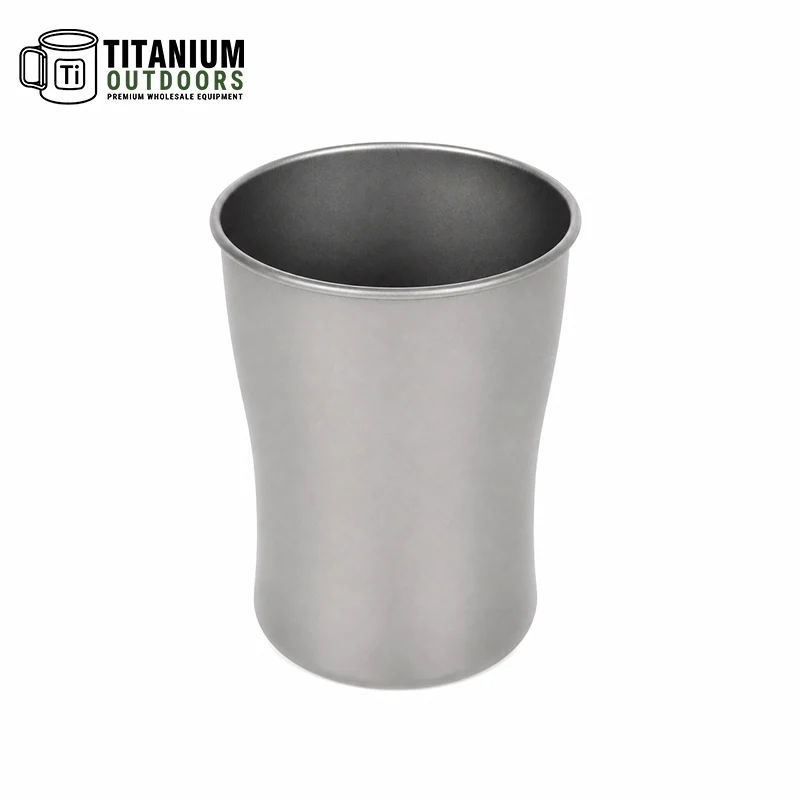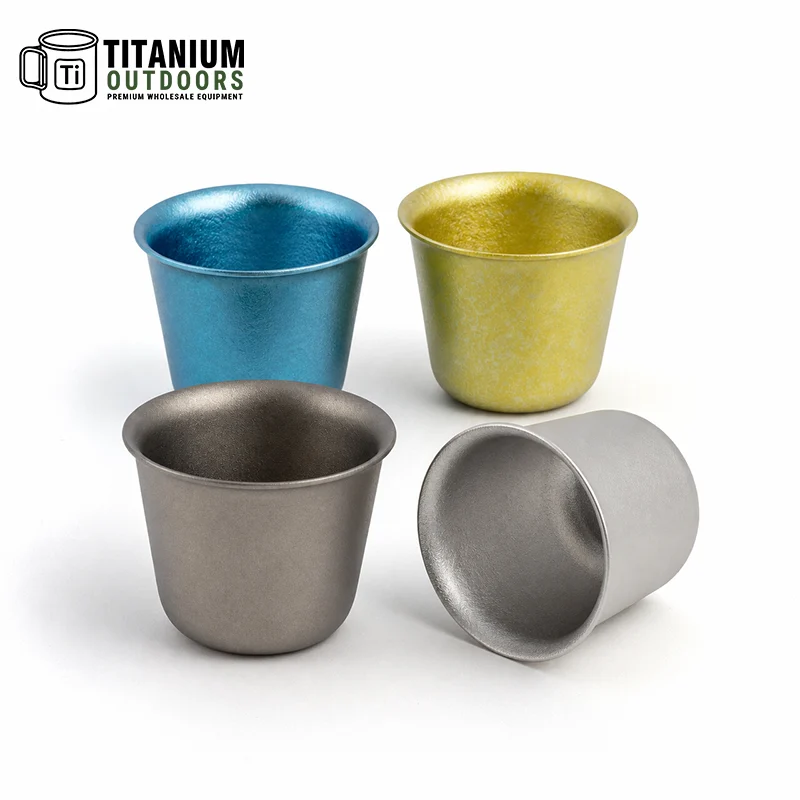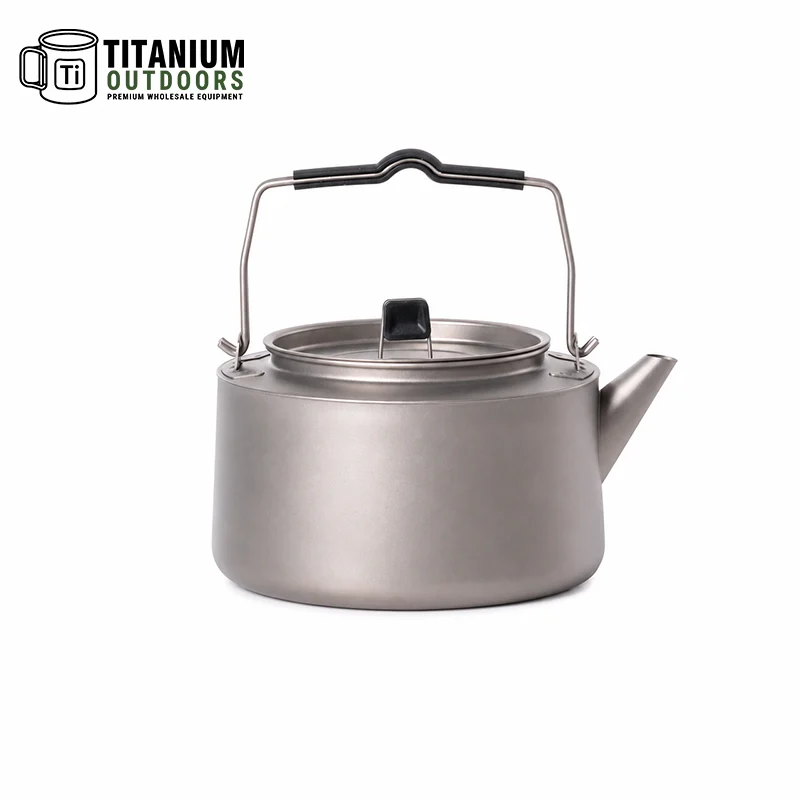

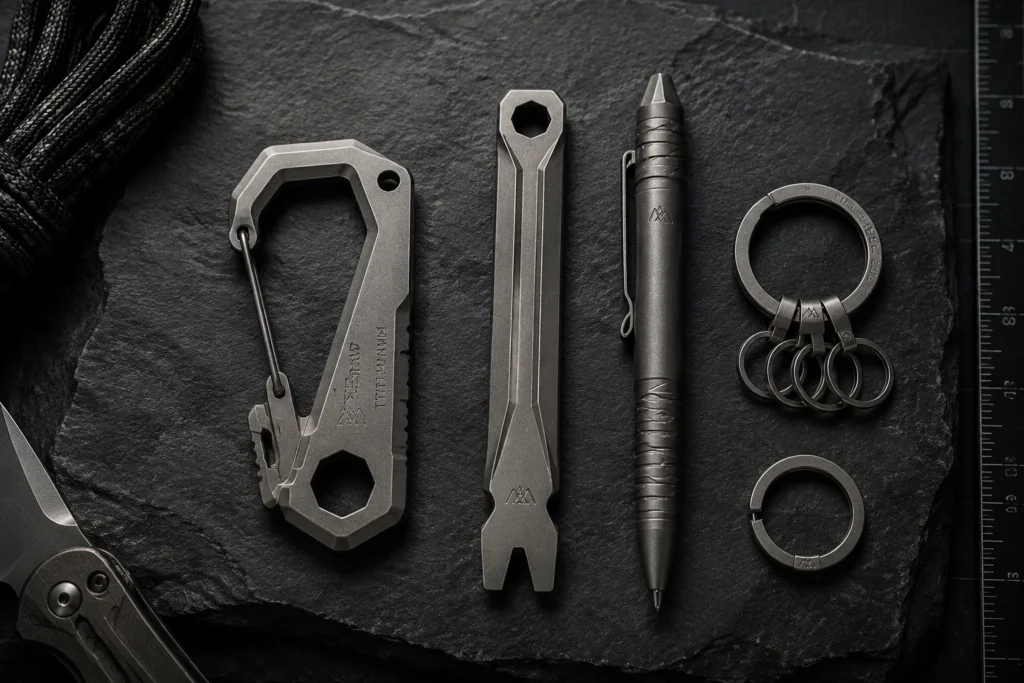
Pure titanium (CP grades 1–4) and titanium alloys like Ti-6Al-4V (Grade 5) or Ti-3Al-2.5V (Grade 9) serve fundamentally different applications. CP titanium wins on corrosion resistance, biocompatibility, and food safety — making it the right choice for cookware, cups, and medical devices. Grade 5 alloy delivers 2.5× more tensile strength and suits structural, aerospace, and high-load components. Grade 9 sits in between and dominates the outdoor tubing market. Choosing the wrong grade costs you money, performance, or regulatory compliance — this guide shows you which is which.
At a Glance: Which Titanium Grade Do You Actually Need?
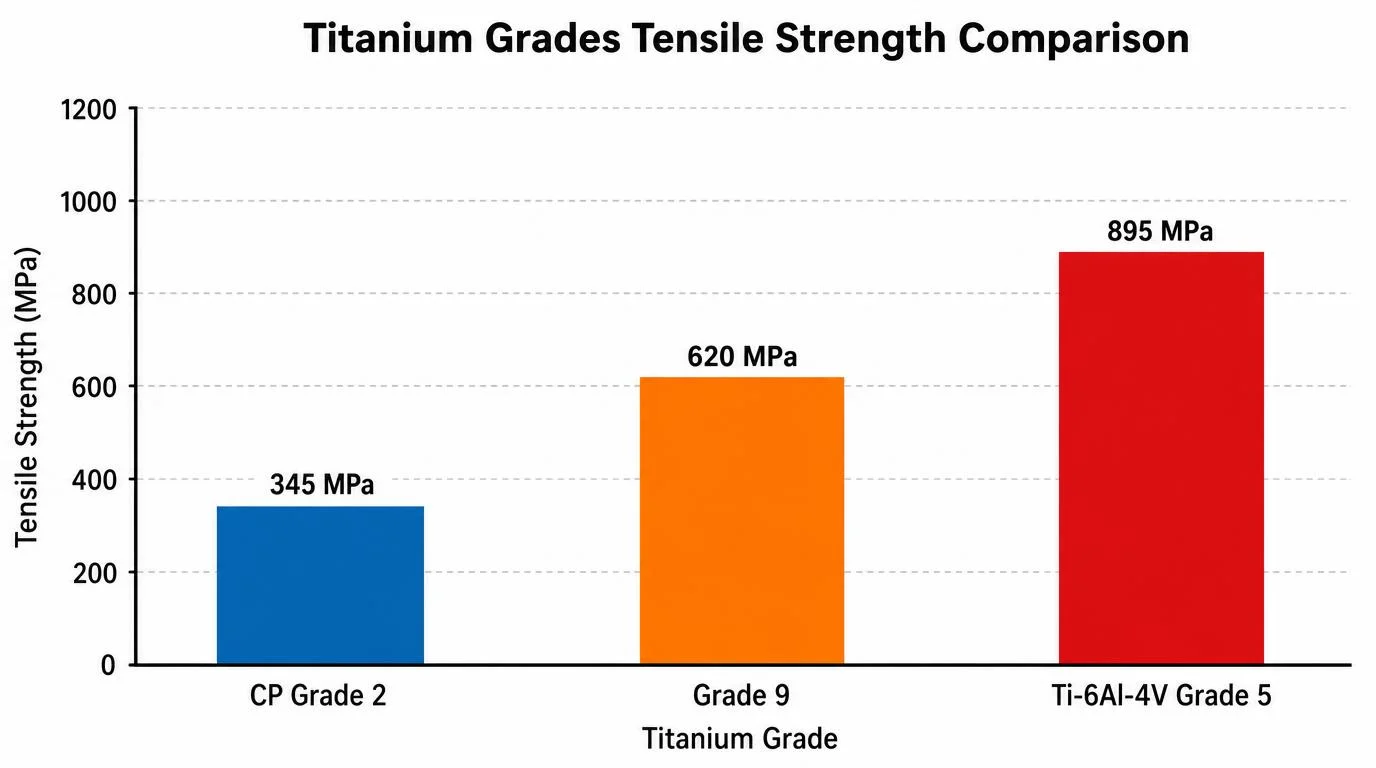
The single most important thing to know: “titanium” is not one material. ASTM recognizes 38+ titanium grades. For outdoor gear and industrial B2B sourcing, three matter most:
| Property | CP Titanium (Grade 1–2) | Grade 9 (Ti-3Al-2.5V) | Grade 5 (Ti-6Al-4V) |
|---|---|---|---|
| Composition | ≥99% Ti | Ti + 3% Al + 2.5% V | Ti + 6% Al + 4% V |
| Tensile Strength | 240–550 MPa | ~620 MPa | ~895 MPa |
| Density | ~4.51 g/cm³ | ~4.48 g/cm³ | 4.43 g/cm³ |
| Corrosion Resistance | Excellent | Very Good | Good |
| Biocompatibility | Highest | High | Limited (food contact: avoid) |
| Formability | High | Medium | Low |
| Weldability | Easy | Easy | Requires shielded atmosphere |
| Relative Cost | 1× | 1.3–1.5× | 2–3× |
| Typical Use | Cookware, cups, implants | Bike frames, tubing, outdoor tools | Aerospace, structural parts |
Sources: ASTM B265, urbanedc.com, dynamicmetalsltd.com, Smith Metal datasheet
If you’re sourcing for cookware or outdoor drinkware: Grade 1 or Grade 2 CP titanium.
If you’re sourcing for bike frames, poles, or thin-walled outdoor hardware: Grade 9.
If you’re sourcing for structural brackets, fasteners, or high-stress components: Grade 5.
What Is Commercially Pure (CP) Titanium?
CP titanium is ≥99% pure titanium, differentiated by trace oxygen and iron content across Grades 1–4. Grade 1 has the lowest impurity level (≤0.18% O₂) and is the softest and most ductile. Grade 4 has higher impurity tolerance and correspondingly higher strength — up to 550 MPa tensile — at the cost of some formability.
In practice, Grade 2 is the industrial workhorse: 345 MPa tensile strength, 275 MPa yield strength, 20% elongation minimum. It holds its shape under stamping and deep-drawing, which is why it dominates cookware and sheet-metal applications.
The oxide layer is the key advantage. When CP titanium contacts oxygen, TiO₂ forms on the surface within milliseconds. This self-healing passive film is what makes CP titanium resistant to saltwater, most acids, and chlorinated environments — Grade 2’s corrosion rate in wet chlorine is just 0.001 mm/year (NeoNickel technical data). No coating, no treatment required.
For food-contact and body-contact applications, Grade 1 is the standard precisely because no alloying elements are present. It’s the same material classification used in medical-grade dental implants and surgical devices. If a cookware brand is using Grade 1 and says so, that’s a meaningful claim.
What Is Titanium Alloy — and Why Does It Exist?
Titanium alloys add elements to boost specific performance parameters that CP titanium can’t achieve. The most important is Ti-6Al-4V (Grade 5): 6% aluminum raises the alpha-phase transition temperature and increases strength; 4% vanadium stabilizes the beta phase and improves heat treatability.
The result: Grade 5 achieves 895 MPa tensile strength — roughly 2.5× Grade 2 — at nearly the same density (4.43 g/cm³ vs 4.51 g/cm³ for CP). That strength-to-weight ratio is why Grade 5 accounts for approximately 50% of all titanium consumed globally and dominates aerospace, defense, and high-performance automotive sectors (Dynamic Metals Ltd).
Maximum service temperature also shifts significantly: CP titanium is rated to ~200°C in normal atmosphere; Grade 5 performs to ~400°C, which matters for engine components and exhaust systems.
The trade-off is fabrication complexity. Grade 5 cannot be cold-formed like CP titanium without cracking risk. Welding requires shielded atmosphere to prevent embrittlement. Machining cycle times are longer, tool wear is higher, and all of this flows downstream into higher part cost — typically 2–3× more than equivalent CP titanium products.
The Outdoor Middle Ground: Grade 9 (Ti-3Al-2.5V)
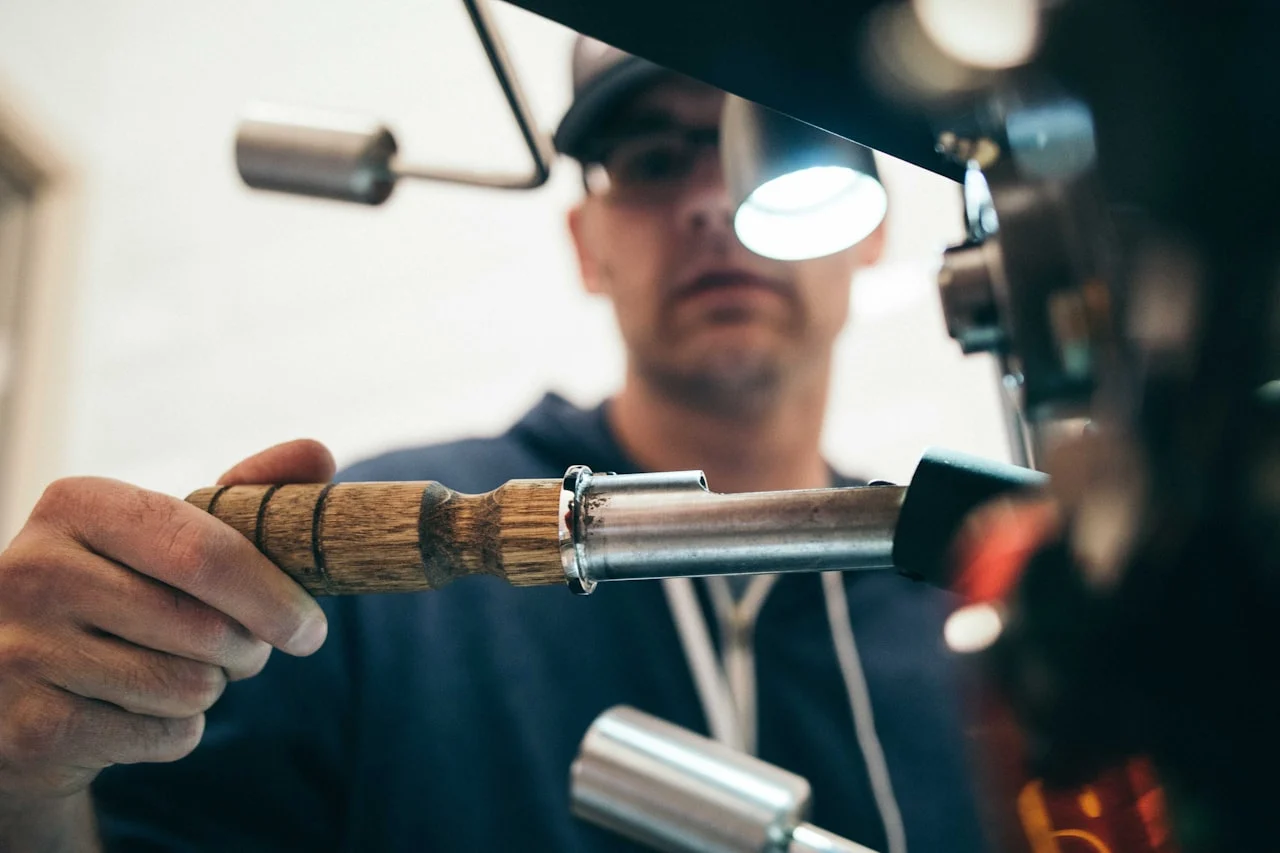
Grade 9 is the grade most outdoor manufacturers never tell you they’re using — but probably should. It’s a near-alpha alloy with 3% aluminum and 2.5% vanadium, sitting squarely between CP and Grade 5: 620 MPa tensile strength, cold-formable, weldable without a vacuum chamber, and 20–50% stronger than Grade 2.
The cycling industry figured this out years ago. Enigma Bicycle Works calls Grade 9 “the workhorse of titanium bike building” — most high-end titanium frame tubing is Grade 9, not Grade 5, because it balances wall-thickness reduction against cold-working constraints. Grade 5 would be overkill structurally and a nightmare to form into thin-walled tubes.
For outdoor gear manufacturers, Grade 9 makes sense for:
- Tent poles and trekking poles (thin-walled, weight-critical, impact-loaded)
- Cutlery handles and tool frames (higher wear resistance than CP)
- Water bottle bodies where wall reduction is a design priority
The vanadium content in Grade 9 is lower than Grade 5 (2.5% vs 4%), and while it’s not the preferred food-contact material, short-term contact in well-finished products carries low practical risk. That said, for anything with prolonged food contact — pots, cups, bowls — CP titanium remains the correct choice.
The Food Safety Question No One Answers Directly
Buyers ask this constantly, and most articles sidestep it: Is Ti-6Al-4V (Grade 5) safe for cookware?
The honest answer: Grade 5 is not recommended for direct, prolonged food contact.
Vanadium is a transition metal with cytotoxicity at elevated concentrations. Aluminum, while present in trace amounts in alloy, is not a food-safe additive. The passive oxide layer on Grade 5 is protective under normal conditions, but elevated pH, acidic foods (tomato sauce, vinegar), high heat, and surface damage can compromise it.
This is why specialist cookware brands like Valtcan explicitly use Grade 1 and state it publicly. It’s not just marketing differentiation — it’s sound materials practice. The implant industry, which faces similar contact duration and body-chemistry considerations, also uses CP grades (Grade 1 and Grade 23 ELI) rather than Ti-6Al-4V for direct tissue contact.
For a B2B buyer sourcing cookware or drinking vessels: require the supplier to state the grade in writing and back it with a mill certificate. If the answer is “titanium alloy” without grade specification, that’s a red flag worth addressing before production starts.
Corrosion Resistance: Where CP Titanium Has No Rival
CP titanium’s corrosion performance is exceptional — and Grade 5’s is merely good. In marine environments, chemical processing, and outdoor exposure to salt, moisture, and UV, CP titanium’s homogeneous oxide layer outperforms alloys because there are no second-phase particles or compositional gradients to create galvanic micro-cells.
Grade 5 is still far more corrosion-resistant than stainless steel in most environments. But when you need demonstrated resistance across a wide pH range, chemical media, or long outdoor service life — Grade 2 is the technically superior choice.
In my review of performance data from NeoNickel and Dynamic Metals, the most consistent differentiator is this: CP titanium’s oxide layer is self-healing across the widest range of conditions. Grade 5’s oxide layer is protective too, but the alloying elements can introduce localized vulnerability in specific aggressive media — something a buyer sourcing for outdoor or marine applications should factor in.
Weight: The Number Everyone Gets Wrong
The weight difference between CP titanium and Grade 5 is negligible for most products.
Grade 2 density: 4.51 g/cm³
Grade 5 density: 4.43 g/cm³
That’s a 1.8% difference. On a 300 ml camping cup weighing 80 grams, you’re talking about a 1.5 gram difference — well within manufacturing tolerance variation.
The real weight story is about wall thickness enabled by strength. Because Grade 5 is 2.5× stronger, a designer can specify thinner walls for a structurally equivalent part — but this is only relevant for load-bearing components, not thin-walled cookware or cups where the limiting factor is rigidity during handling, not structural load.
For outdoor cookware and drinkware, CP titanium at standard gauge is lighter or equal in practice because it machines thinner without load-bearing risk, and the density penalty is trivially small.
B2B Sourcing: 3 Questions to Ask Your Titanium Supplier
Most titanium products on the market are labeled “titanium” without grade disclosure. For B2B buyers, grade ambiguity translates directly into risk — compliance failures, buyer audit rejections, or product returns.
Before signing an order, ask these three questions:
1. “What ASTM grade is this material, and can you provide the mill certificate?”
A legitimate manufacturer will answer Grade 1, 2, 4, 5, 9, or another specific grade and back it with documentation. “High-grade titanium” or “pure titanium alloy” are not answers — they’re evasions.
2. “What is the oxygen content specification?”
This matters most for CP grades. Grade 1 has ≤0.18% O₂; Grade 2 has ≤0.25%. Higher oxygen content increases strength but reduces ductility and corrosion performance. A supplier that knows their oxygen spec is working from actual process control.
3. “Has this been tested for food contact compliance?”
For cookware, cups, and any product contacting food or beverages, ask for migration testing or food-contact compliance documentation. CP Grade 1 or 2 will pass easily. Grade 5 — if the supplier is using it for cost reasons in cookware — is a liability.
Real-World Application Matrix
| Application | Recommended Grade | Why |
|---|---|---|
| Camping cookware (pots, pans) | Grade 1 CP | Food safe, formable, no leaching risk |
| Titanium cups / mugs | Grade 1 or 2 CP | Best biocompatibility, easy to deep-draw |
| Camping cutlery | Grade 2 CP | Good balance of ductility and hardness |
| Trekking poles / tent poles | Grade 9 | Stronger than CP, cold-formable tubing |
| Bicycle frames | Grade 9 | Industry standard for tube forming |
| Outdoor fasteners / hardware | Grade 5 | High fatigue resistance needed |
| Aerospace brackets | Grade 5 | Highest strength-to-weight required |
| Medical/dental implants | Grade 1 or Grade 23 ELI | Maximum biocompatibility |
| Marine heat exchangers | Grade 2 CP | Best corrosion resistance in saltwater |
Frequently Asked Questions
Is titanium alloy stronger than pure titanium?
Yes, significantly. Ti-6Al-4V (Grade 5) achieves ~895 MPa tensile strength versus ~345 MPa for Grade 2 CP titanium — roughly 2.5× stronger. Grade 9 (Ti-3Al-2.5V) sits in between at ~620 MPa.
Which titanium is best for outdoor cookware?
Commercially pure titanium, specifically Grade 1 or Grade 2. These grades have no alloying elements to leach, form easily into thin-walled shapes, and resist corrosion from food acids and outdoor environments.
Is Ti-6Al-4V (Grade 5) safe for food contact?
It’s not recommended for prolonged food contact. The vanadium and aluminum content creates potential leaching risk under acidic or high-heat conditions. CP grades are the correct choice for cookware and drinkware.
What titanium grade do bike frames use?
Most high-end titanium bicycle frames use Grade 9 (Ti-3Al-2.5V), not Grade 5. Grade 9 offers 20–50% more strength than CP titanium while remaining cold-formable and easy to weld into thin-walled tubes.
How do I identify what grade of titanium a product uses?
Ask for the mill certificate or Certificate of Analysis (COA) from your supplier. If the product lists “titanium” without specifying the grade, contact the manufacturer. Legitimate suppliers can state the ASTM grade number.
Can titanium alloy be welded?
Grade 9 and CP grades weld relatively easily, though titanium always requires clean conditions (no oxygen contamination). Grade 5 welding requires shielded atmosphere control — it’s achievable but more process-intensive and costly.
Summary
Titanium is not interchangeable across grades — and for outdoor gear procurement and B2B manufacturing, getting the grade right matters as much as getting the material right.
CP titanium (Grade 1–2) owns the cookware, drinkware, and medical device space because nothing else matches its combination of formability, food safety, and corrosion resistance. Grade 9 is the unsung hero of outdoor tubing and bike frames — a practical middle ground that most buyers don’t know to ask for. Grade 5 is the performance alloy that makes aerospace possible, but it belongs in structural components, not your camping mug.
The consistent pattern I see across supplier conversations and spec sheets: buyers who specify the grade get better products, fewer compliance surprises, and stronger supplier accountability. Ask for the ASTM grade and the mill certificate. It’s a three-second conversation that prevents a lot of expensive problems.