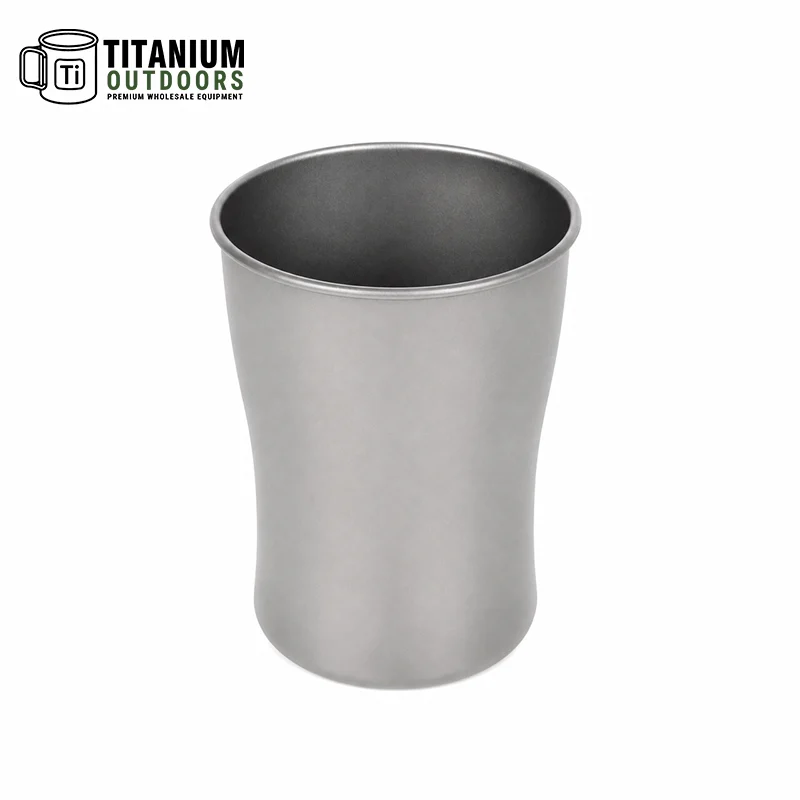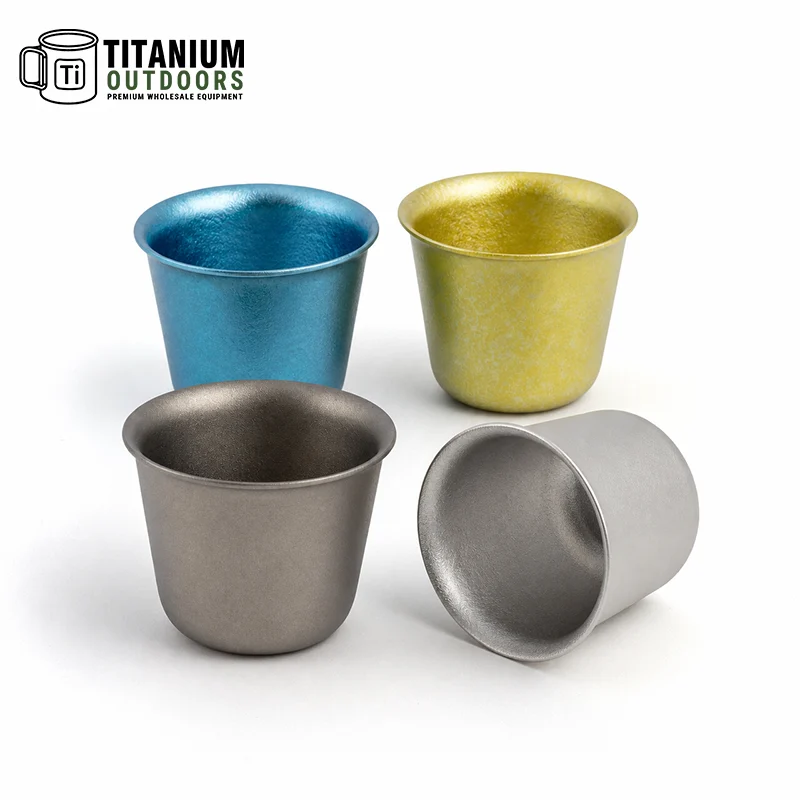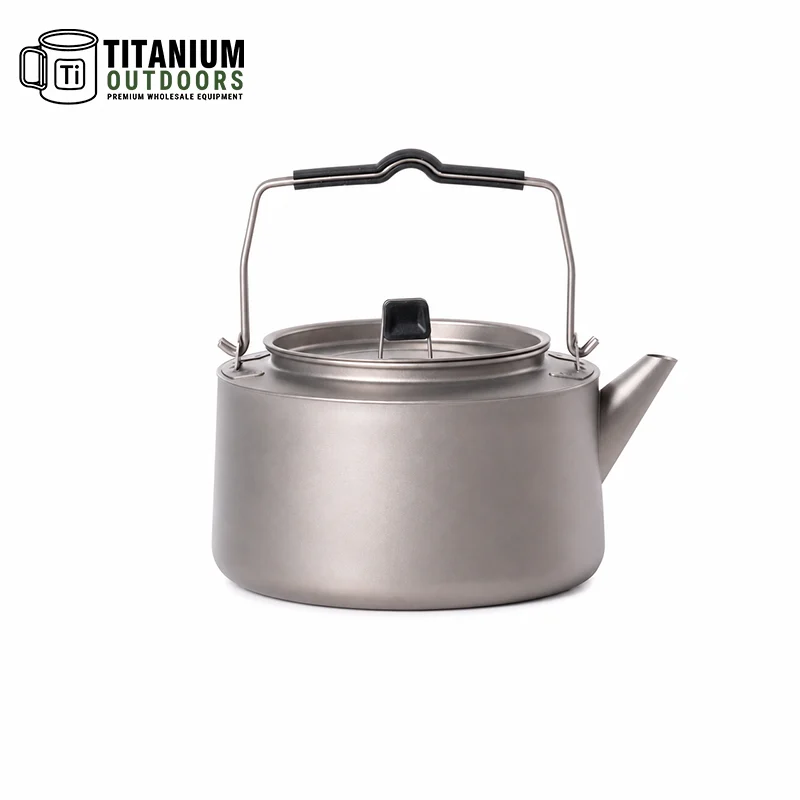
Titanium coffee mugs weigh 40–60% less than stainless steel equivalents, are completely taste-neutral, and carry FDA/LFGB food-contact compliance — which is why outdoor brands from niche ultralight labels to established gear companies specify Grade 1 or Grade 2 titanium for their drinkware lines. At roughly 78g for a 450ml single-wall mug vs 160g for the same size in 316 stainless steel, the weight case alone closes most procurement decisions. This guide covers the material science, real-world performance, brand sourcing considerations, and the specific reasons leading outdoor brands choose titanium over every alternative.
Why This Material Decision Matters More Than You Think
Pick up a titanium coffee mug for the first time and the reaction is almost always the same: this can’t be right. It feels too light to be real. An empty 450ml mug from Titanium Outdoor tips the scale at around 78 grams — roughly the weight of two AA batteries. The stainless steel version of the same mug? About 160 grams.
That 82-gram gap sounds trivial. Tell that to a thru-hiker carrying every gram for 500 miles, or a brand manager spec’ing gear that will be worn, used, and reviewed by serious outdoor athletes. In those contexts, material choice is a product statement.
Outdoor brands don’t choose titanium by accident. They choose it because it solves specific problems that no other material solves simultaneously: extreme weight reduction, zero flavor transfer, lifetime durability, and clean compliance paperwork. This guide explains each of those reasons in depth — plus the honest limitations that every procurement team should know before placing an OEM order.
Titanium vs. Stainless Steel vs. Aluminum: The Core Comparison

Before getting into why brands choose titanium, here’s the full material comparison table that procurement teams and gear buyers actually need:
| Property | Titanium (Grade 1/2) | Stainless Steel (304/316) | Aluminum (6061) |
|---|---|---|---|
| Density | 4.51 g/cm³ | 7.93–8.00 g/cm³ | 2.70 g/cm³ |
| Weight (450ml single-wall mug) | ~78g | ~155–165g | ~60–70g |
| Thermal conductivity | ~21.9 W/m·K | ~16.2 W/m·K | ~167–205 W/m·K |
| Corrosion resistance | Excellent (TiO₂ passive layer) | Good (Cr₂O₃ passive layer) | Moderate |
| Taste neutrality | Complete — zero leaching | Very good (minor metallic at high temp) | Poor — reacts with acidic beverages |
| Food safety certifications | FDA, LFGB, EU food contact | FDA, LFGB | FDA (coated versions only) |
| Direct flame/stove use | ✅ Single-wall only | ✅ Single-wall only | ✅ |
| Price (OEM, per unit) | $$$ | $ | $ |
| Lifetime durability | Excellent | Excellent | Moderate |
The takeaway: Titanium is the only material that combines near-aluminum weight with stainless-level food safety and zero flavor compromise. Aluminum is lighter but fails on taste and uncoated food safety. Stainless steel is safe but heavy.
Weight: The Number That Drives Brand Decisions

Titanium has a density of 4.51 g/cm³. Food-grade stainless steel (304 or 316) sits at around 7.93–8.00 g/cm³. That’s a 43–45% density advantage — and it shows up directly in finished product weight.
Here are verified weights for standard configurations:
- 450ml titanium single-wall mug: ~75–85g
- 450ml stainless steel single-wall mug: ~150–170g
- 500ml titanium double-wall mug: ~110–130g
- 500ml stainless steel double-wall mug: ~220–260g
For outdoor brands, weight is not just a spec — it’s a story. Gear editors, YouTube reviewers, and ultralight communities weigh everything. A product that comes in at 78g instead of 165g gets written about differently. It hits different price-per-gram benchmarks. It slots into a different product tier.
Outdoor brands that have made the switch consistently cite pack weight as the primary reason they moved from stainless steel OEM orders to titanium. Not aesthetics. Not marketing. Weight.
Why this matters beyond hiking: Even for car campers or festival-goers, a lighter mug means less bag fatigue and a better carry experience. For brands positioning products as “go-anywhere, do-anything” gear, titanium signals seriousness about performance without compromise.
Taste Neutrality: The Science Behind “Pure Coffee Flavor”

This is the reason coffee-focused outdoor brands specifically request titanium over stainless steel or aluminum — and it’s not marketing.
Titanium is one of the most chemically inert metals used in consumer products. When titanium is exposed to oxygen, it immediately forms a thin, self-regenerating layer of titanium dioxide (TiO₂) on its surface. This passive oxide layer is stable, non-porous, and completely non-reactive — it won’t interact with acidic coffee, tannic tea, or carbonated beverages at any temperature.
The practical result: your coffee tastes exactly the way it was meant to taste. No metallic overtone, no mineral aftertaste, no interaction with acidity.
Compare this to aluminum, which reacts with acidic beverages and can transfer a distinctly metallic flavor — which is why bare aluminum camping cups fell out of favor for coffee use. Even high-quality 304 stainless steel can impart a faint metallic note at high temperatures, particularly in single-wall cups where the metal itself contacts the lip directly.
For brands building custom drinkware, taste purity becomes a key quality promise in product copy and customer reviews. Customers notice — and they return for it.
Food Safety and Certifications: What OEM Brands Actually Specify

When outdoor brands source titanium drinkware, the compliance checklist typically looks like this:
- FDA food contact compliance (U.S. market)
- LFGB certification (EU market — Lebensmittel-, Bedarfsgegenstände- und Futtermittelgesetzbuch)
- EU Regulation (EC) 1935/2004 (materials in contact with food)
- Grade specification: Grade 1 (commercially pure, 99.5%+ Ti) or Grade 2 (commercially pure, 99.2%+ Ti)
Grade 1 vs. Grade 2 for drinkware: Both grades are food-safe and appropriate for coffee mugs and camping cups. Grade 1 is slightly softer and more formable — better for deep-draw manufacturing. Grade 2 has marginally higher strength and is the most common specification for outdoor drinkware. Neither grade contains alloying elements like aluminum or vanadium, which is the critical distinction — Grade 5 (Ti-6Al-4V) is not appropriate for food contact applications due to its aluminum and vanadium content.
A reputable titanium OEM supplier should provide LFGB and FDA documentation as standard with orders, along with material test reports confirming grade purity. This matters enormously for EU market entry, where LFGB non-compliance can block product sales entirely.
Durability That Outlasts the Product Line
A well-made titanium coffee mug doesn’t have a product lifecycle — it has a geological one. Titanium’s corrosion resistance is exceptional: the same TiO₂ passive layer that keeps your coffee tasting clean also prevents rust, oxidation, and surface degradation indefinitely.
In practical terms, this means:
- No rust after years of exposure to water, humidity, or acidic beverages
- No surface pitting or degradation from dishwasher use
- No coating to chip, scratch, or degrade (unlike painted or powder-coated alternatives)
The honest limitation on durability: Single-wall titanium mugs are manufactured with thin walls to achieve their lightweight specs — typically 0.6–0.8mm wall thickness. This makes them more susceptible to denting from hard impacts compared to a thick-walled stainless steel mug. Drop a titanium mug rim-first onto granite and you may get a dent. It won’t rust, crack, or fail — but it may no longer be perfectly round.
Brands that want maximum dent resistance and don’t prioritize weight should consider double-wall titanium construction (which uses two thinner walls with a vacuum gap — stiffer in some impact scenarios) or stainless steel. But for brands marketing to ultralight users who handle their gear carefully, thin-wall titanium performs beautifully.
Real-World Use: What Outdoor Professionals Actually Report
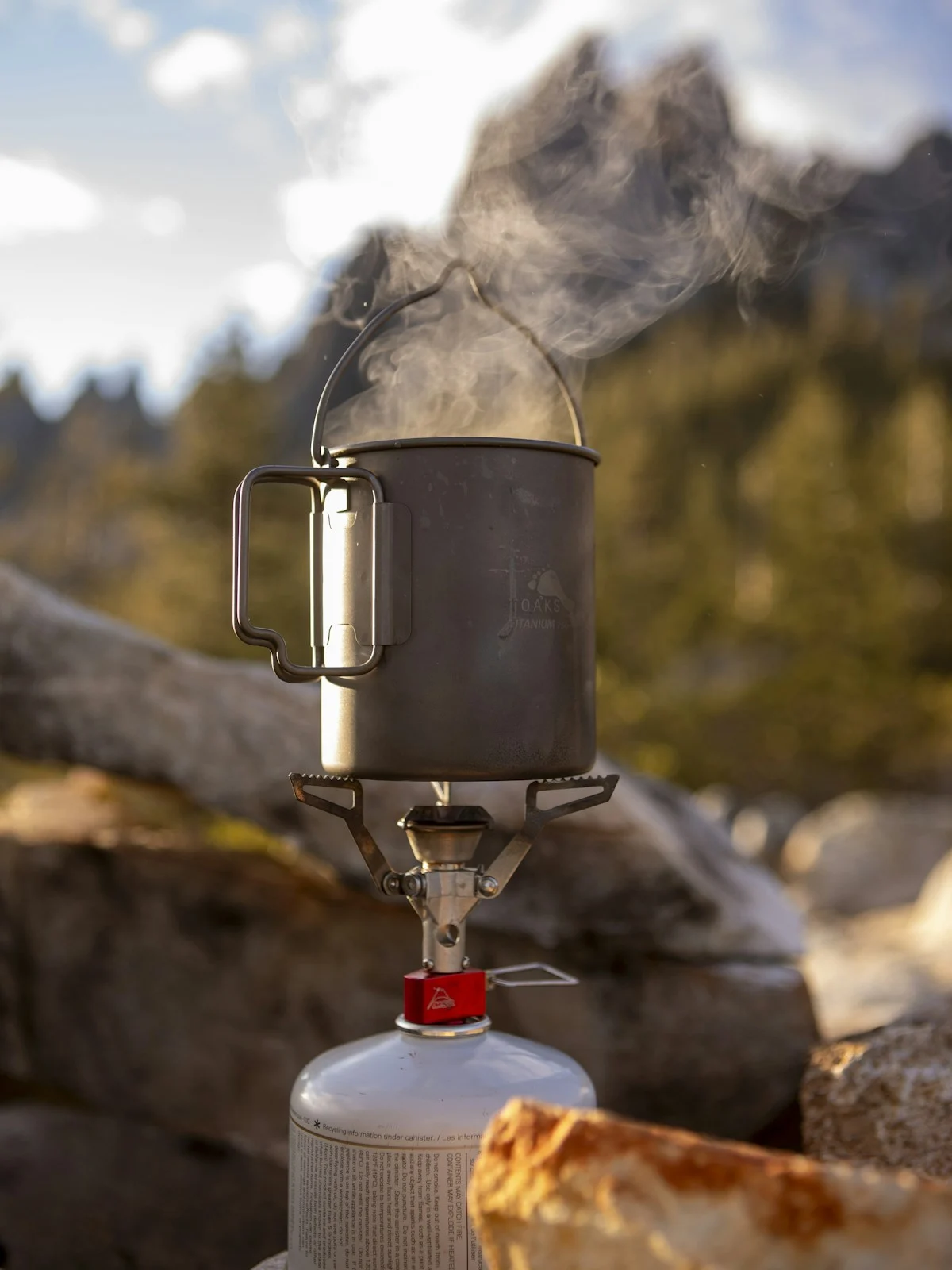
The outdoor gear community has now had years to test titanium drinkware in real conditions. Here’s what consistent real-world feedback across r/ultralight, r/backpacking, and long-form gear review sites shows:
What works well:
- Boiling water directly in a single-wall titanium cup on a backpacking stove — titanium handles repeated thermal cycling without warping or degrading
- Coffee, tea, and soup taste better than from aluminum; on par with or better than stainless steel
- After 5+ years of regular use, titanium cups show scratches and minor surface marks but no structural degradation
- Packable alongside other cookware without weight penalty or rust contamination risk
What to watch for:
- Single-wall titanium mugs get very hot at the rim when filled with boiling water — a foldable handle or silicone sleeve is standard for serious use
- Titanium can develop a rainbow iridescence with repeated high-heat exposure — this is cosmetic and harmless, but some brands view it as a feature, others as a flaw
- Cost is genuinely higher — a quality 450ml titanium camping mug retails for $25–$45 vs $8–$15 for stainless steel equivalents
Single-Wall vs. Double-Wall: Which Configuration Do Brands Choose?

Both configurations are available in titanium, and outdoor brands typically offer one or both in their product lines.
Single-Wall Titanium Mug:
- Weight: ~75–90g (450ml)
- Best for: Ultralight backpacking, direct stove heating, minimalist carry
- Trade-off: Hot to the touch when filled; drinks cool faster
- Single-wall is the most popular OEM specification for ultralight brands
Double-Wall Titanium Mug:
- Weight: ~110–140g (450ml)
- Best for: Camp coffee enjoyment, shoulder-season cold mornings, all-day carry
- Trade-off: Cannot be used directly on a stove flame; higher cost
- Better insulation performance — maintains drink temperature 2–3x longer than single-wall
Brand strategy consideration: Most mid-to-premium outdoor brands launch with a single-wall mug SKU first (lower MOQ, lower unit cost, stronger ultralight story) and add a double-wall variant once the product line is established.
What to Look for in a Titanium Drinkware OEM Partner
A dedicated titanium manufacturer like Titanium Outdoor specializes in OEM and ODM drinkware and cookware for outdoor brands globally. What differentiates a specialist from a general-purpose factory matters when a brand is staking its product quality on supplier execution.
Key factors brands evaluate when selecting an OEM partner:
Material traceability: Can the supplier provide mill certificates confirming Grade 1 or Grade 2 titanium? A dedicated titanium manufacturer sources from verified Ti mills and provides full material documentation with every order.
Certification readiness: FDA and LFGB compliance documentation, including migration testing results, should be standard — not an add-on. This is especially critical for brands entering EU markets.
Customization capability: Laser engraving, custom handle design, proprietary lid systems, color anodizing — outdoor brands need differentiation beyond a generic mug shape.
MOQ flexibility: Many outdoor brands start with smaller initial orders to validate market response before scaling. Working with a supplier that accommodates various volume levels — rather than enforcing rigid high-minimum-order-quantity requirements — is important for smaller labels just entering the market.
Production consistency: Titanium’s machinability requires specialized tooling and process control. Inconsistent wall thickness or poor weld quality shows up immediately in consumer reviews. Experienced titanium manufacturers maintain tighter tolerances.
When Titanium Is NOT the Right Choice
Credible B2B content acknowledges limitations. Here are scenarios where titanium is not the optimal specification:
- Budget-first product lines: If the retail price point needs to stay under $15 for a camping mug, stainless steel is more appropriate. Titanium’s raw material and processing costs make a sub-$15 retail price difficult without significant quality compromise.
- High-impact abuse environments: Work-site drinkware, military canteens, or products marketed to users who routinely drop gear on hard surfaces — stainless steel’s thicker walls absorb impacts better.
- Cooking-intensive use: Titanium’s relatively low thermal conductivity (~21.9 W/m·K vs aluminum’s ~167 W/m·K) means heat distribution is less even. For mugs used only to boil water and drink from, this is irrelevant. For cookware where even heating matters, aluminum or stainless is better.
- Price-sensitive consumer segments: The 2–4x price premium over stainless steel is a genuine barrier for some consumer segments. Brands should ensure their target customer values ultralight performance enough to absorb the cost difference.
FAQ
Why do outdoor brands choose titanium coffee mugs over stainless steel?
The primary reason is weight — a 450ml titanium mug typically weighs 78–90g versus 155–165g for the same size in stainless steel. For brands positioning products for ultralight backpacking, thru-hiking, or performance camping, this weight reduction is a core product differentiator. Titanium also offers superior taste neutrality and comparable food safety compliance.
What titanium grade is used in coffee mugs?
Grade 1 and Grade 2 commercially pure titanium are the standard specifications for drinkware and cookware. Both are free of alloying elements (aluminum, vanadium) and carry FDA and LFGB food-contact compliance. Grade 5 (Ti-6Al-4V) contains aluminum and vanadium and is NOT appropriate for food-contact applications.
Is a titanium coffee mug safe for hot drinks?
Yes. Titanium is completely inert and biocompatible — it’s used in medical implants for this reason. It will not leach any compounds into hot or acidic beverages at any temperature encountered in normal drinkware use. Single-wall titanium mugs do get hot to the touch when filled; most designs include a foldable handle or are used with a silicone sleeve.
How long does a titanium coffee mug last?
Indefinitely, under normal use. Titanium does not rust, corrode, or degrade. The main failure mode is denting from hard impacts (thin-wall single-wall mugs). Surface scratches are normal and don’t affect function or food safety.
Can you heat a titanium coffee mug directly on a camp stove?
Yes — single-wall titanium mugs can be used directly over a gas stove, alcohol stove, or even hot coals. Do not heat double-wall insulated titanium mugs directly, as the vacuum seal creates pressure risk.
Why is titanium more expensive than stainless steel?
Titanium ore (ilmenite/rutile) requires energy-intensive refining via the Kroll process, and titanium is significantly harder to machine and weld than steel. These factors combine to make raw titanium sheet roughly 10–15x more expensive per kg than 304 stainless steel, with the cost difference partially offset by titanium’s lower density (you use less material by volume).
Conclusion
Outdoor brands choose titanium coffee mugs because the material makes a genuine performance argument that no alternative currently matches: lightest weight at appropriate food-safety compliance, with lifetime durability and zero flavor compromise.
For brands building premium drinkware lines — whether for ultralight backpackers, coffee-focused outdoor consumers, or premium gift markets — titanium is the specification that justifies the price premium and delivers on every product promise.
Titanium Outdoor has worked with outdoor brands at every stage of product development, from initial material selection through final OEM production with full FDA and LFGB certification documentation. If you’re evaluating titanium for a drinkware line, the material science and manufacturing process are proven — the question is finding a supplier whose quality execution matches the material’s potential.