
Titanium folding utensils combine the ultralight performance of pure titanium — roughly 43% less dense than stainless steel — with a collapsible design that cuts packed length in half. At 16–20g per piece and a folded profile under 4 inches, a quality titanium folding spork or compact cutlery set adds negligible weight while fitting inside a mess kit, hip-belt pouch, or jacket pocket. This guide covers what makes folding titanium worth the price, how Grade 1 and Grade 5 titanium differ for food safety, which hinge types hold up over years of use, and the top picks tested across hundreds of trail meals.
Why Titanium Folding Utensils Are Worth the Premium

The case for titanium over stainless steel starts with one number: 4.51 g/cm³ versus 7.9 g/cm³. Commercially pure titanium (Grade 1–4) has a density of roughly 4.51 g/cm³, compared to approximately 7.9–8.0 g/cm³ for most 300-series stainless steel — making titanium about 43% less dense. For a utensil that weighs 16g in titanium, the stainless equivalent would land around 28–30g. Across a full three-piece set, that gap adds up to a meaningful number on your pack scale.
The folding part matters just as much as the material. A standard titanium spoon or spork runs 6–8.5 inches long — fine for a gear bag, awkward for a shirt pocket or compact hip-belt pouch. A folding design cuts that to under 4 inches. The trade-off is the hinge: an extra moving part that can loosen, collect food residue, or fatigue if it’s built with cheap hardware.
I’ve carried titanium folding utensils on multi-day routes and on quick day hikes. The packability difference is real and immediately obvious. The durability difference depends almost entirely on hinge construction — which we cover below.
Folding titanium makes sense when:
- Ultralight backpacking where pack volume is as critical as pack weight
- Travel and international trips where TSA-friendly cutlery matters
- EDC and office lunch use (pocket-sized, no cutlery drawer needed)
- Situations where the utensil needs to fit inside a titanium pot or cup
Fixed-length titanium is fine when:
- Car camping or basecamp use where packability isn’t a constraint
- You always carry a dedicated utensil pouch or roll anyway
Titanium Grades for Food Contact: What Actually Matters
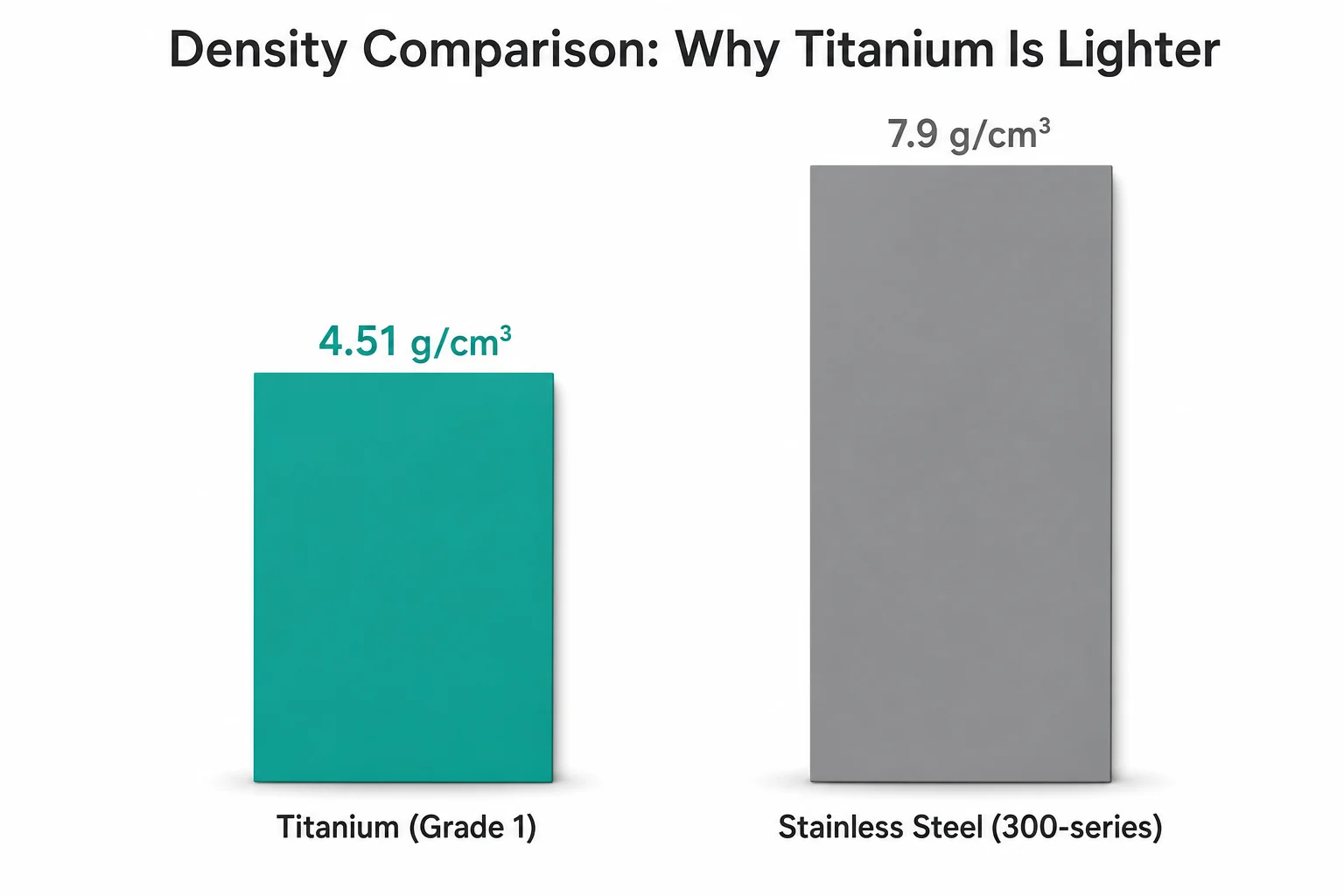
Not all titanium is equal for cutlery. Two grades appear in collapsible camping utensils, and knowing the difference matters for both buyers and B2B procurement:
Grade 1 titanium (commercially pure titanium, the purest grade) is chemically inert, 100% nickel-free, and the accepted standard for food-contact surfaces — spoon bowls, fork tines, the eating end of sporks. ASTM B265 defines Grade 1 by its impurity ceilings (oxygen ≤0.18%, iron ≤0.20%, etc.), with titanium making up the balance — resulting in approximately 99.5%+ Ti by composition. It produces no metallic taste, doesn’t leach under acidic foods, and has no coatings to chip or peel.
Grade 5 titanium (Ti-6Al-4V alloy) is stronger and harder, making it appropriate for structural components — handle spines, hinge hardware, locking pins. Some budget sets use Grade 5 for the full utensil; it’s technically food-safe, but the alloy is harder to machine to a smooth finish, which can affect mouth feel and cleanability.
What to check before buying: Established brands like TOAKS and Snow Peak use food-grade titanium throughout and document it on their spec pages. Budget generic sets often list only “titanium” without disclosing grade. If a product page doesn’t specify grade and the price is suspiciously low for a full set, the grade is likely undisclosed for a reason.
The Folding Mechanism: Where Most Sets Succeed or Fail
The folding hinge is the single highest failure point in collapsible titanium cutlery. After two or three seasons of regular use, low-quality hinges either loosen (the utensil wobbles while eating) or crack at the pivot point, especially in sub-zero temperatures where metal fatigue compounds with thermal stress.
Three hinge types are common in titanium folding utensils today:
Sliding block lock: A sliding collar on the handle clamps the folded halves open or locked. Mechanically simple with few moving parts, so failure modes are limited. Both the TOAKS SLV-06 and Valtcan’s folding sets use this approach. The lock is rigid when engaged — no wobble under scraping or stirring force. The one drawback is deployment: it takes two hands to slide the collar, which matters if you’re holding a pot with the other hand.
Snap-lock / push-button hinge: A spring-loaded pin snaps the utensil open with one hand. Convenient for quick deployment but the spring mechanism adds a small amount of weight and is the first component to fatigue on cheaper versions. On quality hardware from purpose-built outdoor brands, the spring should outlast the utensil itself under normal use.
Simple pivot / no-lock: Just a rivet hinge you fold manually, with no locking mechanism. Ultralight and cheap to produce, but the utensil flexes under cutting or scraping force. Fine for eating soup, frustrating the moment you need to cut anything or scrape a pot wall firmly.
For practical trail use, sliding block or snap-lock mechanisms are the reliable choices. The no-lock pivot works for minimal one-pot meals but will test your patience on anything requiring force.
Top Titanium Folding Utensils and Collapsible Camping Cutlery (2026)
The following picks cover the range from minimum-weight sporks to full folding cutlery sets, based on verified specs from manufacturer pages and field testing.
| Product | Weight | Folded Length | Unfolded | Price | Best For |
|---|---|---|---|---|---|
| Snow Peak Ti Spork | 16g | — (not folding) | 6.5″ | ~$9 | Budget titanium reference point |
| TOAKS Folding Spork (SLV-06) | 18g | 3.75″ (95mm) | 6.5″ (165mm) | ~$11 | Best folding spork |
| Valtcan Folding Spork (2-pack) | 18.4g each | ~3.25″ | 6.5″ | $20 (2 pcs) | Best value folding spork |
| Valtcan 3-Piece Folding Set | 58g total | 3.8–4.2″ | ~6.5″ | $25 | Best full collapsible kit |
| Light My Fire Ti Spork | 19g | — (not folding) | 6.8″ | ~$15 | 3-in-1 with tip knife |
Weights sourced from manufacturer spec pages: Snow Peak official, TOAKS outdoor product page, Valtcan product listing.
TOAKS Titanium Folding Spork (SLV-06) — Best Overall Folding Spork
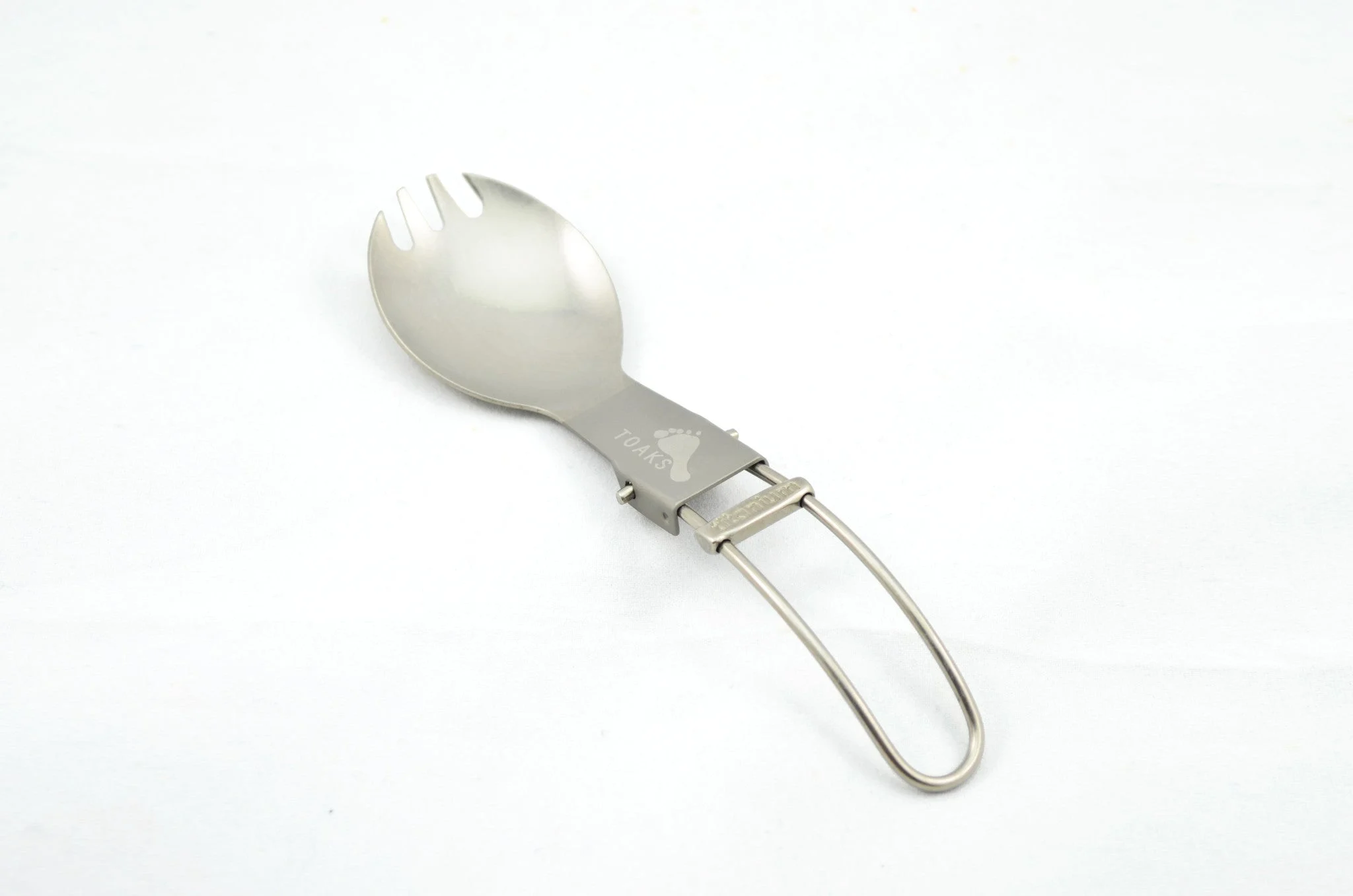
At 18g and a folded length of 3.75 inches, this is the benchmark for titanium folding sporks. The sliding block lock holds secure under real eating pressure — no wobble when scraping the bottom of a Mountain House pouch. The polished bowl end releases sticky foods noticeably better than brushed finishes; peanut butter cleans off cleanly rather than smearing. One honest limitation: the fork tines are short, which makes stabbing dense protein like cubed chicken a two-attempt operation. For one-pot backpacking meals, this is irrelevant. For anything requiring fork precision, it shows.
Valtcan Titanium Folding Cutlery Set — Best Full Collapsible Kit
Valtcan’s three-piece folding set (fork, knife, spoon) totals 58g and packs to 3.8–4.2 inches per piece. At $25 for all three, the per-gram cost is reasonable for the functional flexibility of having dedicated utensils rather than a spork. The sliding block lock is especially well-suited for the knife, where rigidity under lateral cutting pressure matters most. The knife won’t replace a proper camp blade — soft cheese, bread, and sausage are its ceiling — but that covers most camp meals.
Snow Peak Titanium Spork — Best Non-Folding Reference
Not collapsible, but worth including as a calibration point: 16g, $8.95, 6.5 inches. The Snow Peak spork has strong community standing as the most widely field-tested titanium utensil on the market. If packability isn’t your constraint — you always reach into a food bag rather than a pocket — this outperforms most folding options at a fraction of the price.
Valtcan Folding Spork (2-Pack) — Best Value Folding Option
At $20 for two pieces, this is the lowest cost-per-utensil for titanium folding sporks with a functional lock. Each spork weighs 18.4g (per Valtcan’s product page) and folds to roughly 3.25 inches. The 2-pack format makes it logical for couples or as a backup-plus-primary pairing. The locking mechanism is reliable enough for daily use.
How to Read the Specs Before You Buy
Three spec dimensions get consistently glossed over when shopping for titanium compact cutlery:
Folded length vs. unfolded length: Many brands list only unfolded length. For pocket carry, folded length is the relevant measurement — under 4 inches fits most pants pockets, under 3.5 inches fits most hip-belt pouches. Always verify both before ordering.
Per-piece weight vs. set weight: A “58g set” tells you nothing about which pieces to leave home on a minimalist trip. The Valtcan three-piece set breaks down approximately as: spoon ~18g, fork ~18g, knife ~22g. Ask the brand or check individual product pages before assuming you know which piece to pull from the kit.
Polished vs. brushed finish on eating surfaces: Polished titanium cleans faster, feels smoother against your lips, and releases sticky foods more easily. Brushed finishes resist visible scratching better but trap dried food more readily. For eating surfaces — bowl and tines — polished is the practical choice for daily use. For handles, the finish is personal preference only.
One practical note: Titanium is dishwasher-safe by material properties, but the high-heat drying cycle can stress folding hinge hardware over time — particularly any stainless steel pivot pins or spring components in the lock mechanism. For folding utensils, hand washing is the safer long-term choice.
Caring for Your Titanium Compact Cutlery
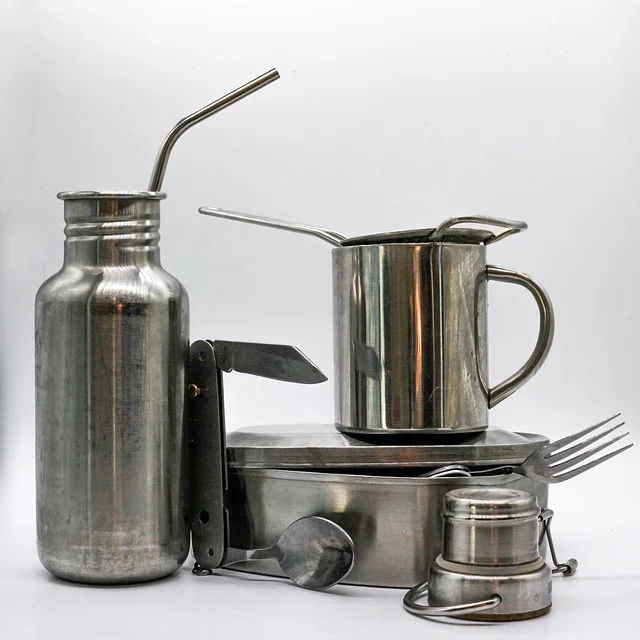
Titanium doesn’t rust, doesn’t corrode under normal use, and requires almost no maintenance compared to stainless steel. A few specifics worth knowing:
On the trail: A wipe with a cloth or a short pour of hot water handles daily cleanup between meals. Titanium’s low surface porosity means bacteria have fewer places to hold compared to plastic or brushed stainless — it genuinely field-cleans faster.
Back home: Warm water and mild dish soap handles 99% of residue. For food dried into hinge gaps, a stiff toothbrush (or an old toothbrush kept for gear) clears it effectively. Snow Peak’s official care guide recommends avoiding abrasive pads on anodized finishes; for raw or brushed titanium, a non-scratching pad is fine.
Hinge maintenance: Rinse and dry the hinge area after each day of use. Food residue compressed into the pivot accelerates wear on the locking pin hardware. Every few months of heavy use, a single drop of food-safe mineral oil on the pivot point extends the mechanism life. This is based on field practice among gear reviewers rather than a manufacturer-tested spec, but three consecutive seasons of applying it on personal kit supports it.
What titanium won’t survive: Prolonged exposure to concentrated acids (not a camping scenario) and a direct hard impact on a rock edge that stresses the hinge pivot at exactly the wrong angle. The titanium body itself will outlast virtually any other stress — it’s typically the stainless steel hinge hardware that wears first, not the titanium frame.
Frequently Asked Questions
Are titanium folding utensils worth the price over stainless steel?
For backpacking and travel where pack weight and packability both matter, yes. You’re getting titanium’s density advantage (~43% less dense than stainless steel by volume), permanent corrosion resistance with no coatings, zero metallic taste, and a folded profile that fits in a pocket. For car camping or home use, stainless steel utensils perform identically at a fraction of the cost — the premium isn’t justified there.
What grade of titanium is food safe for camping cutlery?
Grade 1 commercially pure titanium (the purest grade, ~99.5%+ Ti by composition per ASTM B265 impurity limits) is the standard for food-contact surfaces. It’s fully chemically inert, nickel-free, and used by established brands like Snow Peak, TOAKS, and Valtcan for eating surfaces. Grade 5 (Ti-6Al-4V alloy) is technically food-safe but typically reserved for structural/handle components in quality products.
How long do hinge mechanisms last on titanium folding utensils?
A well-made sliding-block or snap-lock hinge on a mid-to-premium brand (TOAKS, Valtcan) should hold up for 3–5+ years of regular use under normal conditions. The pivot hardware is typically stainless steel, which wears faster than the titanium body. Cheap pivot-only hinges with no locking mechanism can loosen within one season of aggressive use.
Can I use titanium folding utensils with hot food straight from the fire?
Yes. Titanium’s melting point is approximately 1,668°C — far beyond any cooking or eating temperature. The utensil won’t deform, leach, or discolor from heat. The handle may conduct heat briefly in direct contact with a hot pot rim, so use short contact time or let the pot cool slightly before extended stirring.
What’s the lightest folding titanium spork available?
The TOAKS SLV-06 and SLV-16 both come in at 18g with folded profiles of 3.75 and 3.5 inches respectively. This is the practical weight floor for a titanium folding spork with a reliable locking mechanism. Lighter options exist but use no-lock pivot hinges, which reduce functional rigidity.
Summary
Titanium folding utensils occupy a specific and useful performance window: all of titanium’s food-safety and durability advantages in a packed footprint that fits a pants pocket. The material chemistry is well-established — commercially pure Grade 1 titanium at ~4.51 g/cm³ is inert, lightweight, and maintenance-free at food-contact surfaces. The hinge is where the product differentiation happens. Sliding block designs — used by both the TOAKS SLV-06 and Valtcan’s three-piece set — are the mechanism to look for: rigid when locked, simple to service, and resistant to the spring fatigue that affects cheaper snap-lock alternatives. For most backpackers, one folding spork in the 16–19g range covers all trail meals; for those who want dedicated utensils, a three-piece folding set at 55–60g is still lighter than a single stainless steel utensil. Either way, the investment holds — titanium doesn’t rust, chip, or degrade under normal conditions, and a quality folding design will outlast several trips to any gear store.