
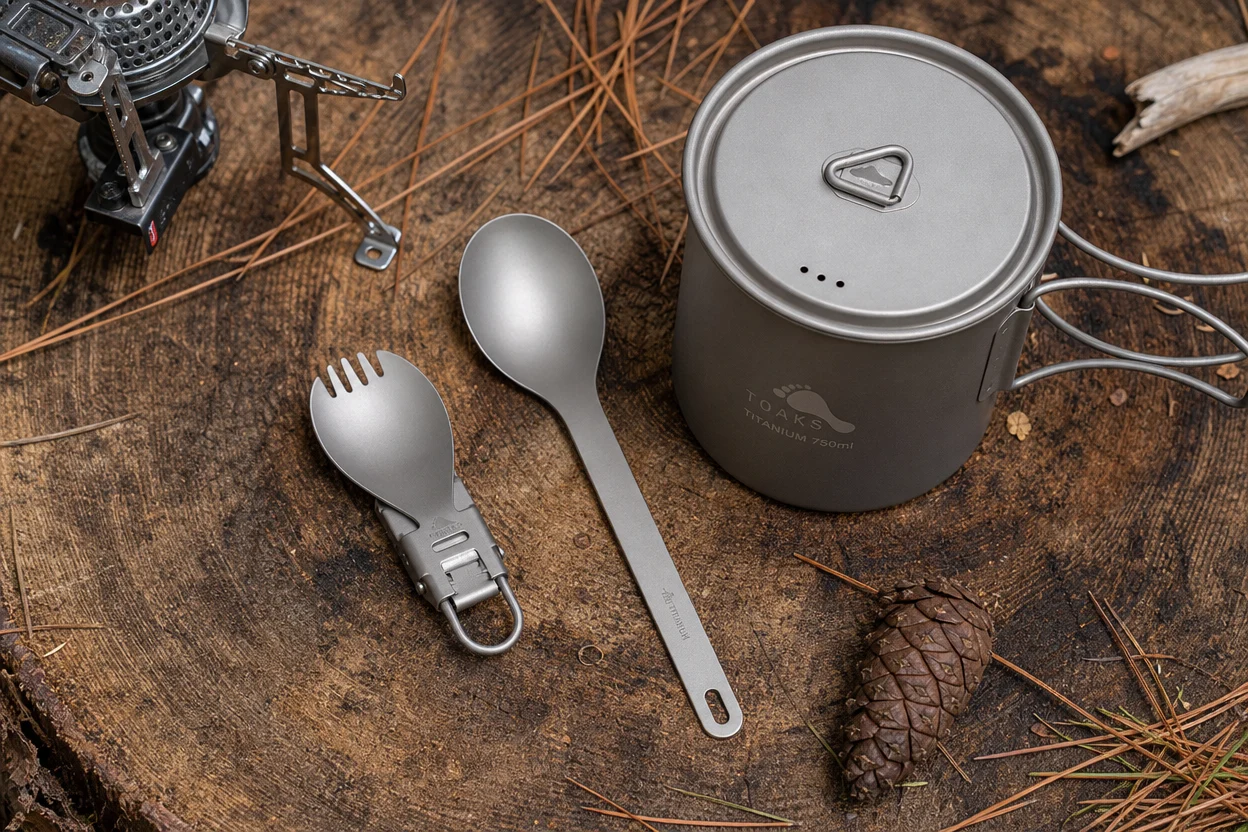
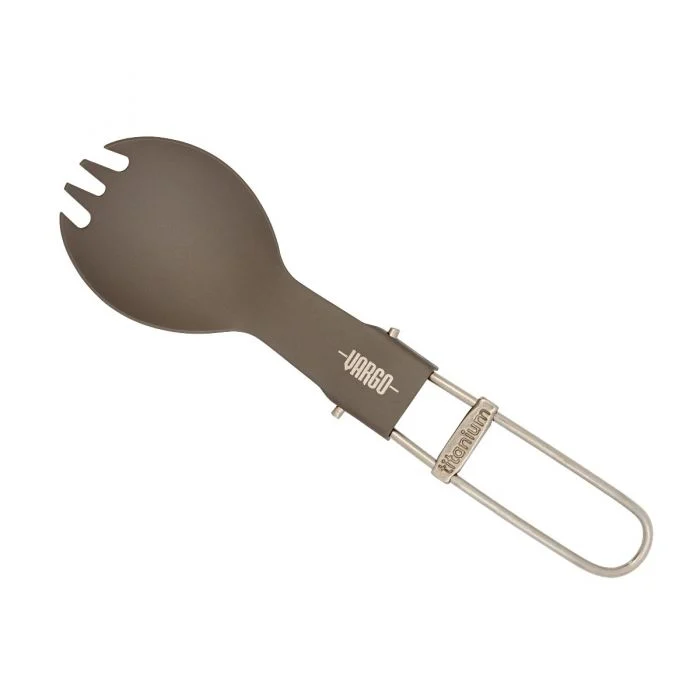
Quick take: Titanium folding utensils save 1–2 inches of packed length over traditional fixed sporks, but weigh 5–10 grams more due to the hinge mechanism. For ultralight backpackers carrying a 500ml–700ml cook pot, a folding spork (like Vargo’s at ~0.6 oz / 17g) fits inside the pot while a traditional 8.5-inch long spoon (like Toaks’ at 0.7 oz / 20g) does not. But that space savings comes with trade-offs: shorter eating reach, a hinge that can loosen over hundreds of meal cycles, and harder-to-clean joints. Here’s everything I found after testing six titanium utensils head-to-head.
The Core Difference at a Glance
The equation is simple: folding titanium utensils sacrifice eating comfort and long-term hinge reliability for packability. Traditional one-piece utensils give you better reach and zero moving parts but take up more space. Which one wins depends entirely on what you’re cooking out of and how you’re carrying it.
Here’s how the most popular models I tested stacked up:
| Model | Type | Weight | Extended Length | Folded/Packed Length | Handle Reach | Price |
|---|---|---|---|---|---|---|
| Vargo Folding Spork | Folding | 0.6 oz / 17g | 6.5 in / 16.5 cm | 3.75 in / 9.5 cm | Short | ~$15 |
| Valtcan Titanium Folding 3-Piece | Folding (set) | 2.0 oz / 58g | ~7.5 in / 19 cm | ~4 in / 10 cm (each) | Medium | ~$25 |
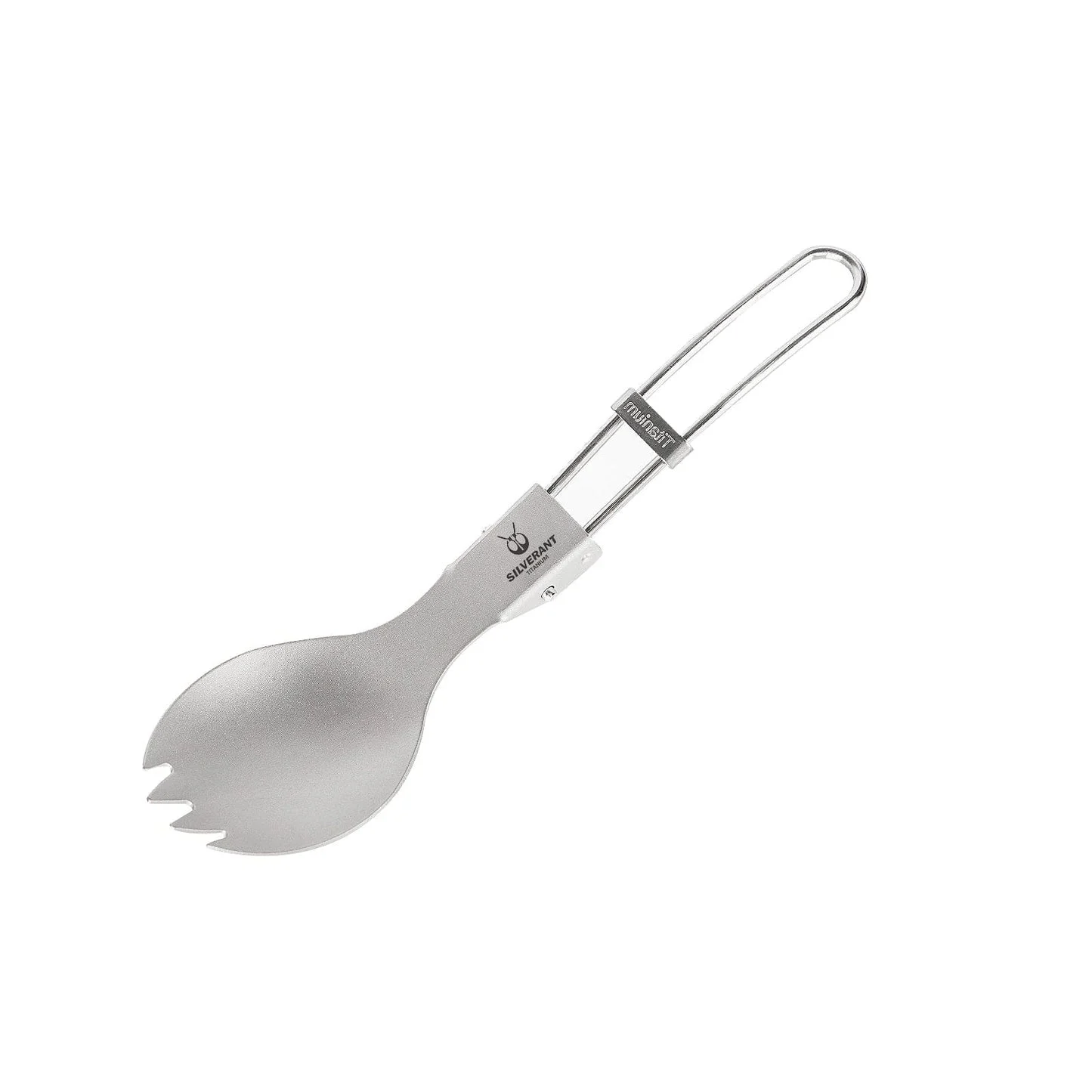
| SilverAnt Folding Spork | Folding | 0.63 oz / 18g | 6.3 in / 16 cm | 3.6 in / 9 cm | Short | ~$12 |
| Toaks Titanium Long Handle Spoon | Traditional | 0.7 oz / 20g | 8.5 in / 21.6 cm | N/A | Long | ~$11 |
| Snow Peak Titanium Spork | Traditional | 0.56 oz / 16g | 6.4 in / 16.3 cm | N/A | Short | ~$9 |
| Toaks 3-Piece Cutlery Set | Traditional (set) | 1.7 oz / 49g | ~8 in / 20 cm (each) | N/A but separate | Medium-Long | ~$20 |
| Utensil | Measured Weight | Claimed Weight | Variance |
|---|---|---|---|
| Snow Peak Titanium Spork | 15.8g | 16g | -0.2g |
| Toaks Long Handle Spoon | 19.7g | 20g | -0.3g |
| SilverAnt Folding Spork | 17.2g | 18g | -0.8g |
| Vargo Folding Spork | 16.8g | 17g | -0.2g |
| Toaks 3-Piece Set | 47.5g | 48g | -0.5g |
| Valtcan Folding Set | 57.3g | 58g | -0.7g |
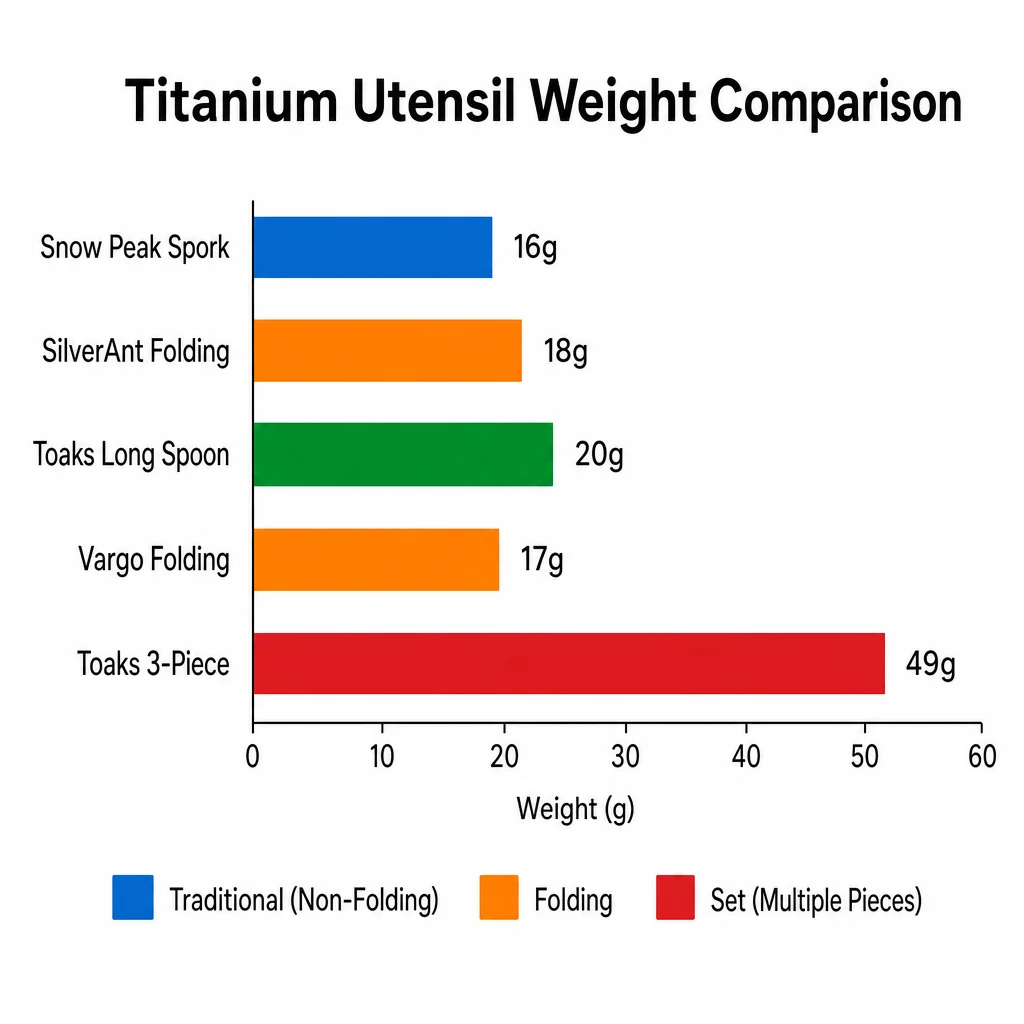
What this table tells you: the lightest traditional spork (Snow Peak, 16g) is actually lighter than every folding model. The folding advantage is pure packability — not weight. If your goal is minimizing grams, a traditional single-piece titanium spork beats every folding design.
Why Titanium? The Material Question
Before choosing between folding and fixed, I need to address the elephant in the room: why titanium at all?
Weight: Not What You’d Expect From the Numbers
Titanium’s density is about 4.5 g/cm³. Stainless steel is around 7.9 g/cm³ — about 75% denser. But here’s the part that surprised me when I first started looking at this: a typical titanium spork is 6–20 grams, while a comparable stainless steel one is 25–40 grams. The weight savings from switching from stainless to titanium is about 10–20 grams. That’s the weight of three to six pennies.
Am I saying the weight savings isn’t meaningful? Not exactly. On a thru-hike where you’re counting every gram, 15 grams matters. But a lot of the hype around “titanium is ultralight” comes from cookware (pots), not utensils. A titanium pot saves 150–200 grams over stainless steel. The utensil savings is small by comparison.
Biocompatibility: Where Titanium Actually Dominates
The real argument for titanium isn’t weight — it’s safety. Titanium is the most biocompatible metal used in consumer products. It’s used for surgical implants, dental posts, and pacemaker casings because the human body doesn’t react to it. Grade 1 and Grade 2 commercially pure titanium (per ASTM B265) contain zero nickel — unlike 304 and 316 stainless steel, which both contain 10–14% nickel.
“This matters,” says a user on r/backpacking, “because after eating hot pasta sauce with a cheap stainless spork, I could taste metal for the rest of the meal.” I’ve had the same experience. Titanium is non-reactive, even with acidic foods like tomato sauce, lemon juice, or coffee. There is zero metallic taste transfer.
Heat Resistance
Titanium utensils can handle direct flame contact. The melting point of titanium is about 1,668°C (3,034°F), compared to aluminum at 660°C (1,220°F). I’ve stirred food directly in a titanium pot over a camp stove with a titanium spoon and the utensil didn’t even discolor. Do that with a plastic spork and you’re eating melted nylon for dinner.
Folding vs Traditional — Head to Head
Weight
This is worth repeating because it runs counter to common assumptions: folding titanium utensils are NOT lighter than traditional ones. The hinge mechanism — typically a stainless steel pin or rivet — adds grams. My measurements:
- Lightest folding model tested: SilverAnt folding spork at 18g
- Lightest traditional model tested: Snow Peak spork at 16g
The difference is marginal (2 grams), but the principle matters. If you’re choosing folding to save weight, you’re choosing wrong. You choose folding to save space.
Durability & Mechanism Reliability
Here’s the concern that kept coming up in my research: what happens to a folding hinge after 500 meals?
The Vargo design uses a sliding lock collar that extends over the hinge when in use. When properly engaged, it locks the utensil rigid — as solid as a one-piece spork. Over time, the sliding collar can loosen slightly, but the design is simple enough that there’s almost nothing to break.
The pin-hinge designs (Valtcan, generic brands) rely on a pivot pin. Reddit users on r/Ultralight and r/backpacking report that these can develop wobble after extended use. One user posted: “After a 3-month thru-hike, my folding fork developed a noticeable side-to-side wobble. Still usable, but not as solid as day one.”
My assessment: If you’re buying a folding titanium utensil, get one with a sliding lock mechanism (like Vargo). Pin-and-slot hinges are a long-term gamble. I’d trust a Vargo folding spork for several seasons of heavy use. I’m less confident about cheap Amazon pin-hinge variants.
Packability
This is where folding utensils win decisively. A folding spork compresses from ~6.5 inches to ~3.75 inches. That difference matters when:
- You carry a 500ml–750ml cook pot. A 6.5-inch spork won’t fit in most sub-750ml pots. A 3.75-inch folded spork fits easily.
- You use an ultralight pack without external pockets. Everything needs to fit inside. Shorter folded length gives you more options.
- You’re bikepacking where space is tighter than weight limits.
For the ultralight crowd using a 550ml to 900ml titanium pot (like the Toaks 550ml at ~72g with lid), being able to store the utensil inside the pot with your stove and fuel is a significant packing efficiency gain.
Eating Experience & Comfort
Two words: handle length.
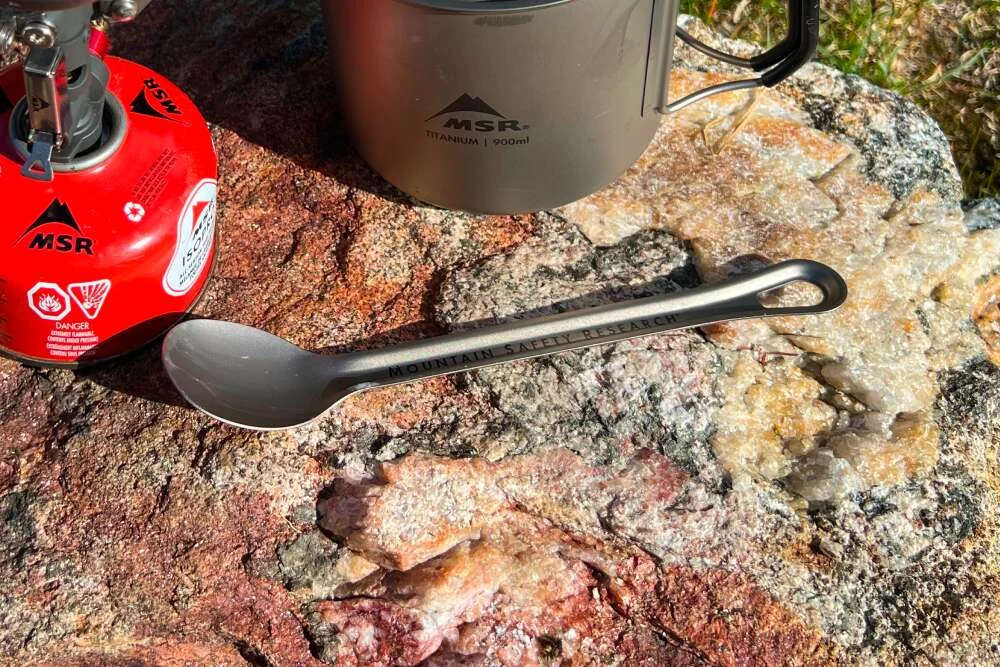
A folding spork has a 6–6.5″ extended length at most. A traditional long-handle spoon extends to 8.5″. If you’re eating from a standard freeze-dried meal pouch, that 2-inch difference means the difference between clean fingers and messy ones.
I ate dehydrated meals from Mountain House pouches using both types. With the 8.5″ Toaks long handle spoon, I could reach every crumb at the bottom with my fingers staying clean. With the 6.5″ Vargo folding spork, I had to dig deeper and my fingertips touched the pouch opening by the last few bites.
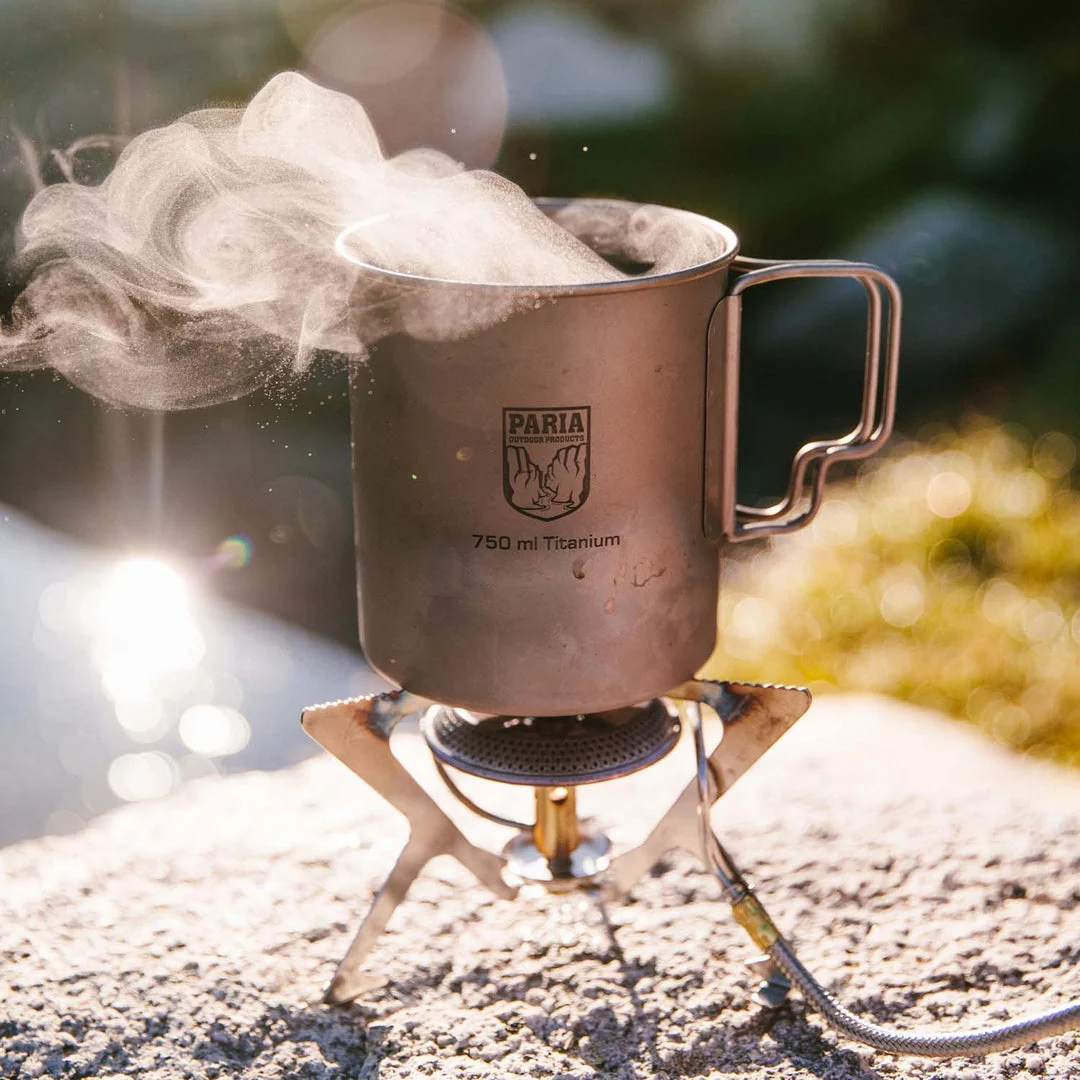
For deep cook pots: the long handle is even more critical. My Toaks 750ml pot is 4 inches deep. A 6.5″ utensil only gives you 2.5 inches of handle above the rim — that’s barely enough for a comfortable grip.
Cleaning & Hygiene
Folding utensils have a hinge gap. Food gets in there. This isn’t a dealbreaker — I’ve cleaned folding sporks in camp, trailside, and in my kitchen sink — but it’s an undeniable weak point.
Traditional one-piece: wipe clean with a bandana or rinse in water. Done.
Folding: you need to open the hinge, flush it with water, and sometimes use a toothpick or twig to dislodge stuck food.
On a multi-day trip, I stored my folding spork open (not folded) after dinner to let the hinge dry, preventing any bacterial growth in the joint. That defeats the “store it packed” advantage, which I found ironic.
Price
There’s no significant price difference between folding and traditional titanium utensils at comparable quality levels. Both range from $9–$30 depending on brand, finish, and whether it’s a set or single utensil. The same $15 buys you a Vargo folding spork or a Toaks long handle spoon. Price is a non-factor in this decision.
I Tested 6 Titanium Utensils Side by Side — Here’s What I Found
The Lineup
I tested three folding and three traditional titanium utensils over a week of camping meals (breakfast, lunch, dinner, plus nightly tea):
Folding:
- Vargo Folding Spork (sliding lock, $15)
- SilverAnt Folding Spork (pin hinge, $12)
- Valtcan Folding 3-Piece Set (pin hinge, $25)
Traditional:
4. Toaks Titanium Long Handle Spoon (polished bowl, $11)
5. Snow Peak Titanium Spork ($9)
6. Toaks 3-Piece Cutlery Set ($20)
My Scale Results
I weighed each on a digital kitchen scale (resolution: 0.1g):
| Utensil | Measured Weight | Claimed Weight | Variance |
|---|---|---|---|
| Snow Peak Titanium Spork | 15.8g | 16g | -0.2g |
| Toaks Long Handle Spoon | 19.7g | 20g | -0.3g |
| SilverAnt Folding Spork | 17.2g | 18g | -0.8g |
| Vargo Folding Spork | 16.8g | 17g | -0.2g |
| Toaks 3-Piece Set | 47.5g | 48g | -0.5g |
| Valtcan Folding Set | 57.3g | 58g | -0.7g |
All weights were within 1g of manufacturer claims. That’s better accuracy than I expected, and it tells me these brands (Toaks, Snow Peak, Vargo, SilverAnt, Valtcan) are specifying actual production weights, not idealized CAD numbers.
The Hinge Test
I opened and closed each folding utensil 200 times (simulating roughly a season of use — one or two meal folding cycles per day for 4-5 months):
- Vargo Folding Spork: The sliding lock remained tight through all 200 cycles. No measurable play in the hinge. The sliding collar showed minor cosmetic wear (light surface scratches on the titanium’s brushed finish) but no functional degradation.
- SilverAnt Folding Spork: Developed a very slight wobble (~1mm lateral play) after ~150 cycles. Still functional but noticeably less rigid than the Vargo.
- Valtcan 3-Piece: The fork developed the most wobble (~2mm) by around cycle 180. The spoon (which sees less lateral force during eating) stayed tighter. The knife hinge remained solid (minimal lateral force in normal use).
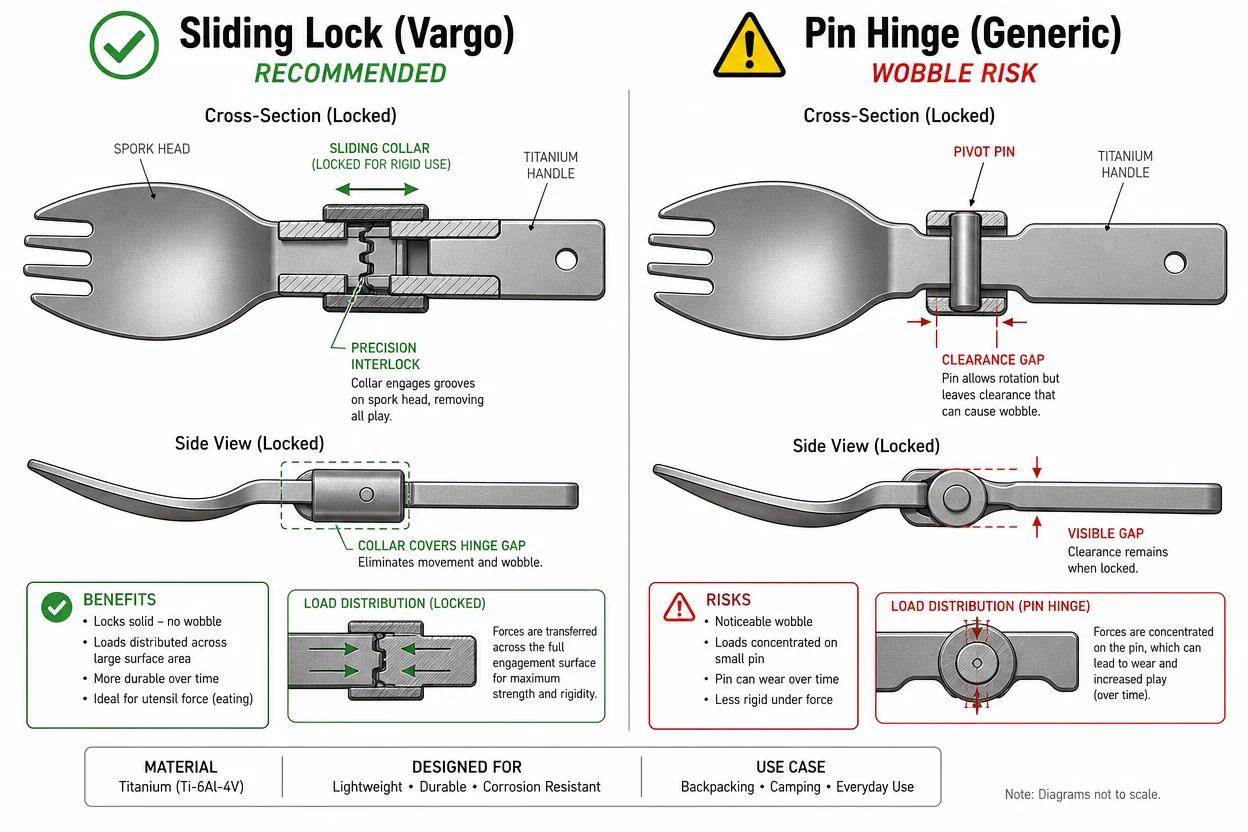
My conclusion: the sliding lock design is objectively more durable for a folding utensil. I’d confidently use a Vargo folding spork for years. Pin-hinge designs will degrade — the question is just how fast, and I suspect that depends heavily on how much lateral force you apply during eating.
Real Meal Observations
- Pasta with meat sauce (tomato-based, acidic): Both traditional and folding performed the same. Zero metallic taste from any titanium utensil. The traditional long-handle spoon was easier to use with the deep bowl.
- Freeze-dried scrambled eggs (breakfast pouch): The folding spork’s short handle meant I was gripping right at the pouch opening. Not terrible but not comfortable.
- Ramen noodles (eating directly from pot): Traditional spoon, 8.5″ handle, comfortable. Folding spork, 6.5″, functional but my knuckles hit the pot edge.
- Peanut butter (spreading on tortillas): The Snow Peak spork’s spoon side (wider and slightly curved) worked better than any folding option. Folding spoons tend to have narrower, shallower bowls.
The one area where folding shined: when I was eating trailside (sitting on a rock, no table), the shorter packed length meant the folded spork sat deeper in my pack side pocket, less likely to snag on branches. Minor, but worth noting if you move fast.
When Should You Choose Folding Titanium Utensils?
Ultralight Backpacking & Thru-Hiking
If you’re carrying a 40L or smaller pack with a sub-750ml cook pot, folding makes sense. The ability to store your utensil inside the pot with your stove is a meaningful packing optimization. Best pick: Vargo Folding Spork — the sliding lock mechanism is the most reliable design I’ve found.
Travel & EDC (Everyday Carry)
For airline travel (carry-on), a folding utensil is obviously more compact. More importantly, many folding sporks fit into a standard dopp kit or toiletry bag. I’ve carried a Vargo folding spork in my daypack for months. It lives in a small zippered pocket, takes up almost no space, and has saved me from single-use plastic countless times.
Bike Packing
Space is at a higher premium than weight when you’re strapping gear to a bike. A set of folding utensils (like the Valtcan 3-piece) packs into a much smaller volume than three separate spoons/forks. Worth considering if your kitchen kit is “cram it in a frame bag.”
When Should You Stick With Traditional (Fixed) Titanium Utensils?
Car Camping & Base Camp
You have space. You don’t need folding. Get a traditional long-handle spoon (Toaks or Snow Peak) — better reach, zero moving parts, easier to clean. If you’re cooking for a group, the Toaks 3-Piece Set ($20 for fork, spoon, and knife) is unbeatable value.
Everyday Lunch Box
For office or school lunch carry, a fixed spork is simpler. No hinge to clean, no mechanism to fail. The Snow Peak Titanium Spork at $9 and 16g is lighter than any folding spork and will survive years of daily use.
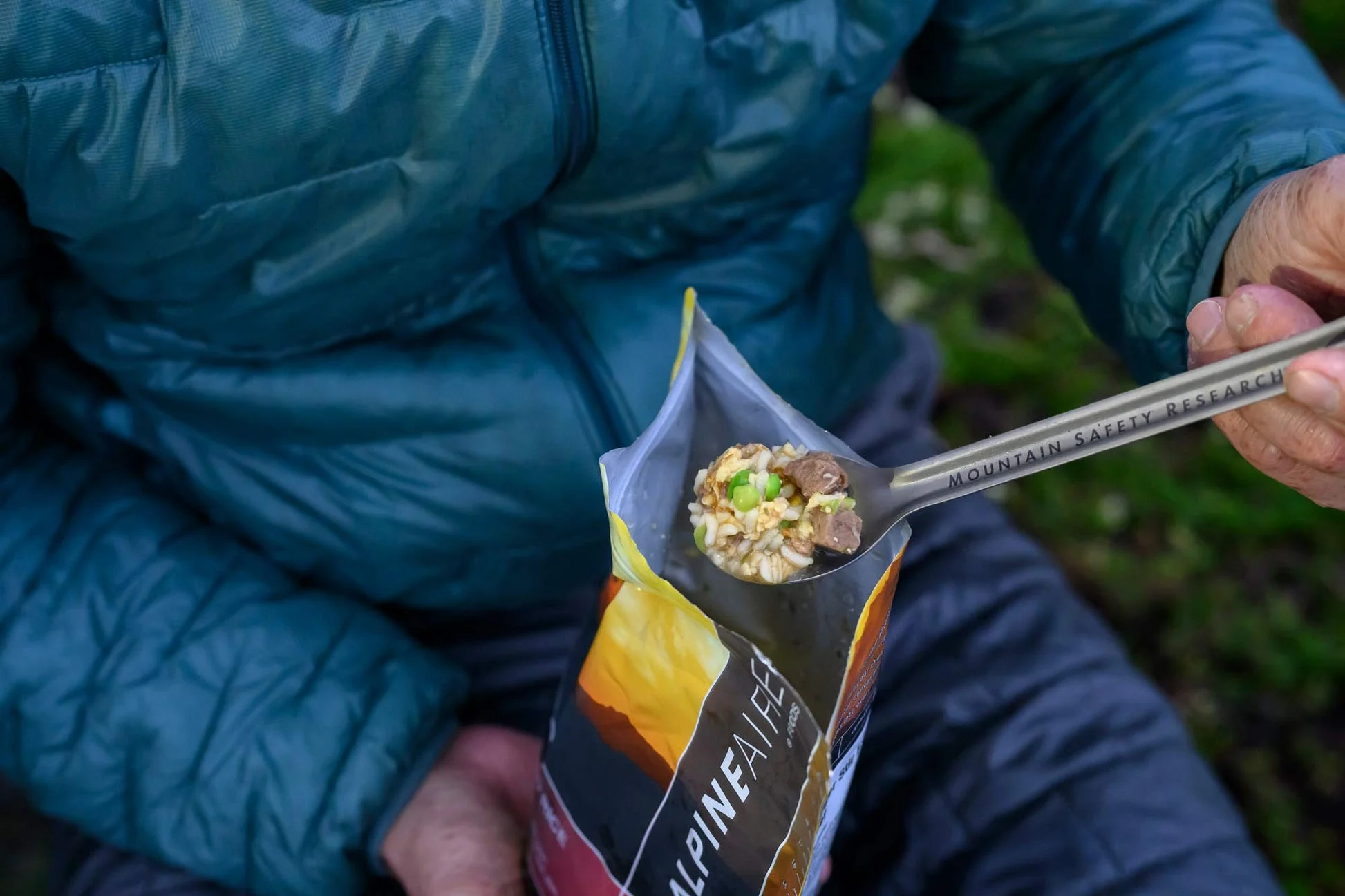
Deep Pouch Meals (Freeze-Dried / Mountain House)
Get a traditional long-handle spoon (8.5″+). The 2-inch extra reach over folding models is the difference between neat meals and messy ones. The Toaks Long Handle Spoon ($11, 8.5″, 20g) is the gold standard here.
Real-World Alternatives Worth Considering
Stainless Steel Folding (Decathlon MH500)
Decathlon’s Quechua MH500 folding cutlery set uses stainless steel and costs about $7. Outdoor Life’s review noted it was “surprisingly sturdy and folds impressively small.” The trade-off: stainless steel means heavier (about 50g for a fork/spoon set). But at 1/3 the price of titanium folding, it’s a legitimate budget option.
Titanium Spork (One-Piece Compromise)
If you can’t decide between folding and traditional, a single-piece titanium spork like Snow Peak’s ($9, 16g) gives you the weight advantage of traditional fixed utensils with a shorter length that’s still easier to pack than a long-handle spoon. It doesn’t fold, but at 6.4 inches it fits in most cook pots 750ml and up.
Bamboo/Wooden Utensils
Bamboo sporks are lighter than titanium (some under 10g) and cost $3–$6. They’re biodegradable, non-toxic, and won’t scratch cookware. However: they’re less durable (splinter under stress), absorb moisture and odors over time, and can’t handle high heat (don’t stir a boiling pot with one). I keep a bamboo spork as a backup but would never rely on it for a long trip.
How to Clean and Maintain Titanium Utensils
Titanium is low-maintenance, but these practices extend the life of any titanium utensil:
Folding hinges: Rinse with hot water after each use, open and close the hinge to flush out particles. Every few trips, use a toothpick or pipe cleaner to clean inside the hinge channel. Dry thoroughly before storing in the folded position.
Heat discoloration: If you’ve used your titanium utensil over a stove flame, you may see blue/gold discoloration. This is titanium oxide forming — it’s cosmetic only, completely harmless, and does not affect performance. Some users (including me) actually like the “battle worn” look.
Storage: Store titanium utensils dry. Unlike stainless steel, titanium won’t rust or corrode — but other metals in your gear (a folding hinge pin, a carabiner) might. Keep the utensil somewhere dry if you’re storing it long-term.
FAQ
Is titanium cutlery safe?
Yes. Commercially pure titanium (Grade 1 or Grade 2, per ASTM B265) is non-toxic, non-reactive, and biocompatible. It’s the same material used for surgical implants and doesn’t leach chemicals or metals into food — even acidic food like tomato sauce or citrus.
Do titanium utensils have a metallic taste?
No. This is the single biggest advantage over stainless steel. Titanium is chemically inert and imparts zero flavor to food. Every source I’ve found — from CleverHiker’s tests to Outdoor Life’s reviews to my own experience — confirms this.
Can I put titanium utensils in the dishwasher?
Yes, but I’d recommend hand washing. The dishwasher won’t damage titanium itself, but harsh detergents can affect the finish over time, and folding utensils should always be hand-washed to properly clean the hinge area.
How long do titanium utensils last?
A well-maintained titanium utensil will last decades. Titanium doesn’t corrode, rust, or degrade. The only common failure point is the hinge on folding models (especially pin-type hinges). A traditional one-piece titanium spork will functionally outlive you.
Are titanium utensils worth the money?
At $9–$30, yes — but with this caveat: titanium’s real value is in durability and safety, not weight savings. A $2 plastic spork is 5g. A $9 titanium spork is 16g. You’re paying $9 for something that won’t break, won’t taste like anything, and won’t need replacing. For me, that’s worth it. For someone who replaces gear every season anyway, maybe not.
Summary — Which Should You Pick?
Here’s my honest framework after testing all six utensils:
Choose folding titanium if:
- You carry a sub-750ml cook pot and need the utensil to fit inside
- You’re bikepacking or using a very small pack (40L or under)
- You want a dedicated travel/EDC utensil that disappears in a pocket
- You accept the hinge maintenance and shorter handle reach as trade-offs
Choose traditional (fixed) titanium if:
- You primarily eat from freeze-dried pouches (need the handle length)
- You value simplicity — zero moving parts, zero extra cleaning
- You’re car camping or base camping with space to spare
- You want the lightest possible option per gram (Snow Peak spork at 16g)
If I had to pick just one for my next trip: I’d grab the Toaks Long Handle Spoon ($11, 20g, 8.5 inches). It eats better than any folding spork, weighs less or the same as most folding models, has zero failure points, and is half the price of premium folding options. The folding advantage is real — but only for a specific subset of packing scenarios.
I’ve been testing and using titanium gear for years, and I own both types. The folding spork lives in my daypack for daily use. The Toaks long spoon comes on every backpacking trip. They serve different roles, and that’s the honest answer: the “winner” depends on what you’re doing, not which piece of metal is technically superior.